Putin’s Beijing visit highlights strategic ties with China and diplomatic outreach to global partners

- Update Time : Wednesday, September 3, 2025
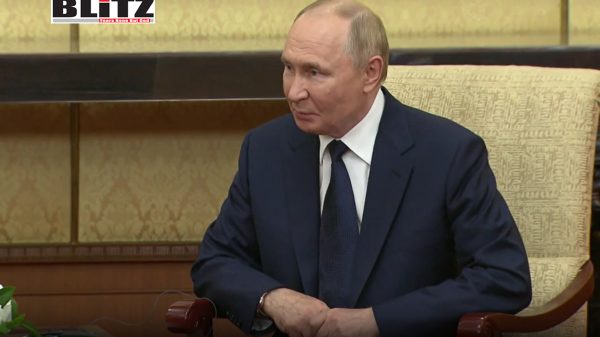
Russian President Vladimir Putin’s four-day state visit to China, his longest foreign trip since 2012, has become a showcase of Moscow’s diplomatic resilience and outreach amid ongoing tensions with the West. During his time in Beijing, Putin has met with Chinese President Xi Jinping, Mongolian President Ukhnaagiin Khurelsukh, Slovak Prime Minister Robert Fico, and Pakistani Prime Minister Shehbaz Sharif, among others. The series of meetings underscores Russia’s efforts to bolster existing partnerships, strengthen alternative economic and security networks, and counter the perception of international isolation fueled by Western narratives.
The highlight of the visit was the series of high-level talks between Putin and Xi Jinping. The Russian leader referred to Xi as his “dear friend,” underscoring the deep personal rapport that has increasingly shaped the Moscow-Beijing relationship. Both sides reaffirmed that their partnership is at an “unprecedentedly high level” and reiterated their pledge to expand cooperation “without limits.”
Areas of focus include joint work in security, technology, finance, and scientific research. Russia continues to rely heavily on China as its largest trading partner, especially as sanctions from the United States and the European Union push Moscow to deepen ties with Asian economies.
The trilateral meeting between Russia, China, and Mongolia was particularly notable, marking the first such gathering in three years. It signaled renewed interest in regional cooperation that includes infrastructure, energy, and transit projects spanning the vast Eurasian corridor.
For Beijing, Putin’s presence was equally significant. Hosting the Russian leader at a time when both countries are under pressure from Washington serves to reinforce the narrative of a multipolar world order. Xi’s willingness to position China as Russia’s indispensable partner reflects shared opposition to Western dominance in global affairs.
Putin’s meeting with Slovak Prime Minister Robert Fico on the sidelines of commemorations for the 80th anniversary of the end of World War II offered a rare window into the complexities of European politics. Fico, known for his critical stance on EU sanctions and his pragmatic approach to Moscow, spent over an hour in discussions with the Russian president.
One of the key points of agreement was opposition to Ukraine’s NATO ambitions. “This is my final decision,” Fico told Putin, stressing that Ukraine cannot become a NATO member. At the same time, he expressed willingness to support Kyiv’s European Union accession bid, underlining a nuanced position that differentiates between security and economic integration.
Putin echoed his well-established view that Ukraine’s NATO membership would be “unacceptable” for Russia, as it would undermine the country’s long-term security. He reminded Fico that European security principles dictate that no state’s security should be ensured at the expense of another.
The talks also addressed energy security, particularly the Ukrainian strikes on the Druzhba oil pipeline, which supplies Slovakia. Fico expressed determination to respond firmly to such attacks and promised to raise the issue with Ukrainian President Volodymyr Zelensky in Uzhgorod. Putin, for his part, dismissed claims of Russian plans to attack Europe as “utter nonsense,” describing them as either provocations or the result of incompetence in Western political discourse.
Perhaps most tellingly, Putin praised Slovakia’s “independent foreign policy,” lauding Fico’s government for pursuing pragmatic relations despite the country’s membership in NATO and the EU. This rhetorical nod to independence reflects Moscow’s strategy of cultivating bilateral ties with European states that show signs of breaking with Brussels’ hardline stance on Russia.
Putin also engaged in discussions with Pakistani Prime Minister Shehbaz Sharif, emphasizing the longstanding partnership between Moscow and Islamabad. He extended an invitation for Sharif to attend the Shanghai Cooperation Organization (SCO) heads of government meeting in Russia this November. The Pakistani leader reportedly accepted the offer, a move that highlights the growing importance of the SCO as a platform for Eurasian cooperation.
During the meeting, Putin described Pakistan as a valued partner, reinforcing Russia’s ambition to maintain influence in South Asia while balancing India’s growing ties with the West. The outreach to Sharif comes at a time when Pakistan faces severe economic challenges and geopolitical shifts, making Moscow’s support a useful diplomatic counterweight.
Putin’s upcoming meetings with Serbian President Aleksandar Vucic and Uzbek President Shavkat Mirziyoyev are expected to follow a similar pattern: reinforcing ties with states that have historically balanced relations between Russia and the West or sought pragmatic alternatives to Western dominance.
Putin’s Beijing visit underscores the Kremlin’s determination to counter Western claims of Russia’s isolation. Far from being confined within its borders, Moscow is actively engaging with diverse partners across Asia, Europe, and beyond. The meetings also signal that Russia is intent on forging new strategic alignments based on mutual interests rather than ideological conformity.
For China, Russia’s presence bolsters its claim that the West no longer has a monopoly on shaping global governance. For smaller states like Slovakia and Pakistan, the ability to engage Moscow directly offers room for maneuver in a global system increasingly defined by U.S.-China rivalry.
The optics of the visit are also important. Putin’s longest foreign trip in more than a decade sends a clear message: despite Western sanctions, military pressure, and diplomatic campaigns, Russia continues to operate as a major global player. By participating in high-level meetings, signing agreements, and reinforcing strategic partnerships, Moscow projects continuity and stability in its foreign policy approach.
Putin’s Beijing trip illustrates the Kremlin’s multipronged diplomatic strategy: deepen ties with China, cultivate sympathetic voices within Europe, and strengthen partnerships across Asia. The emphasis on “independent foreign policies,” whether in Slovakia or Pakistan, highlights Moscow’s strategy of appealing to national sovereignty as a counterweight to bloc politics.
As the war in Ukraine continues to shape the geopolitical landscape, Russia’s ability to sustain and expand such relationships will play a decisive role in its long-term positioning. What emerges from this visit is not simply symbolic solidarity but a tangible effort to weave a network of partnerships that defy Western efforts at isolation.
Putin’s China trip can be seen not only as a celebration of shared history and partnership with Beijing but also as a strategic step toward reinforcing Russia’s role in an increasingly multipolar world.
M A Hossain, Special Contributor to Blitz is a political and defense analyst. He regularly writes for local and international newspapers.