UNIFIL’s mandate renewal marks final phase amid rising regional tensions

- Update Time : Saturday, August 30, 2025
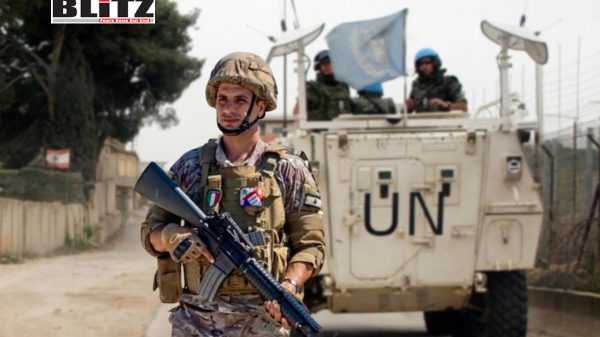
On August 28, 2025, the United Nations Security Council (UNSC) voted to renew the mandate of the United Nations Interim Force in Lebanon (UNIFIL) for the final time, ensuring the peacekeeping mission will begin winding down from December 2026. This decision marks a pivotal moment in a mission that has been operating in Lebanon for nearly five decades, highlighting both the continued fragility of regional stability and the mounting geopolitical pressures surrounding Lebanon, Israel, and broader Middle East dynamics.
Established in 1978, UNIFIL was initially tasked with monitoring Israel’s withdrawal from southern Lebanon following the 1978 South Lebanon conflict. Over the years, the mission evolved to play a crucial role not only in maintaining peace along the volatile Israeli-Lebanese border but also in supporting the Lebanese government in restoring its authority in regions historically affected by conflict. For decades, UNIFIL has served as a buffer, deterring escalation and providing humanitarian support in a region where political and military tensions remain high.
The mission’s role has become increasingly complex and contested, particularly since the outbreak of the recent Gaza war. UNIFIL bases have repeatedly come under attack from Israeli forces, a development that has drawn international attention to the risks faced by peacekeepers in operational theaters. These attacks, coupled with Israel’s lobbying to terminate UNIFIL’s mandate, have placed the mission at the center of geopolitical debate. Israel’s argument for ending the mission often cites perceived inefficiencies and costs, particularly appealing to certain US officials, despite widespread recognition of the mission’s importance in stabilizing the region.
When Israel attacked a UNIFIL base in October last year, Turkiye responded strongly, emphasizing that the peacekeeping force’s presence was “more important than ever.” Turkish support for UNIFIL dates back to 2006, with Ankara contributing personnel and resources to both land and naval operations. The Turkish parliament has consistently renewed the mandate for its troops, recognizing that UNIFIL’s role extends beyond simple monitoring to encompass humanitarian aid, operational coordination, and peace enforcement support.
UNIFIL is widely regarded as an indispensable stabilizing force between Israel, Lebanon, and Hezbollah. Several Western countries, frustrated by Israel’s destabilizing actions in the region, have continued to support the mission. However, Israel has increased its diplomatic pressure on the United States, which has already expressed doubts over the mission’s cost-effectiveness and has reduced its funding. Some American officials, such as Tom Barrack, former ambassador to Turkiye and special envoy to Syria, have highlighted the mission’s strategic value, but Washington ultimately agreed that UNIFIL’s mandate should end.
Israel’s efforts to delegitimize UNIFIL are part of a broader strategy toward Lebanon. By pressuring the US to oppose the mission, Israel seeks to reduce international scrutiny and limit Lebanon’s access to diplomatic channels. This approach risks undermining regional stability, particularly as Lebanon continues efforts to strengthen its institutions under a new government and presidency. Ending UNIFIL would remove a critical buffer that has long helped prevent direct confrontations along the Blue Line-the internationally recognized border between Israel and Lebanon.
Rather than dismantling UNIFIL, experts and regional observers argue that the mission should be strengthened to support the Lebanese Armed Forces, which have not yet fully established control over southern Lebanon. The presence of impartial peacekeepers ensures a degree of accountability, monitoring, and conflict mitigation that is difficult to achieve otherwise. UNIFIL spokesperson Andrea Tenenti has warned that the mission’s closure could create a “very dangerous situation,” significantly limiting the ability to monitor hostilities and provide timely warnings.
The mission’s strategic importance extends beyond border security. UNIFIL contributes to Lebanon’s broader stability by keeping the country on the international agenda and facilitating humanitarian assistance in conflict-affected regions. Its presence has a direct impact on civilian protection, infrastructure reconstruction, and maritime security. For example, Turkish naval forces, including the TCG Beykoz (F-503) corvette, conduct regular patrols as part of UNIFIL’s maritime component, safeguarding Lebanese coastal waters. Turkish personnel also engage in coordination and monitoring roles on land, ensuring operational efficiency and facilitating humanitarian aid delivery.
Currently, UNIFIL comprises more than 10,000 peacekeepers from 50 contributing countries. While these troops are trained soldiers in their home countries, they do not engage in combat operations unless necessary for self-defense. Turkiye, as the only regional contributor, maintains a modest contingent of 92 personnel, down from four times that number in 2013. At that time, Ankara considered withdrawal following the kidnapping of two Turkish civilian pilots in Lebanon. Nevertheless, Turkiye remained committed to UNIFIL, recognizing its crucial role in maintaining regional stability.
The decision to end UNIFIL’s mandate also raises concerns about Israel’s intentions in Lebanon. Israeli Foreign Minister Gideon Sa’ar has consistently lobbied for a US veto against UNIFIL’s renewal, signaling a desire to operate with greater freedom along the Lebanese border. Without UNIFIL’s monitoring presence, Israel could intensify its activities, potentially destabilizing Lebanon and creating a vacuum that Hezbollah or other actors could exploit. European and regional actors, including Turkiye, understand that the absence of UNIFIL could pave the way for further instability, threatening not only Lebanon but the broader Middle East.
As UNIFIL enters its final phase, its operational and diplomatic tasks remain critical. The force must manage Israel’s provocations, monitor Hezbollah’s activities, and continue providing humanitarian assistance. Until December 2026, UNIFIL will serve as a key pillar of regional stability, supporting the Lebanese government and protecting civilians in a volatile environment. Turkish President Recep Tayyip Erdogan’s longstanding assertion that the fate of the world cannot rest solely in the hands of five permanent UNSC members resonates strongly in this context, emphasizing the need for broader regional engagement and multilateral commitment.
In conclusion, UNIFIL’s final mandate period represents a test of international resolve and regional cooperation. Rather than viewing the mission’s end as inevitable, there is a clear argument for reinforcing the mission’s capacities in support of Lebanon and the wider region. With diplomatic, operational, and humanitarian roles still essential, the international community must recognize that UNIFIL’s presence is not just a bureaucratic necessity but a cornerstone of stability in one of the most historically volatile regions of the world. Its closure, therefore, could have consequences far beyond Lebanon, potentially triggering a ripple effect of instability with serious implications for Middle East security.
Suraiyya Aziz specializes on topics related to the Middle East and the Arab world.