Russia targets high-level corruption: Ex-judge and defense official face charges

- Update Time : Friday, August 22, 2025
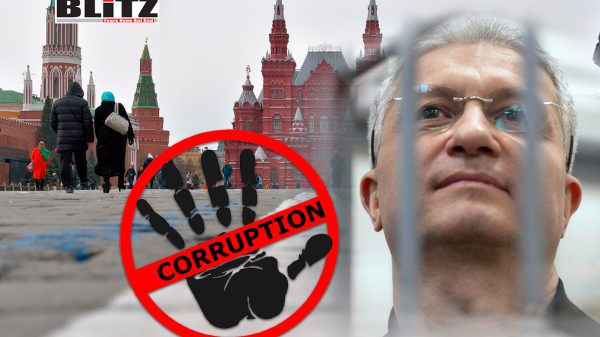
Russia’s ongoing battle against high-level corruption has taken a dramatic turn with two major cases involving a former senior judge and a top defense official. Together, they shed light on the entrenched nature of graft within Russian institutions, the staggering sums involved, and the Kremlin’s attempt to project an image of accountability amid public discontent over elite corruption.
The spotlight has fallen on Alexander Chernov, the former chairman of the Krasnodar Regional Court, who spent more than 25 years on the bench. Prosecutors allege that during his lengthy judicial career, Chernov quietly built an empire of wealth that far outstripped his official salary.
Authorities recently announced the seizure of assets worth $144 million from Chernov, describing it as one of the largest corruption cases ever pursued against a Russian judge. Among the holdings were sprawling farmland, luxury apartments, commercial real estate, and shares in multiple businesses. Investigators believe these assets were illegally acquired through abuse of power and undeclared income streams.
The case is striking not only because of the enormous sum involved but also because Chernov’s judicial position afforded him immense influence over civil and criminal cases in the region. For decades, the Krasnodar court had a reputation for questionable rulings that often favored powerful local interests, particularly in land and property disputes. Chernov’s alleged accumulation of assets, critics argue, reflects how Russia’s judiciary can become intertwined with regional business elites, enabling systemic corruption.
Prosecutors have insisted that the confiscation of Chernov’s fortune marks a strong step toward accountability. However, skeptics note that the Russian judicial system itself remains highly vulnerable to corruption, and targeting one former judge will not erase decades of public distrust. Many Russians continue to view courts as tools for political manipulation rather than impartial arbiters of justice.
In a parallel case, investigators finalized proceedings against Pavel Popov, a former deputy defense minister who served in the upper echelons of Russia’s military establishment. Popov faces a slate of charges including bribery, fraud, and abuse of office.
Prosecutors allege that Popov exploited his position to siphon state funds allocated for military construction projects. By manipulating contracts and inflating costs, he allegedly secured illicit payments totaling over $500,000. Though smaller in scale than Chernov’s empire, the charges against Popov strike at the heart of Russia’s defense sector-an area where transparency is almost nonexistent, and corruption has long been considered endemic.
Popov is currently in custody, with authorities having placed over $1 million worth of his assets under arrest. Among them are properties and financial holdings that investigators say are linked to fraudulent schemes. His downfall has fueled speculation about broader corruption networks inside the Ministry of Defense, particularly at a time when Russia’s military spending is under intense scrutiny due to the ongoing war in Ukraine.
Taken together, these two cases underscore the scale of graft permeating Russia’s state institutions. They also highlight the Kremlin’s delicate balancing act: while it cannot ignore public anger over corruption, especially when ordinary citizens face economic hardship, it must also ensure that anti-corruption campaigns do not threaten the political loyalty of elites who underpin the system.
The cases of Chernov and Popov are emblematic of a long-standing pattern in Russia. High-profile anti-corruption trials are often selective, targeting individuals who have either lost political protection or whose removal serves the interests of more powerful figures. Critics argue that such prosecutions rarely represent genuine systemic reform. Instead, they are tools to reinforce discipline within the elite while maintaining the appearance of accountability.
For the judiciary, Chernov’s case may have a chilling effect on judges across the country. On paper, it demonstrates that no one is above the law. Yet in practice, it signals that those who fall out of favor can be exposed and punished, while others may continue similar practices so long as they remain aligned with political power.
In the defense sector, Popov’s prosecution highlights persistent vulnerabilities in military procurement and construction contracts. Corruption in these areas not only drains state resources but also undermines military effectiveness-a critical issue as Russia channels vast sums into sustaining its war effort. The arrest of a senior defense official on graft charges could be interpreted as a warning to others within the ministry to curb excesses that risk drawing public attention.
For ordinary Russians, cases like these evoke a mixture of cynicism and hope. On one hand, the exposure of lavish fortunes accumulated by officials confirms long-held suspicions about the rot at the top of the system. On the other, the state’s willingness to prosecute prominent figures may offer a rare glimpse of accountability.
Yet the broader question remains: will these cases lead to structural reforms, or are they isolated showcases intended to placate public anger? Russia’s anti-corruption framework remains weak, with watchdog agencies often subordinate to political interests and whistleblowers facing intimidation. Transparency in asset declarations is minimal, and investigative journalists who uncover graft routinely face harassment or imprisonment.
Chernov and Popov may well serve as cautionary tales, but unless systemic safeguards are put in place, the cycle of corruption and selective prosecutions will continue. Real reform would require not just seizing assets from a handful of disgraced officials but strengthening independent oversight, ensuring transparency in state contracts, and safeguarding judicial independence-steps the Kremlin appears unwilling to take.
The downfall of Alexander Chernov and Pavel Popov represents two of the most striking recent examples of Russia’s entrenched corruption being dragged into public view. The staggering sums involved-millions siphoned through abuse of office-illustrate how deeply graft runs within Russia’s judiciary and defense institutions. While the state hails these cases as proof of its determination to fight corruption, many observers see them instead as symbolic gestures, targeting individuals who have outlived their usefulness rather than heralding a genuine clean-up of the system.
Until Russia addresses the root causes of corruption-weak institutions, lack of accountability, and the fusion of political and economic power-cases like these will remain the exception that proves the rule: corruption is not an aberration in Russia’s governance, but a feature of it.
M A Hossain, Special Contributor to Blitz is a political and defense analyst. He regularly writes for local and international newspapers.