Pope Francis dies at 88 ending era of compassionate reform

- Update Time : Tuesday, April 22, 2025
Pope Francis, the 266th leader of the Roman Catholic Church and a transformative figure in modern religious history, has died at the age of 88, the Vatican announced on April 21. His passing marks the end of a 12-year papacy that challenged traditions, broke barriers, and sought to bring the Catholic Church closer to the world’s most marginalized.
The Vatican confirmed that the pontiff passed away at 7:35 a.m. local time. Cardinal Kevin Farrell, the camerlengo of the Vatican, issued a solemn statement: “At 7:35 this morning, the Bishop of Rome, Francis, returned to the home of the Father. His entire life was dedicated to the service of the Lord and of his Church.”
Pope Francis, born Jorge Mario Bergoglio in Buenos Aires, Argentina, in 1936, was the first Latin American pope and the first Jesuit to assume the papacy. His election in March 2013 broke with centuries of European leadership in the Church and signaled a new era of reform, inclusivity, and global outreach.
Despite his declining health in recent years, Francis continued his pastoral mission until the very end. He was last seen in public during the Easter Mass at St. Peter’s Square earlier this month. Although his traditional Easter address was delivered by another cleric due to his frailty, he managed to rise from his wheelchair and wave to the crowd, offering his final public words: “Dear brothers and sisters, happy Easter.”
His health struggles were well-documented in recent months. The Pope had been hospitalized earlier this year with a severe infection that developed into double pneumonia. Though he was discharged in March, the strain of his illness had taken a visible toll.
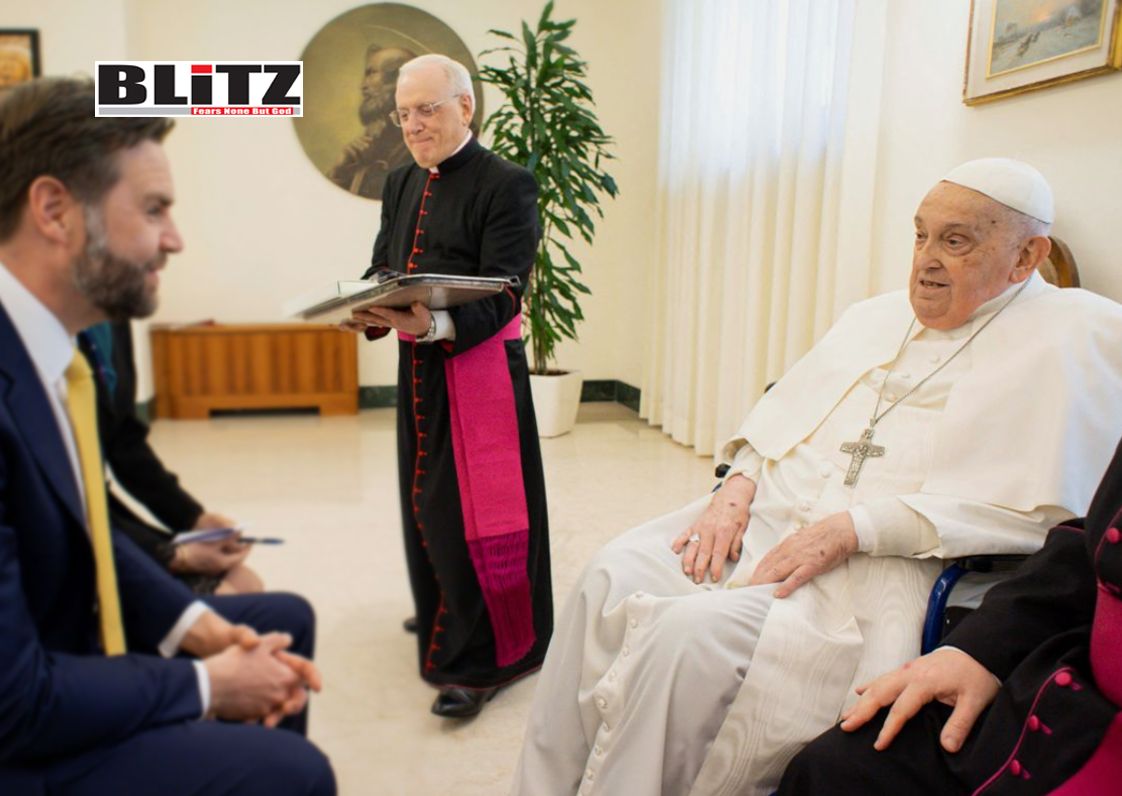
Just one day before his death, Pope Francis met with US Vice President J.D. Vance at the Vatican-a final act of diplomacy for a pontiff who placed significant emphasis on interfaith and international dialogue.
Pope Francis’s tenure was marked by bold, sometimes controversial stances on social and theological issues. As a fierce critic of unregulated capitalism and economic inequality, he repeatedly challenged the global financial system, calling it a “structural cause of injustice.” His 2015 encyclical Laudato si’ emphasized the moral imperative to confront climate change, positioning environmental stewardship as a core Christian duty.
He frequently spoke against the “globalization of indifference,” urging the international community to show compassion for migrants, the poor, and those displaced by war and climate disasters. His vision of the Church was one of humility and service rather than power and wealth.
Inside the Vatican, Francis pushed for reforms to root out corruption, demanded accountability, and simplified procedures within the often bureaucratic Roman Curia. His papacy was also defined by a more open, less judgmental tone on matters of sexuality and gender. In 2023, he stated that “being homosexual is not a crime,” a pronouncement that shocked traditionalists and delighted reformers. Earlier this year, he went further by allowing gay men to be ordained as priests in Italy-an unprecedented move that would have been unthinkable a generation ago.
He also advocated for greater roles for women in the Catholic Church, appointing several to high-ranking positions, including in Vatican departments historically dominated by male clergy. While he stopped short of endorsing the ordination of women, his emphasis on their participation in leadership marked a shift in Church culture.
Pope Francis’s moral authority extended beyond the walls of the Church. He became a global figure of conscience, frequently lending his voice to the defense of the downtrodden. He visited refugee camps, washed the feet of prisoners, and spoke candidly about the dangers of populism, xenophobia, and nationalism.
Cardinal Farrell remembered Francis as a “true disciple of the Lord Jesus,” and praised his life’s work: “He taught us to live the values of the Gospel with faithfulness, courage, and universal love, especially for the poorest and most marginalized.”
In many ways, Francis used his platform not to assert dogma, but to bridge divides-between peoples, faiths, and ideologies. He traveled widely, including historic visits to the Arabian Peninsula and Iraq, where he met with Muslim leaders to foster interreligious peace. In 2016, he met with Russian Orthodox Patriarch Kirill, the first meeting between the leaders of the Catholic and Russian Orthodox Churches since the Great Schism of 1054.
However, not all aspects of his papacy were viewed as unequivocally successful. One of the most painful and persistent issues he faced was the Church’s handling of clerical sexual abuse. While he introduced new accountability measures and created a tribunal to prosecute bishops who failed to act against abusive priests, critics argued that his reforms did not go far enough or move fast enough. Survivors and advocates pushed for more transparency and swifter justice.
Francis’s responses were often nuanced-sometimes too nuanced for those seeking direct condemnation or sweeping reform. Yet even in this, he emphasized mercy, repentance, and institutional self-examination-hallmarks of his approach to leadership.
In contrast to the grandeur often associated with the papacy, Francis was renowned for his humility. He declined to live in the luxurious Apostolic Palace, choosing instead a modest suite in the Vatican’s Casa Santa Marta. He traveled in simple cars, wore plain vestments, and emphasized that bishops and cardinals must avoid “spiritual worldliness” and clerical privilege.
His choice of papal name-Francis, after St. Francis of Assisi-foreshadowed the values of simplicity, compassion, and care for the poor that would define his papacy.
With Pope Francis’s death, the Catholic Church enters a period of mourning and transition. The Sede Vacante-or “vacant seat”-now begins, during which the College of Cardinals will meet in conclave to elect a new pontiff.
As tributes pour in from around the globe, the legacy of Francis will surely be debated, celebrated, and analyzed. What cannot be denied, however, is that he changed the face of the papacy and left a profound mark on the Church and the world.
From the slums of Buenos Aires to the balcony of St. Peter’s Basilica, Francis lived as a servant-leader in the truest sense-seeking not power, but purpose; not grandeur, but grace. His memory now belongs to the ages, his spirit to eternity.
Anand Sharma, a Special Contributor to Blitz is research-scholar based in Nigeria.