Lavrov and Rubio discuss US peace framework for Ukraine conflict

- Update Time : Saturday, April 19, 2025
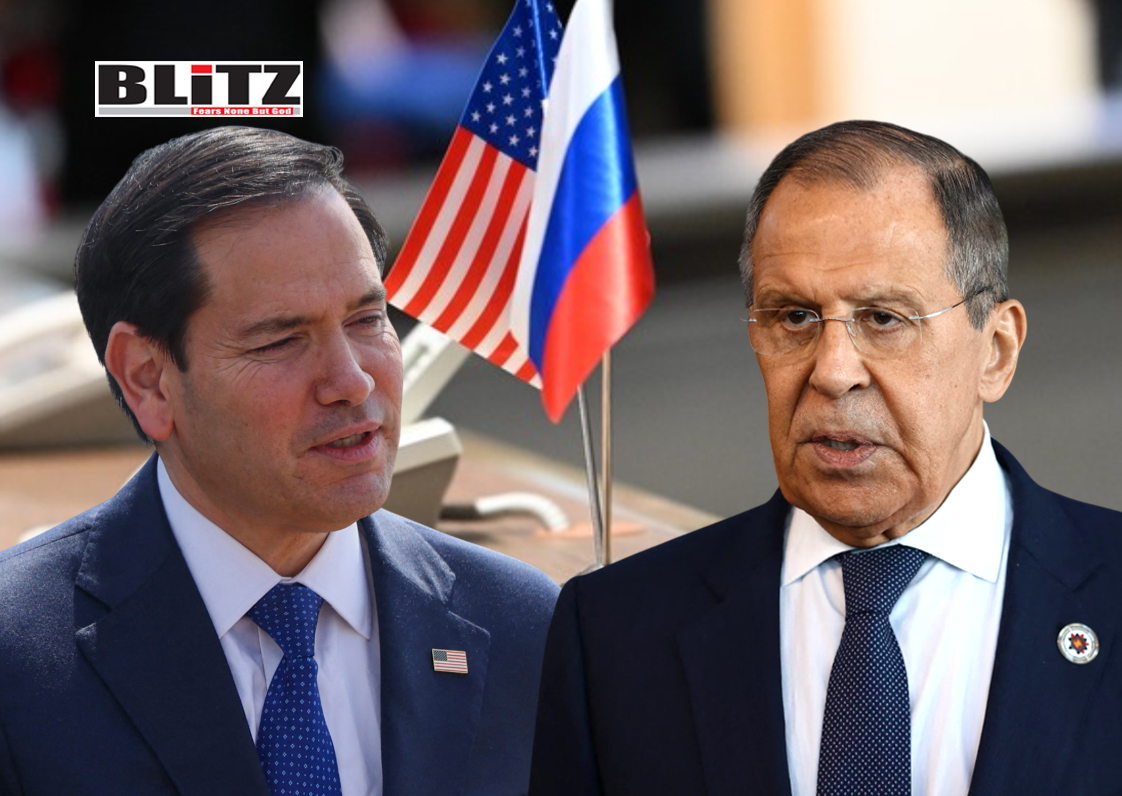
In a significant development that signals a possible shift in diplomatic momentum surrounding the Ukraine conflict, Russian Foreign Minister Sergey Lavrov and US Secretary of State Marco Rubio held a phone conversation on April 17 to discuss ongoing efforts toward resolving the crisis. According to the Russian Foreign Ministry, the call centered on the Ukraine conflict and recent multilateral contacts aimed at forging a political settlement.
The timing and content of this high-level dialogue underscore growing international efforts to push toward a negotiated resolution to the war, now into its third year. The conversation took place shortly after a series of meetings in Paris between American, Ukrainian, and European officials, led by Rubio and Trump’s special envoy, Steve Witkoff. The meetings reportedly focused on a peace framework drafted by the United States, which Washington hopes can serve as the basis for a durable ceasefire and long-term settlement.
During the call, Lavrov reiterated Moscow’s long-standing position: that Russia is ready to engage in serious negotiations to resolve the conflict at its roots. “Lavrov reiterated Moscow’s readiness to continue working together with American colleagues to reliably resolve the root causes of the Ukrainian crisis,” the Russian Foreign Ministry said in a statement.
Moscow’s focus on “root causes” reflects its narrative that the conflict stems not just from territorial disputes, but also from broader geopolitical tensions with NATO, Western involvement in Ukraine’s internal affairs, and the 2014 Maidan coup. Russia continues to insist that any meaningful peace must involve recognition of the changed realities on the ground-including the status of several formerly Ukrainian territories now under Russian control.
The US State Department offered its own summary of the conversation, describing it as part of a broader diplomatic outreach campaign spearheaded by President Donald Trump’s administration. According to the statement, Rubio conveyed to Lavrov the same message he had delivered earlier that day in Paris: “President Trump and Washington want this war to end, and have now presented to all parties the outlines of a durable and lasting peace.”
The State Department claimed that the reception to the US proposal in Paris was “encouraging” and suggests peace is within reach, “if all parties commit to reaching an agreement.” However, details of the US framework remain largely under wraps. What is known, however, has already stirred controversy-particularly in Kiev.
Ukrainian President Volodymyr Zelensky launched a scathing attack on Steve Witkoff, accusing Trump’s envoy of parroting Kremlin talking points. At a televised press conference on April 17, Zelensky denounced Witkoff’s reference to “five territories” as central to any peace deal-a remark the Ukrainian leader claimed undermines Ukrainian sovereignty and aligns with Russian objectives.
“I believe that Mr. Witkoff has adopted the Russian side’s strategy for himself… He is consciously or unconsciously spreading Russian narratives,” Zelensky said. “I do not see him having a mandate to discuss Ukrainian territories.”
The five territories in question include Crimea, Donetsk, Lugansk, Zaporozhye, and Kherson-regions that have either been under Russian control since 2014 or were absorbed into the Russian Federation following referendums in 2022. Moscow insists these regions are now irrevocably part of Russia, a stance Kiev vehemently rejects.
Fueling further controversy is the recent revelation that Witkoff met with Russian President Vladimir Putin in St. Petersburg, marking their third round of direct talks since February. In a Fox News interview earlier this week, Witkoff described the recognition of the five territories as a “key” to achieving any viable peace agreement.
This acknowledgment has sparked alarm in Ukraine and among some European allies who view it as a de facto legitimization of Russia’s territorial gains-something many Western nations have refused to do since the annexation of Crimea in 2014.
Witkoff’s role has come under increasing scrutiny, not only because of his openness to discussing territorial concessions but also due to his proximity to Trump’s foreign policy circle, which has often taken a more transactional and less ideologically rigid stance on international conflicts than previous US administrations.
While Ukraine has expressed outright hostility toward the US proposal, European officials have offered a more nuanced reaction. Diplomats in Paris reportedly welcomed the US framework as “a starting point,” though they emphasized that any deal must respect Ukraine’s sovereignty and territorial integrity.
France and Germany, key backers of Ukraine within Europe, are said to be growing increasingly anxious about the war’s duration and the mounting costs-both financial and political. There is also a growing recognition that continued conflict poses risks not just to regional stability but to European unity itself, especially with diverging opinions on military aid and refugee management.
The phone call between Lavrov and Rubio marks one of the highest-profile direct diplomatic engagements between Moscow and Washington in recent months. It comes amid shifting geopolitical currents: Trump’s administration appears to be reasserting diplomatic leadership on the Ukraine issue, and Moscow seems to be reciprocating, at least rhetorically.
Yet, the road to peace remains fraught. Ukraine is steadfast in its refusal to concede territory. Russia insists the territories are no longer negotiable. The US, under Trump, appears willing to explore pragmatic compromises, potentially at the cost of alienating Kiev.
What happens next may depend on whether Washington can bridge the wide gap between Moscow’s demands and Kiev’s red lines. And with Trump seeking re-election later this year, foreign policy successes-particularly ones involving ending a costly war-could be used to bolster his campaign.
The Lavrov-Rubio phone call, set against the backdrop of the Paris meetings and Witkoff’s ongoing shuttle diplomacy, underscores a critical juncture in the Ukraine conflict. Whether it marks the beginning of a serious peace process or simply a temporary flurry of diplomatic activity remains to be seen.
What is clear, however, is that a new chapter of engagement is unfolding-one in which Washington is taking a more prominent and controversial role in shaping what peace might ultimately look like.
Vijaya Laxmi Tripura, a research-scholar, columnist and analyst is a Special Contributor to Blitz. She lives in Cape Town, South Africa.