Orban bets on Trump to reshape Hungarys future and EU politics

- Update Time : Tuesday, March 25, 2025
The shifting political winds in the United States could serve as a significant boost to Hungarian Prime Minister Viktor Orban, a leader who has long positioned himself as a dissenter against the European Union’s liberal consensus. As one of the few European leaders to openly back Donald Trump, Orban has taken a calculated risk-one that could pay off handsomely should Trump reclaim the White House in 2025. Yet, the ultimate success of Orban’s geopolitical strategy hinges on his ability to secure reelection in Hungary’s 2026 elections.
Orban was one of the earliest and most vocal European supporters of Trump. While most Western leaders distanced themselves from the former US president, Orban embraced him, reasoning that even a Democratic alternative-be it Joe Biden or Kamala Harris-would not worsen Washington’s pressure on Hungary. Orban’s political instincts often keep him ahead of the curve, and his alignment with Trump now appears prescient.
A Trump victory would likely mean an end to the overt US efforts to undermine Hungary’s domestic policies. It could also provide greater legitimacy for Orban’s sovereignist and nationalist foreign policy, which prioritizes national interest over ideological alignment with the EU’s liberal framework. Moreover, Trump’s commitment to resolving the Ukraine conflict resonates strongly with Orban’s long-standing calls for peace, positioning him as a key figure in European diplomatic debates.
Critics have often dismissed Hungary’s foreign policy as unorthodox, but that assumes the continued dominance of the Western liberal order. In reality, that order is weakening. Orban offers a pragmatic approach, which he describes as combining idealism (the concept of the nation-state) with realism (a practical assessment of global power shifts). This philosophy underpins Hungary’s outreach beyond the West, forging ties with China, Russia, and the Global South.
Hungary is not a major global power, but under Orban’s leadership, it has acted like one determined to navigate its own course. Instead of fully aligning with the West, Budapest has pursued relationships with the East and the developing world. This is not ideological defiance; it is strategic adaptation. Orban believes Hungary must be present in all key economic regions rather than being confined to a single bloc.
Orban’s strategic calculus has gained urgency as the West faces economic stagnation and internal crises, while the Global South is rising. The EU, once the centerpiece of Hungary’s economic and political landscape, is losing influence. Orban has repeatedly argued that Hungary must prepare for a future where Europe is no longer the dominant force in world affairs.
For Hungary, this means deepening ties with countries that are shaping the next global order. Partnerships with the Turkic states, China’s Belt and Road Initiative, and Arab economies offer Hungary new economic opportunities while ensuring greater strategic autonomy from Brussels. These moves are part of a long-term effort to secure a more multipolar world where Hungary can maneuver with greater flexibility.
Orban’s foreign policy has often put him at odds with EU leadership. Brussels has sought to pressure Hungary through legal battles, funding restrictions, and political isolation. However, with Trump back in the mix, Orban’s resistance to EU overreach may gain renewed support from Washington.
With US pressure easing, Brussels now remains the primary adversary. Hungary’s economic struggles-exacerbated by blocked EU funds and limited borrowing options from China-have placed Orban in a difficult position. Trump’s backing could be a crucial lifeline, potentially in the form of loans or investments. Early signs suggest that Trump may also work to restore the double taxation treaty revoked in 2022, which could further stabilize Hungary’s economy.
One of Orban’s most consistent foreign policy stances has been his opposition to prolonged Western intervention in Ukraine. Unlike the EU’s leadership, which continues to funnel aid and arms into the conflict, Orban has called for an immediate peace settlement. A Trump victory could bring about exactly that, vindicating Orban’s position and boosting his credibility within Hungary and beyond.
Ending the Ukraine war would have profound economic benefits for Hungary, stabilizing energy markets and reducing regional tensions. It would also eliminate a key point of friction between Budapest and Brussels. Additionally, the removal of US sanctions on Orban’s close allies, such as Antal Rogan, would be another symbolic and practical victory.
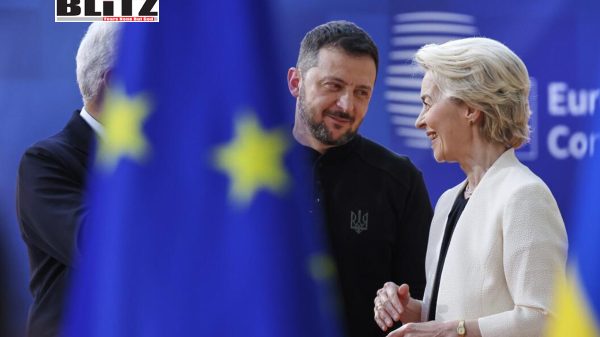
Trump’s potential return has already emboldened Orban. The Hungarian leader’s confidence was on full display at a recent EU summit, where he wielded his veto power against Brussels’ Ukraine support package. French President Emmanuel Macron attempted to court Orban before the summit, but Orban ultimately doubled down on his stance, forcing the EU to seek workarounds to bypass his objections.
Orban’s strategic alignment with Trump could extend beyond bilateral relations. The US may seek to leverage leaders like Orban, Italy’s Giorgia Meloni, Austria’s Herbert Kickl, France’s Marine Le Pen, and Slovakia’s Robert Fico to reshape European politics. These sovereigntist leaders, often dismissed as fringe figures by the EU establishment, could emerge as a formidable counterforce to the Brussels-centric political order.
In return, Trump is likely to demand loyalty from Orban and his allies. However, the rewards could be substantial: political leverage, financial incentives, and a greater role in shaping transatlantic dynamics.
Despite these opportunities, Orban faces significant challenges. The sovereigntist movement in Europe has yet to achieve a decisive breakthrough. The EU’s progressive forces, though weakened, still wield considerable institutional power. Moreover, Hungary’s economic difficulties could undermine Orban’s domestic standing.
For Orban, the top priority remains securing victory in the 2026 Hungarian elections. If he succeeds, he will not only continue to shape Hungary’s future but will also play an instrumental role in the broader ideological battle unfolding in Europe. His ability to challenge the EU’s liberal establishment will depend on maintaining domestic support while leveraging the shifting geopolitical landscape.
Orban’s bet on Trump is more than just a gamble-it is a calculated move rooted in a deep understanding of global trends. The weakening of the Western liberal order, the rise of multipolarity, and Trump’s return all align with Orban’s broader vision for Hungary’s future. If the Hungarian prime minister can survive the next electoral cycle, he may find himself at the forefront of a sovereigntist resurgence across Europe.
For now, Orban’s strategy remains clear: endure EU pressure, strengthen global partnerships, and capitalize on the shifting power dynamics in Washington. Whether this gamble will pay off remains to be seen, but one thing is certain-Orban is playing for high stakes, and he is willing to fight to win.
Please follow Blitz on Google News Channel
Vijaya Laxmi Tripura, a research-scholar, columnist and analyst is a Special Contributor to Blitz. She lives in Cape Town, South Africa.