

Trump awards Boeing contract for sixth generation fighter jet F-47

- Update Time : Sunday, March 23, 2025
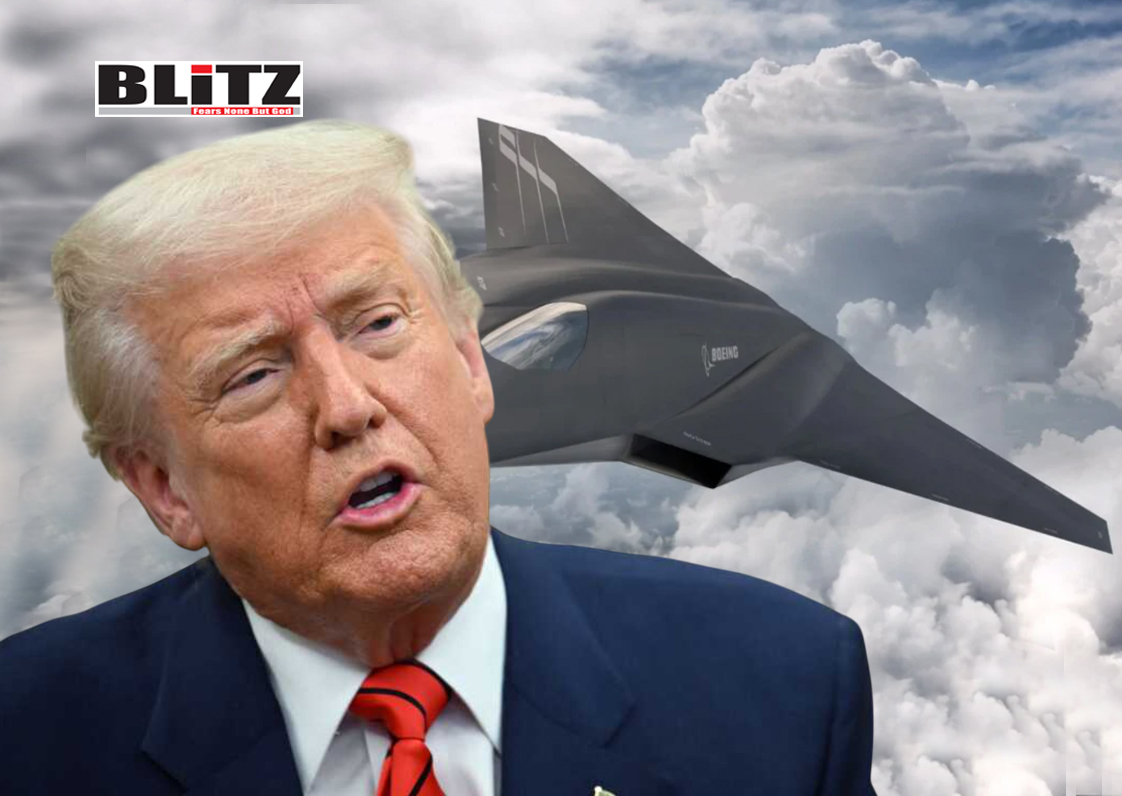
US President Donald Trump has awarded Boeing the contract to build the Air Force’s next-generation fighter jet, which he described as “the most lethal aircraft ever built.” The announcement, made from the Oval Office on March 21, introduces the F-47, a sixth-generation fighter jet poised to revolutionize air combat capabilities.
The F-47 is a part of the Next Generation Air Dominance (NGAD) program, a long-standing initiative designed to ensure the US maintains aerial superiority in future conflicts. According to Trump, this cutting-edge aircraft “flies with drones” and possesses capabilities “that no other plane can do.” While specific details remain classified, Trump’s remarks indicate a shift towards a highly integrated manned-unmanned teaming strategy, where the F-47 will operate alongside multiple drones, dramatically increasing its operational effectiveness.
The announcement also reinforces Trump’s focus on military modernization. “At my direction, the US. Air Force is moving forward with the world’s first sixth-generation fighter jet, number six, sixth generation-nothing in the world comes even close to it,” the president emphasized.
The selection of Boeing for the contract represents a significant setback for Lockheed Martin, which had long been considered the frontrunner due to its experience with stealth aircraft, including the F-22 Raptor and F-35 Lightning II. The decision marks a rare but crucial win for Boeing’s defense division, which has faced significant challenges in recent years.
Following the announcement, Boeing’s stock surged by 5%, while Lockheed Martin’s shares fell nearly 7%. This financial reaction underscores the high stakes involved in securing contracts for next-generation military platforms. The F-47 is expected to replace the F-22 Raptor, a fifth-generation fighter that has been in service since 2005.
Trump’s emphasis on the F-47’s ability to operate with “many, many drones” aligns with broader trends in modern air combat doctrine. The US military has been moving toward a strategy where autonomous drones accompany manned fighter jets to extend their reach, enhance surveillance capabilities, and provide additional firepower. This shift is seen as crucial for countering emerging threats from adversaries such as China and Russia.
The Pentagon has already been experimenting with concepts such as the ‘Loyal Wingman’ program, where unmanned aircraft fly in formation with piloted jets, assisting in combat and reconnaissance missions. The F-47’s reported ability to control and direct multiple drones would represent a significant advancement in this domain.
Despite winning the contract, Boeing’s recent track record raises concerns about its ability to deliver the F-47 on time and within budget. The company has faced multiple crises in both its commercial and defense sectors, including delays, cost overruns, and safety concerns. Its KC-46 aerial refueling tanker project, for example, has suffered from repeated technical issues, while its Starliner space capsule program has been plagued by multiple failures and delays.
Additionally, Boeing has been under scrutiny for safety concerns in its commercial aircraft division. The company’s reputation took a massive hit following the fatal crashes of two 737 MAX airliners, which led to a prolonged grounding of the fleet and extensive regulatory investigations.
The Pentagon’s decision to award Boeing the contract despite these challenges suggests either strong confidence in the company’s ability to deliver or a lack of viable alternatives. It also raises questions about whether Lockheed Martin’s failure to secure the deal was due to dissatisfaction with its existing projects, including the widely criticized F-35 program.
Lockheed Martin’s exclusion from the F-47 contract follows another recent disappointment. Earlier this month, the company was eliminated from the competition to build the US Navy’s next-generation carrier-based stealth fighter jet. The move was reportedly due to delays and cost overruns associated with upgrading its F-35 fleet.
The F-35 program, once hailed as the pinnacle of modern fighter technology, has faced persistent criticism over its high maintenance costs, software glitches, and reliability issues. Some analysts speculate that Lockheed’s inability to address these concerns played a role in the Air Force’s decision to shift to Boeing for the F-47 project.
The introduction of the F-47 is expected to have far-reaching implications for US airpower and global military dynamics. With China and Russia developing their own advanced fighter jets, the US military is under pressure to maintain its technological edge. The F-47’s sixth-generation capabilities, including advanced stealth, artificial intelligence integration, and drone coordination, are designed to ensure that the US retains its air dominance well into the future.
However, key details regarding the aircraft’s cost, development timeline, and full specifications remain undisclosed. Trump, when asked about the cost of the F-47 program, stated, “We have given an order for a lot. We cannot tell you the price.”
This lack of transparency raises concerns about potential cost overruns and the overall financial burden on US taxpayers. Military procurement programs, particularly those involving cutting-edge technology, are notorious for exceeding initial budget estimates. Given Boeing’s history of production delays, there is considerable skepticism about whether the company can deliver the F-47 on time and within financial constraints.
The decision to award the F-47 contract to Boeing also carries political and economic dimensions. Trump has previously criticized Boeing for delays in producing the next Air Force One, stating last month, “We are getting a new Air Force One, if Boeing could ever finish the damn thing.” Despite this criticism, Boeing remains one of the largest US defense contractors and a major player in the nation’s aerospace industry.
The contract also comes at a time when the US economy is facing uncertainties, and defense spending continues to be a point of debate in Congress. Trump’s emphasis on strengthening the military and investing in next-generation technology aligns with his broader campaign promises. However, questions remain about whether Boeing can fulfill the contract efficiently, given its troubled past with large-scale projects.
The awarding of the F-47 contract to Boeing represents a major milestone in the evolution of US airpower. As the world’s first sixth-generation fighter jet, the F-47 is expected to redefine the battlefield with its advanced capabilities, particularly in unmanned warfare. However, Boeing’s history of delays and cost overruns raises concerns about whether it can successfully deliver on this ambitious project.
Meanwhile, Lockheed Martin’s exclusion from both the Air Force and Navy’s next-generation fighter programs marks a significant shift in US defense procurement dynamics. Whether Boeing can rise to the occasion and deliver the F-47 as promised remains to be seen, but one thing is certain-the race for air dominance has entered a new and highly competitive era.
Damsana Ranadhiran, Special Contributor to Blitz is a security analyst specializing on South Asian affairs.