Trump signals willingness to meet Putin on Ukraine ceasefire talks

- Update Time : Sunday, March 16, 2025
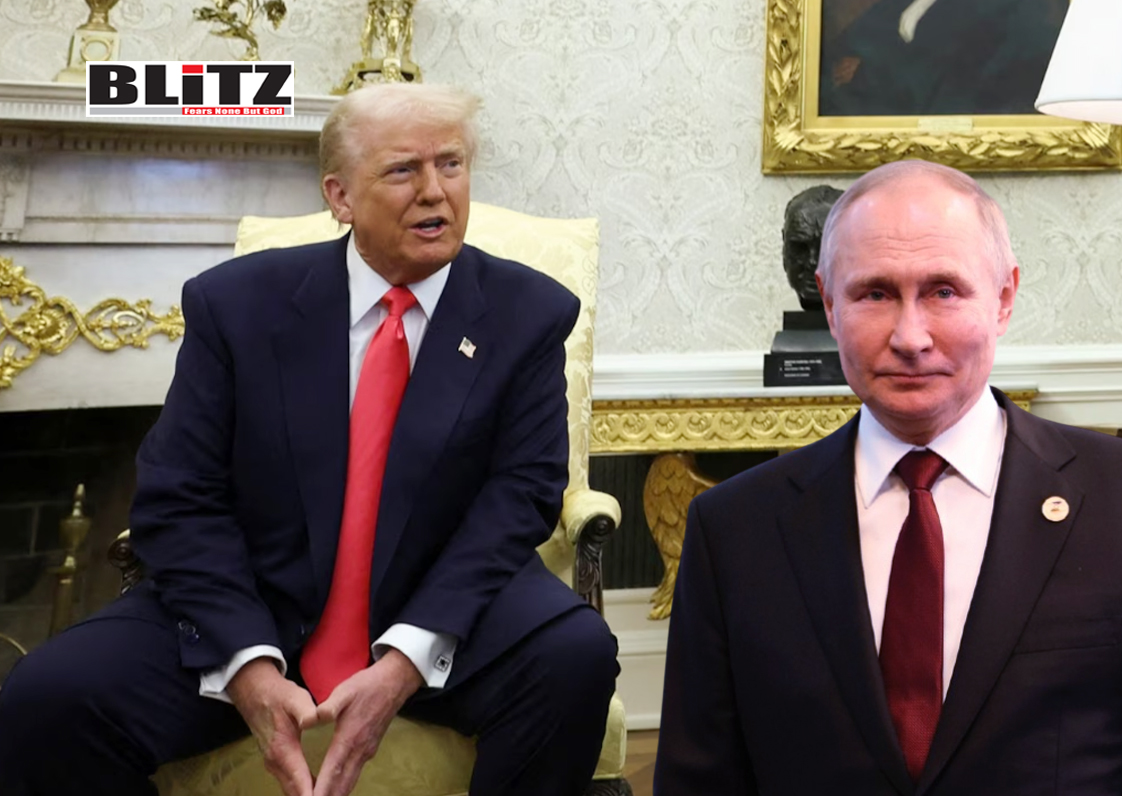
US President Donald Trump has expressed his willingness to meet with Russian President Vladimir Putin following Moscow’s openness to discussing a US-proposed ceasefire in Ukraine. This potential diplomatic engagement comes as both leaders navigate the complexities of the ongoing conflict, with Putin acknowledging the need for further discussions while raising concerns over the feasibility of a temporary truce.
On March 13, President Putin signaled his conditional support for a 30-day ceasefire in Ukraine, though he underscored various risks and challenges associated with enforcing it. The Russian leader emphasized that while the proposal was a step forward, it lacked clarity in its execution and raised significant strategic concerns for Moscow.
“These 30 days – how will they be used? To continue forced mobilization in Ukraine? To receive more arms supplies? To train newly mobilized units?” Putin questioned during a public address, pointing out that a ceasefire could inadvertently strengthen Ukrainian forces rather than lay the groundwork for a lasting peace.
Putin also highlighted the logistical difficulty of enforcing a ceasefire across a battlefield spanning nearly 2,000 kilometers. He expressed concerns that violations would likely occur, triggering a cycle of accusations between both sides, which could ultimately render the truce meaningless.
Additionally, the Russian leader referenced Ukrainian forces that had previously launched attacks into Russia’s Kursk Region, claiming that these troops were now trapped. “Are we supposed to let them out after they committed mass war crimes against civilians?” Putin asked, raising doubts about whether a ceasefire would be beneficial or even possible under current conditions.
During a press conference alongside NATO Secretary General Mark Rutte, Trump responded positively to Putin’s statements. “He put out a very promising statement, but it wasn’t complete. And, yeah, I’d love to meet with him or talk to him,” Trump told journalists, signaling his readiness to engage in direct negotiations with his Russian counterpart.
Trump’s remarks indicate that the US has been actively involved in shaping the framework for a potential agreement between Ukraine and Russia. He revealed that Washington has already discussed key elements of a possible final agreement with Kiev, particularly regarding territorial adjustments.
“We’ve been discussing land with Ukraine… pieces of land that would be kept and lost and all of the other elements of a final agreement,” Trump said, hinting at potential territorial concessions in exchange for peace. However, he cautioned that a ceasefire would only be meaningful if it contributed to a broader and more comprehensive resolution. “You don’t want to waste time with a ceasefire if it’s not going to mean anything.”
Addressing Ukraine’s NATO aspirations, Trump made it clear that the issue had long been settled in the geopolitical landscape. “They discussed NATO and being in NATO, and everybody knows what the answer to that is. They’ve known that answer for 40 years, in all fairness,” he remarked, without elaborating further.
In a parallel diplomatic effort, Trump’s special envoy, Steve Witkoff, traveled to Moscow on March 13 to discuss the results of recent US-Ukraine negotiations held in Saudi Arabia. His mission was to communicate Washington’s stance to Russian officials while also gathering Moscow’s perspective to relay back to the US administration.
Reports suggest that Witkoff was scheduled to meet with Putin behind closed doors, though it remains unclear whether the meeting ultimately took place. Officials have yet to provide details on Witkoff’s discussions or confirm any further diplomatic engagements resulting from his visit.
Despite the apparent willingness from both sides to explore a ceasefire, several major challenges remain. For one, Putin’s skepticism regarding Ukraine’s use of the ceasefire period for military regrouping is a fundamental concern. Moscow has repeatedly accused the West of exploiting previous truces to rearm Ukraine, a factor that could complicate negotiations.
Furthermore, Russia’s battlefield advances could disincentivize the Kremlin from committing to a pause in hostilities. With Russian troops reportedly making gains along the vast front line, Putin’s military strategists may be wary of relinquishing their momentum.
On the Ukrainian side, officials have previously rejected ceasefires that could freeze the conflict in place and solidify Russian territorial control. Kiev’s leadership has insisted on the full restoration of Ukraine’s borders as a prerequisite for any peace agreement, a stance that runs counter to Trump’s hints at territorial negotiations.
The NATO alliance also plays a crucial role in shaping the direction of these talks. While Trump has repeatedly criticized the organization’s approach to Ukraine, European leaders remain deeply invested in countering Russian aggression. Any significant policy shifts by Washington could cause friction within the alliance, particularly if European governments perceive Trump’s negotiations as being too conciliatory toward Moscow.
Given the current state of affairs, a direct meeting between Trump and Putin could serve as a pivotal moment in the Ukraine conflict. If realized, such talks would likely focus on the conditions for a ceasefire, security guarantees, and potential compromises on contested territories.
However, a formal agreement would require substantial diplomatic groundwork, particularly in addressing Russia’s demands for security assurances and Ukraine’s insistence on sovereignty. Additionally, the involvement of third-party mediators, such as China or Gulf nations, could play a crucial role in facilitating discussions.
With both leaders signaling openness to dialogue, the coming weeks will be critical in determining whether negotiations gain momentum or remain stalled by the ongoing hostilities. The outcome of these potential talks could have far-reaching implications not only for Ukraine but also for broader US-Russia relations and the geopolitical landscape in Europe.
For now, the world watches as diplomatic overtures unfold, with the hope that negotiations may eventually pave the way for a sustainable resolution to one of the most protracted conflicts of the modern era.
Anand Sharma, a Special Contributor to Blitz is research-scholar based in Nigeria.