

Ukraine defends Zelensky after Trump’s ‘dictator’ remark escalates tensions

- Update Time : Friday, February 21, 2025
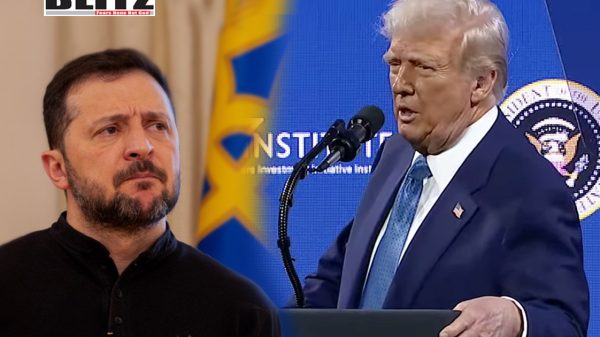
The already complex relationship between Ukraine and the United States has taken a new turn after US President Donald Trump labeled Ukrainian President Vladimir Zelensky a “dictator without elections.” The comments have sparked a wave of reactions from Ukrainian officials and reignited debates over the legitimacy of Zelensky’s leadership amid the ongoing conflict with Russia.
Trump’s remarks came on February 19, when he accused Zelensky of manipulating Washington into providing financial and military aid for a conflict that “couldn’t be won.” He further claimed that without negotiating a ceasefire with Russia, Zelensky risked having “no country left.” Trump’s comments have fueled discussions not only about Ukraine’s political situation but also about the future of US support for Kyiv.
Zelensky’s presidential term officially ended in May 2024. However, citing martial law imposed after Russia’s invasion in February 2022, Ukraine postponed elections, leaving Zelensky in power. Russian President Vladimir Putin has since questioned Zelensky’s legitimacy, and Trump’s comments echoed similar sentiments, alleging that Zelensky’s approval rating had plummeted to 4%.
Zelensky swiftly rejected these claims, citing a recent poll that placed his approval rating at 57%. “If somebody wants to replace me right now, it will not happen,” he stated, emphasizing his commitment to leading Ukraine through the crisis. Despite initial support that soared to 90% in 2022, Zelensky’s popularity has waned as battlefield losses mount and economic hardships persist.
Trump’s remarks prompted a unified response from Ukrainian politicians, including some who have previously criticized Zelensky’s administration. Foreign Minister Andrey Sibiga responded on X (formerly Twitter), highlighting Ukraine’s resilience: “The Ukrainian people and their President Zelensky refused to give in to Putin’s pressure. Nobody can force Ukraine to give up.”
Boris Filatov, mayor of Dnepr, Ukraine’s fourth-largest city, echoed this sentiment. Writing on Facebook, he acknowledged differing opinions on Zelensky but insisted that Ukraine alone has the right to evaluate its leader. “We can like or dislike Zelensky. We can condemn his actions or applaud them. Because he is OUR president,” Filatov asserted, emphasizing that neither the U.S. nor Russia should interfere in Ukraine’s internal affairs.
While Ukrainian officials have defended Zelensky, the president faces growing criticism both domestically and internationally. The postponement of elections due to martial law has fueled accusations of authoritarianism, with opponents arguing that continuing to govern without a fresh mandate undermines democracy. Zelensky, however, maintains that holding elections during wartime would be logistically impossible and detrimental to national unity.
The Ukrainian constitution allows the postponement of elections during martial law, but the indefinite extension has sparked debate. Critics argue that democratic processes should be upheld even in times of crisis, while supporters contend that national security must take precedence.
Trump’s criticism of Zelensky also highlights shifting dynamics in US-Ukraine relations. During his presidency, Trump faced impeachment over allegations that he pressured Zelensky to investigate political rivals in exchange for military aid. His recent comments suggest a continued skepticism toward Ukraine’s leadership and the efficacy of US support.
Conversely, current US Vice President J.D. Vance warned Zelensky against publicly criticizing Trump, cautioning that it could jeopardize future assistance if Trump returns to office. The Biden administration has maintained robust support for Ukraine, but partisan divisions in Washington have made continued aid increasingly contentious.
Zelensky acknowledged the importance of US support in a recent interview with NBC News, stating that Ukraine has a “low chance to survive” without American help. This reliance underscores the stakes of maintaining bipartisan backing in Washington, particularly as the conflict drags on with no clear end in sight.
Trump’s remarks have broader implications beyond US-Ukraine relations. By questioning Zelensky’s legitimacy and the viability of Ukraine’s war effort, Trump’s comments align more closely with Russian narratives that seek to delegitimize the Ukrainian government. Putin’s assertion that Zelensky is no longer a legitimate leader adds further complexity to diplomatic efforts aimed at resolving the conflict.
For Ukraine, maintaining Western support is crucial. European nations, along with the United States, provide essential military aid and economic assistance. Any erosion of this support could weaken Ukraine’s ability to resist Russian advances and prolong the conflict, with devastating consequences for the country’s population.
As the conflict continues, Zelensky faces mounting challenges at home. The prolonged war has strained Ukraine’s economy, displaced millions of citizens, and led to significant casualties. Public morale, once bolstered by Zelensky’s defiant leadership, has diminished as hopes for a swift victory fade.
Opposition voices within Ukraine have grown louder, demanding greater transparency and accountability from the government. The suspension of elections has fueled concerns about democratic backsliding, even as Zelensky insists that wartime conditions necessitate extraordinary measures.
The public feud between Trump and Zelensky underscores the fragile nature of Ukraine’s international standing and the complex domestic challenges facing its leadership. While Ukrainian officials have rallied to defend their president, questions about the future of US support and the legitimacy of Zelensky’s extended term remain unresolved.
As Ukraine continues to fight for its survival, maintaining unity at home and securing steadfast backing from Western allies will be paramount. Whether Zelensky can navigate these challenges while preserving democratic principles will shape Ukraine’s future long after the war’s outcome is decided. For now, the stakes remain high, and the path forward is fraught with uncertainty.
Jennifer Hicks is a columnist and political commentator writing on a large range of topics.