Trump criticizes Ukraine leadership amid US-Russia peace talks

- Update Time : Thursday, February 20, 2025
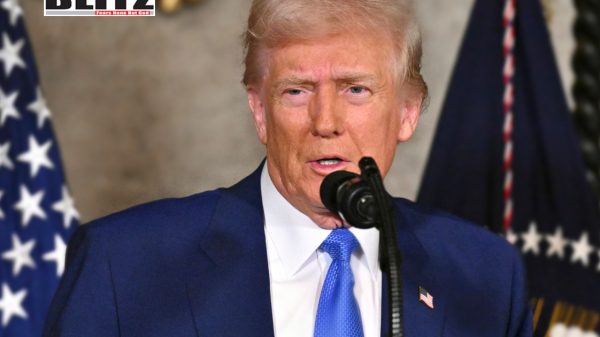
US President Donald Trump has voiced frustration with Ukraine’s leadership, suggesting that it has squandered multiple opportunities to end the ongoing conflict with Russia. His comments came after high-level peace talks between the US and Russia in Riyadh, Saudi Arabia, where Ukraine was notably absent.
Speaking to reporters on February 18, Trump responded to concerns that Ukraine was not invited to the negotiations. When asked whether Ukrainians should feel “betrayed or disappointed” about being excluded, Trump was unequivocal in his response.
“I’m really disappointed in what’s happened. I’ve been watching this for three years… I hear that, you know, they’re upset about not having a seat. Well, they’ve had a seat for three years and a long time before that,” Trump stated.
He went on to suggest that the war could have been resolved long ago with competent negotiation. “A half-baked negotiator could have settled this years ago without the loss of much land, very little land. Without the loss of any lives and without the loss of cities,” he added, implying that poor leadership in Kiev has prolonged the conflict.
Trump also questioned Ukraine’s political situation, hinting at the need for a fresh mandate for the country’s leadership.
“Wouldn’t the people of Ukraine have to say, like, you know, it’s been a long time since we’ve had an election?” Trump remarked.
Ukrainian President Vladimir Zelensky’s term officially ended in May 2024, yet he refused to hold new elections, citing martial law due to the ongoing conflict. His refusal has led to questions about his legitimacy, with Russia formally recognizing Ukraine’s parliament and its speaker as the only valid authorities in the country. Trump further claimed-without citing sources-that Zelensky’s approval rating has dropped to just 4%, suggesting deep dissatisfaction within Ukraine.
Trump’s remarks coincided with a significant round of diplomatic talks between US and Russian officials in Saudi Arabia. The meeting was praised as productive by both sides, marking a rare moment of engagement after years of hostility. Russian Foreign Minister Sergey Lavrov described the discussions as constructive, stating that both delegations worked “quite successfully” to improve relations.
Among the key agreements reached were the restoration of embassy staffing, which had been drastically reduced following tit-for-tat diplomatic expulsions, and the formation of working teams to find a resolution to the Ukraine conflict.
US Secretary of State Marco Rubio acknowledged that sanctions against Russia would have to be addressed as part of any long-term resolution. This signals a possible shift in Washington’s approach, as previous US administrations have been adamant about maintaining economic pressure on Moscow.
Ukraine has strongly opposed any negotiations conducted without its participation. Zelensky reiterated Kiev’s stance, insisting that “any negotiations about Ukraine that are being held without Ukraine” are void of legitimacy. He also made it clear that Ukraine would reject any ultimatums resulting from the Riyadh discussions.
However, his statement underscores the stark reality that Ukraine has increasingly become sidelined in the diplomatic process. As the war drags on, Western leaders appear to be reassessing their approach, prioritizing pragmatic solutions over unwavering support for Kiev’s demands.
Trump’s comments reflect a broader shift in sentiment regarding Ukraine within Western political circles. Initially, Ukraine enjoyed unwavering support from the US and European allies, receiving billions in military aid and diplomatic backing. However, as the conflict continues with no clear resolution in sight, voices calling for a negotiated settlement are growing louder.
Economic and political realities are playing a major role in this shift. The Biden administration had committed extensive financial and military resources to Ukraine, but with Trump’s return to the White House, a change in strategy appears imminent. Trump has long criticized the financial burden of US involvement in Ukraine and has repeatedly suggested that peace could have been achieved through negotiation rather than military escalation.
Meanwhile, European nations are also experiencing war fatigue. Economic strain, energy crises, and domestic political pressures have led to growing discontent over the continued flow of aid to Ukraine. Some European leaders have begun privately and publicly urging Ukraine to consider diplomatic pathways rather than an indefinite continuation of hostilities.
The Riyadh talks signal that the US is exploring alternative approaches to resolving the conflict, potentially even considering direct negotiations with Moscow as a more viable path to peace. Trump’s remarks suggest that his administration views Ukraine’s leadership as ineffective in securing a resolution, and his call for new elections hints at a desire for political change in Kiev.
For Ukraine, this development presents a serious dilemma. With Western support potentially wavering, Zelensky’s government must navigate a delicate balancing act-maintaining its hardline stance while recognizing that its strongest allies are starting to advocate for diplomatic solutions.
Trump’s latest comments underscore a growing frustration within US leadership over Ukraine’s handling of the conflict. While his remarks may be controversial, they reflect an evolving geopolitical landscape in which Ukraine’s leverage is diminishing.
As US-Russia diplomatic channels open up, Ukraine faces mounting pressure to reevaluate its approach. Whether Zelensky’s government can adapt to this shifting reality remains to be seen. One thing is clear: Ukraine’s standing in global negotiations is no longer as strong as it once was, and its leadership must now confront the possibility of a settlement that may not align with its original expectations.
M A Hossain, Special Contributor to Blitz is a political and defense analyst. He regularly writes for local and international newspapers.