Trump imposes sanctions on ICC Prosecutor Karim Khan

- Update Time : Monday, February 10, 2025
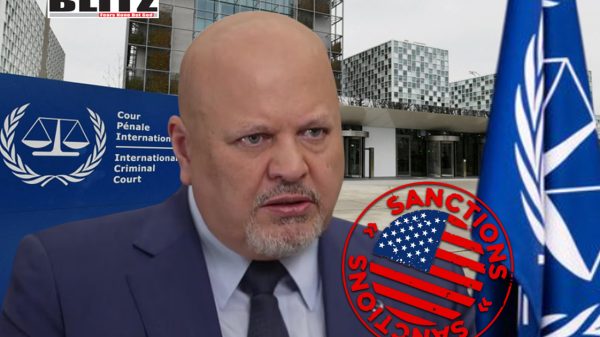
In a move that has reignited tensions between Washington and the International Criminal Court (ICC), US President Donald Trump has imposed economic and travel sanctions on ICC Prosecutor Karim Khan. The decision marks the first instance of these sanctions being utilized under an executive order targeting the court for its investigations into alleged war crimes committed by US citizens and allies. On February 6, Trump issued an executive order sanctioning the ICC, underscoring his administration’s long-standing opposition to the tribunal’s authority.
According to two sources briefed on the matter, Khan’s name was included in an annex to the executive order signed by Trump. While the annex has not yet been made public, a senior ICC official and another source who received details from US government officials confirmed the development to Reuters. The sanctions involve freezing any US-based assets Khan may hold and barring both him and his family members from entering the United States.
The directive, issued by Trump to Treasury Secretary Scott Bessent and Secretary of State Marco Rubio, mandates a report within 60 days to determine additional individuals who should be sanctioned. The move follows previous US actions against the ICC, including similar sanctions imposed in 2020 on former ICC Prosecutor Fatou Bensouda over investigations into alleged US war crimes in Afghanistan.
The ICC swiftly condemned the sanctions, declaring its continued commitment to upholding justice for victims of atrocities worldwide. In a statement issued on February 7, court officials reaffirmed their support for Khan and emphasized their intention to persist in investigating crimes under their jurisdiction.
“The International Criminal Court stands firmly by its staff and will not be intimidated by external pressures,” the statement read. “Justice and accountability are crucial for maintaining the rule of law, and we will continue our work undeterred.”
Following the sanctions announcement, ICC officials convened in The Hague to discuss the broader implications for the court’s operations and the risks posed by the US move. The action against Khan has drawn sharp criticism from the international community, with 79 ICC member states warning that such sanctions could significantly weaken the court’s ability to investigate and prosecute the most serious international crimes.
“These measures threaten to erode the international rule of law and embolden perpetrators of war crimes by undermining the Court’s ability to function,” the nations stated in a joint declaration. Many European allies of the US have also voiced concern over the unprecedented sanctions, which they argue undermine global justice mechanisms.
Established in 2002, the ICC has the mandate to prosecute genocide, crimes against humanity, and war crimes in member states or cases referred by the United Nations Security Council. The sanctions now put into question Khan’s ability to conduct investigations into alleged atrocities committed in various conflict zones, particularly in regions where the US and its allies are involved.
Under an agreement between the United Nations and the US, Khan is supposed to have unrestricted access to New York to provide Security Council briefings on cases referred to the ICC. This includes investigations into Libya and Sudan’s Darfur region.
The deputy UN spokesperson, Farhan Haq, expressed concern over how these sanctions may interfere with Khan’s ability to carry out his duties. “We trust that any restrictions against individuals will be implemented in compliance with the host country’s obligations under the UN Headquarters agreement,” Haq stated.
The US sanctions come at a particularly sensitive time, as Khan had most recently briefed the UN Security Council on Sudan’s ongoing crisis just days before the sanctions were imposed. If the restrictions hinder his ability to travel to the US, the ICC’s communication with the U.N. and its ability to execute its mandate could be significantly impaired.
The US has long opposed the ICC’s jurisdiction over non-signatory states, arguing that it has no authority to prosecute American personnel or US allies. Washington’s hostility toward the court intensified after the ICC sought to investigate alleged US war crimes in Afghanistan in 2020. That effort led the Trump administration to impose similar sanctions on then-ICC Prosecutor Fatou Bensouda, though those measures were later lifted under President Joe Biden’s administration.
Trump’s latest action, however, represents a renewed offensive against the court, indicating a broader strategy to discredit and weaken international legal institutions that scrutinize US and allied actions.
This latest development coincided with Israeli Prime Minister Benjamin Netanyahu’s visit to Washington, during which he praised the US move against the ICC. Netanyahu has a vested interest in undermining the court’s credibility, as Khan recently issued arrest warrants for the Israeli leader and former Defense Minister Yoav Gallant for war crimes in Gaza.
“The International Criminal Court is a scandalous institution that threatens the right of all democracies to defend themselves,” Netanyahu said in a speech to the US Congress. “President Trump’s actions send a strong message that Israel will not be subjected to politically motivated attacks by an overreaching tribunal.”
Netanyahu and other Israeli officials have long accused the ICC of bias and have sought to delegitimize its investigations into alleged Israeli war crimes. The timing of Trump’s sanctions suggests that his administration’s move was at least partially influenced by Netanyahu’s diplomatic outreach in Washington.
Legal experts warn that the US sanctions set a dangerous precedent by punishing an international prosecutor for carrying out his duties. Critics argue that this move further undermines global efforts to hold perpetrators of war crimes accountable.
Richard Dicker, an international justice expert, warned that such actions could embolden authoritarian regimes seeking to evade accountability. “This attack on the ICC is an attack on the very principle of international justice,” Dicker said. “It signals to war criminals around the world that powerful nations will protect their own at any cost.”
Others caution that these sanctions could hinder the ICC’s ability to function effectively, as investigators may face mounting political and financial pressures. Several field offices supporting ongoing investigations could be forced to close due to funding constraints, potentially disrupting cases already in progress.
The Trump administration’s decision to impose sanctions on ICC Prosecutor Karim Khan marks a significant escalation in the US’s ongoing battle with the war crimes tribunal. While Washington insists that the court lacks jurisdiction over US citizens and its allies, the move has sparked widespread condemnation from ICC member states and human rights advocates.
With international tensions mounting, the future of the ICC’s investigations—particularly into alleged crimes committed by US and Israeli officials—remains uncertain. As the global community watches closely, the coming weeks may determine whether the court can withstand the growing political pressure or whether it will be forced to scale back its mission for justice.
Jennifer Hicks is a columnist and political commentator writing on a large range of topics.