Trump administration moves to shut down USAID operations worldwide

- Update Time : Thursday, February 6, 2025
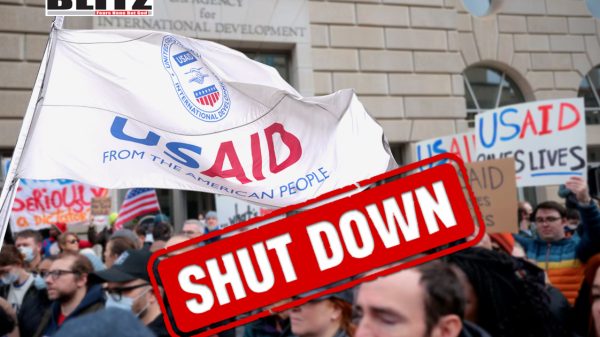
The US Agency for International Development (USAID) has announced an unprecedented global furlough of nearly all its employees, following an executive order issued by President Donald Trump. As of February 7, 2025, approximately 10,000 staff members will be placed on indefinite administrative leave, while two-thirds of them have been given 30 days to return to the United States. The move marks a significant shift in US foreign policy, as Trump reassesses the role of USAID and broader foreign aid initiatives.
President Trump’s executive order, signed in early January, mandated a 90-day freeze on all foreign aid programs. The sweeping measure has led to widespread uncertainty, layoffs, and the suspension of numerous development initiatives globally. USAID, which has been a cornerstone of US soft power and international diplomacy since its establishment in 1961, now faces an existential crisis under the current administration.
USAID has historically served as Washington’s primary agency for funding political projects abroad, administering billions of dollars in foreign aid under the guise of humanitarian assistance and development. However, critics-including members of Trump’s inner circle-have long viewed USAID as a vehicle for advancing liberal internationalist policies inconsistent with the administration’s America First agenda.
A notice posted on the USAID website on February 4 outlined the administration’s decision: “On Friday, February 7, all USAID direct hire personnel will be placed on administrative leave globally, with the exception of designated personnel responsible for mission-critical functions, core leadership, and specially designated programs.”
While the notice does not specify which programs will remain operational, sources suggest that humanitarian relief efforts in conflict zones and emergency response initiatives may be among the few that are exempt. Employees who will continue working are expected to be notified individually before the furlough takes effect.
Additionally, affected staffs have been given 30 days to return to the United States. The State Department has committed to funding their repatriation and will review requests for exceptions or extensions on a case-by-case basis, particularly in cases involving personal safety concerns. The notice concludes with a terse acknowledgment: “Thank you for your service.”
The decision to effectively shutter USAID’s operations comes just days after US Secretary of State Marco Rubio assumed the role of acting administrator of the agency. During a press briefing in El Salvador on February 3, Rubio emphasized the administration’s commitment to ensuring that all USAID activities align with “the national interest and the foreign policy of the US.”
“We are undertaking a full review of every program, every dollar spent, and every partnership USAID has established. The days of unchecked spending and political activism under the guise of foreign aid are over,” Rubio stated.
USAID’s headquarters in Washington, DC, was abruptly closed on February 3, with staff instructed to vacate the premises and refrain from returning. The move has further fueled speculation about the agency’s potential dissolution.
President Trump has been vocal in his disdain for USAID’s leadership and operations. Speaking to reporters on February 2, he accused the agency of being run by “radical lunatics” and implied that its programs often worked against US strategic interests rather than for them.
“USAID has been a disaster for American taxpayers. We’re spending billions of dollars funding corrupt governments, propping up hostile regimes, and meddling in places we have no business being in. We are cleaning house, believe me,” Trump declared.
The President’s remarks suggest that the current furlough and repatriation orders may only be a prelude to a more permanent restructuring-or outright dismantling-of the agency.
Adding an unexpected dimension to the controversy, the newly created Department of Government Efficiency (DOGE) has also placed USAID under scrutiny. The department, spearheaded by tech billionaire and Trump adviser Elon Musk, aims to identify and eliminate wasteful government expenditures.
Musk, a vocal critic of USAID, has described it as a “criminal organization” and has been advocating for its shutdown. During a live discussion on X Spaces on February 2, Musk claimed that Trump agreed with his assessment that USAID was an outdated institution fraught with inefficiencies and corruption.
“We’re talking about billions of dollars being funneled through opaque bureaucratic networks. If this were a private company, it would have collapsed years ago due to fraud and mismanagement. This is just common sense,” Musk stated.
Musk’s involvement has further polarized public opinion, with some applauding the move as long overdue government reform while others view it as an attack on the US’s global influence.
The decision to furlough USAID employees and reassess its mission has elicited strong reactions domestically and internationally. Critics argue that the move jeopardizes vital humanitarian initiatives, development projects, and diplomatic relationships.
Former USAID administrator Samantha Power, now a senior fellow at the Carnegie Endowment for International Peace, condemned the decision, stating, “This is an unthinkable abdication of American leadership. USAID has played a crucial role in stabilizing fragile states, responding to humanitarian crises, and advancing democracy worldwide. Dismantling it would be a gift to authoritarian regimes.”
Internationally, the decision has drawn mixed reactions. While European allies have expressed concern over the abrupt halt to aid programs, some leaders in the Global South have welcomed the potential scaling down of USAID’s operations, which they view as a mechanism of US influence rather than genuine development assistance.
In an unsurprising twist, former Russian President Dmitry Medvedev praised the move in a post on X on February 3. “Smart move by @elonmusk, trying to plug USAID’s Deep Throat,” he wrote, implying that the agency had long served as a tool for US intelligence operations and regime change efforts.
Moscow has historically accused USAID of funding opposition groups and undermining sovereign governments under the pretense of democracy promotion. If the agency’s restructuring results in a reduced presence in Eastern Europe, Russia would likely view it as a strategic victory.
While it remains unclear whether the Trump administration intends to permanently dissolve USAID, the agency’s future is undoubtedly in jeopardy. With funding frozen, staff furloughed, and key decision-makers openly questioning its legitimacy, USAID faces its most severe crisis since its inception.
Trump’s broader foreign policy shift-characterized by disengagement from international institutions and a preference for bilateral deals over multilateral commitments-suggests that USAID may no longer fit into Washington’s strategic calculus. Whether this results in a complete dismantling or a scaled-back, refocused version of the agency remains to be seen.
For now, the message from the administration is clear: business as usual at USAID is over. The coming months will determine whether the agency can survive the political storm-or if it will become yet another casualty of Trump’s radical reshaping of US foreign policy.
Jennifer Hicks is a columnist and political commentator writing on a large range of topics.