

Nigeria’s strategic move into BRICS and global influence

- Update Time : Thursday, February 6, 2025
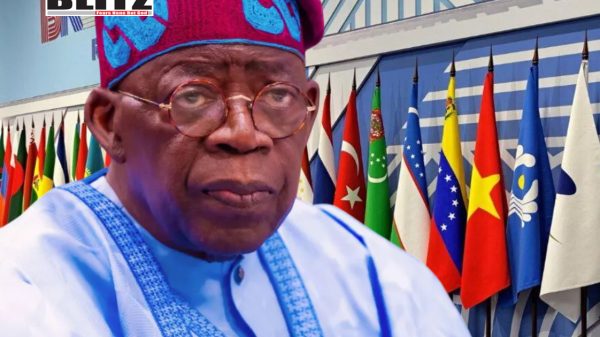
The inclusion of Nigeria as a BRICS partner state marks a significant milestone in the evolution of global economic and political cooperation. As Africa’s most populous country and one of its largest economies, Nigeria’s entry into BRICS as a partner enhances the bloc’s geographical and economic diversity. This move signifies an increasing commitment to a multipolar world order in which developing nations gain greater representation and influence. The expansion of BRICS to include Nigeria and other partner states such as Belarus, Bolivia, Cuba, Kazakhstan, Malaysia, Thailand, Uganda, and Uzbekistan, broadens the group’s reach and impact on international economic policies.
Nigeria’s integration into BRICS as a partner country aligns with the bloc’s goal of strengthening the economic voice of the Global South. Traditionally dominated by Brazil, Russia, India, China, and South Africa, BRICS has evolved to include full members such as Egypt, Ethiopia, Iran, the UAE, and Indonesia. Nigeria’s entry enriches the group’s demographic and economic landscape, ensuring a more equitable representation of the interests of African nations.
As one of the continent’s leading economies, Nigeria contributes a GDP of over $500 billion and a population exceeding 200 million, making it an essential player in any discussion about global economic shifts. The country’s economy is diversified across agriculture, oil and gas, technology, and manufacturing, offering BRICS an opportunity to expand its influence in African markets.
This move comes amid a period of global geopolitical realignment, spearheaded by the Russian Federation and other BRICS nations aiming to counterbalance Western dominance in international affairs. Nigeria’s inclusion provides an opportunity for African countries to amplify their voices in economic and diplomatic discussions, making BRICS a more robust platform for the developing world.
Nigeria’s entry into BRICS as a partner state opens doors for significant economic benefits. The country’s economic foundation, particularly in natural resources, makes it a valuable asset for the bloc. Nigeria possesses vast reserves of crude oil, accounting for nearly 90% of its export revenues. By integrating into BRICS, Nigeria could secure stronger trade agreements and greater access to the markets of China, India, and Russia-three of the largest economies in the world.
Nigeria stands to benefit immensely from expanded trade relations within BRICS. As of 2022, China remained Nigeria’s largest trading partner, with bilateral trade reaching $20 billion. With enhanced BRICS cooperation, Nigeria can further develop export opportunities beyond crude oil, including agricultural products, minerals, and manufactured goods.
Foreign Direct Investment (FDI) is another area where Nigeria could experience substantial growth. In 2021, Nigeria attracted approximately $3.5 billion in FDI, a figure that could significantly increase through BRICS-backed investment initiatives. China has already invested over $10 billion in Nigerian railway and energy infrastructure, and with its new status, Nigeria could see further capital inflows to boost its industrial capacity and employment opportunities.
Nigeria’s heavy reliance on oil has left it vulnerable to fluctuating global energy prices. Partnering with BRICS offers an opportunity to diversify its economy, particularly by strengthening its agricultural and technology sectors. Agriculture currently contributes 22% to Nigeria’s GDP, and with BRICS support, this figure could rise through enhanced trade partnerships, technological exchanges, and investment in modern farming techniques.
Infrastructure remains a key challenge for Nigeria, affecting logistics, productivity, and overall economic growth. Through collaboration with BRICS, Nigeria could access financial mechanisms such as the New Development Bank (NDB), which funds infrastructure and sustainable development projects among BRICS nations. Investments in road networks, ports, and energy grids could significantly lower production and transportation costs, making Nigerian exports more competitive in the global market.
Beyond economic advantages, Nigeria’s BRICS partnership elevates its geopolitical standing. BRICS operates not only as an economic bloc but also as a diplomatic platform advocating for the interests of the Global South. With Nigeria’s inclusion, Africa’s representation within the bloc grows stronger, ensuring that the continent’s developmental and security concerns receive attention in global discussions.
Nigeria, as a regional leader in West Africa, plays a crucial role in peacekeeping and diplomatic mediation. Strengthening its ties with BRICS allows Nigeria to gain a more influential voice on international financial reforms, trade regulations, and climate change policies. The partnership also provides Nigeria with an avenue to counterbalance Western economic dependency by establishing alternative financial frameworks and trade agreements.
South-South cooperation, a key principle of BRICS, emphasizes collaboration among developing nations to create sustainable economic and technological advancements. Nigeria has already established economic and cultural partnerships across Africa, Asia, and Latin America. BRICS membership strengthens these alliances, allowing Nigeria to share best practices, engage in technology transfers, and enhance policy coordination with emerging economies.
Technology is one domain where Nigeria can greatly benefit from BRICS cooperation. With China and India leading in technological innovations, Nigeria can leverage these advancements to boost its growing digital economy. Nigeria’s fintech sector, which has experienced exponential growth in recent years, could gain from BRICS-based knowledge exchanges and funding, further positioning the country as a hub for digital innovation in Africa.
While Nigeria’s status as a BRICS partner offers multiple opportunities, full membership remains a future consideration. The path to full integration will depend on several factors, including Nigeria’s ability to align its economic policies with BRICS priorities and demonstrate its commitment to the bloc’s long-term goals.
Nigeria must navigate its longstanding relationships with Western powers, particularly the United States and the European Union, who may view closer BRICS ties as a challenge to their influence. However, Nigeria has historically pursued a balanced foreign policy, maintaining strong relations with both Western and non-Western blocs. A gradual, strategic integration into BRICS would allow Nigeria to harness economic benefits while mitigating potential diplomatic tensions.
To maximize its BRICS partnership, Nigeria needs to undertake key economic reforms. Enhancing ease of doing business, improving governance structures, and tackling corruption will be crucial for attracting investment and securing more substantial BRICS-backed projects. By implementing these reforms, Nigeria could position itself as a prime candidate for full membership in the near future.
With Nigeria’s integration, BRICS signals its continued expansion beyond its original five members. The bloc’s ability to incorporate new economies demonstrates its commitment to creating an inclusive and multipolar world order. As geopolitical alliances continue to shift, BRICS could emerge as an even more formidable global force, with Nigeria playing a pivotal role in shaping its future direction.
Nigeria’s inclusion as a BRICS partner state is more than a symbolic gesture; it represents a strategic shift in global economic dynamics. Through enhanced trade, increased investment, and greater diplomatic influence, Nigeria stands to gain significantly from its BRICS partnership. As it moves forward, the country must strategically leverage this opportunity to diversify its economy, develop infrastructure, and strengthen South-South cooperation. With the right policies in place, Nigeria’s BRICS partnership could be a transformative step toward long-term prosperity and global influence.
Sonjib Chandra Das is a Staff Correspondent of Blitz.