Biden spending criticized as Trump freezes foreign aid programs

- Update Time : Thursday, January 30, 2025
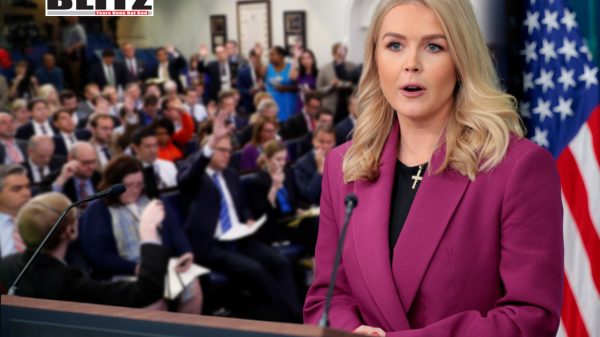
The Biden administration’s handling of the federal budget has come under renewed scrutiny after White House Press Secretary Karoline Leavitt criticized its spending practices as akin to “drunken sailors.” Speaking at a press briefing on January 28, Leavitt defended President Donald Trump’s executive order temporarily freezing nearly all foreign aid, arguing that fiscal irresponsibility during Biden’s tenure contributed to the nation’s economic woes, particularly inflation.
President Trump signed the executive order on January 20, shortly after being sworn in for his second term. The directive halts foreign development aid and other forms of international assistance for a period of 90 days. The move is part of a broader agenda to ensure that taxpayer dollars are spent in a manner that prioritizes American interests.
The order mandates a review of spending by the newly established Department of Government Efficiency and the Office of Management and Budget (OMB). Some exemptions apply, including military assistance to Israel and Egypt, as well as emergency food aid programs. However, most foreign aid programs will undergo rigorous evaluation to determine their necessity and impact on US interests.
Leavitt did not mince words in her critique of the Biden administration’s spending habits, highlighting specific examples of what she called “preposterous waste.” Among them were $37 million allocated to the World Health Organization (WHO) and $50 million for condom distribution programs in Gaza.
“The past four years, we’ve seen the Biden administration spend money like drunken sailors. It’s a big reason we’ve had an inflation crisis in this country,” Leavitt said.
She further argued that excessive foreign aid expenditures under Biden diverted resources away from pressing domestic issues such as infrastructure, healthcare, and economic recovery. “Americans are struggling with the rising cost of living, and yet billions were funneled overseas with little accountability. That ends now,” she added.
One of the core arguments presented by the Trump administration for the aid freeze is the role of excessive government spending in driving inflation. Under Biden, the US saw historically high inflation rates, which many economists attributed to excessive fiscal stimulus and foreign aid expenditures that flooded the economy with excessive liquidity.
The Consumer Price Index (CPI) soared during Biden’s presidency, leading to increased costs for everyday goods and services. Republicans have consistently argued that reckless spending under Biden, including foreign aid that lacked sufficient oversight, exacerbated inflationary pressures, making it harder for average Americans to afford necessities.
Secretary of State Marco Rubio, who has been a strong advocate for Trump’s fiscal policies, defended the foreign aid suspension as a necessary step toward a more responsible budget strategy. Speaking at a press conference last week, Rubio outlined the guiding principles behind the spending reviews.
“Every dollar we spend, every program we fund, and every policy we pursue must be justified with the answer to three simple questions: Does it make America safer? Does it make America stronger? Does it make America more prosperous?” Rubio stated.
This approach signals a dramatic shift from Biden’s broad international aid initiatives to a more targeted, results-driven policy that prioritizes national security and economic stability.
Democrats and international aid advocates have criticized the foreign aid freeze, arguing that it could damage America’s global standing and jeopardize key diplomatic relationships. Many foreign aid programs support critical initiatives, including humanitarian relief, economic development, and public health improvements in developing nations.
Former Secretary of State Antony Blinken, who served under Biden, condemned the move, stating that it could create instability in regions reliant on US assistance. “Foreign aid isn’t charity-it’s an investment in global security and economic stability. Slashing aid abruptly can lead to unintended consequences, including increased migration crises, weakened alliances, and the rise of hostile actors filling the void,” Blinken said.
Additionally, Democratic lawmakers have raised concerns about the impact on ongoing humanitarian efforts, particularly in war-torn and economically struggling nations. Senator Bernie Sanders criticized the decision, calling it “short-sighted and dangerous.”
Trump’s move to freeze foreign aid underscores a broader ideological divide between his administration and Biden’s approach to international engagement. While Biden prioritized multilateralism and global development efforts, Trump’s “America First” doctrine emphasizes prioritizing domestic concerns over foreign commitments.
With the 2024 election season underway, the aid freeze is likely to be a major talking point for both parties. Trump and his allies will tout it as an example of responsible governance and an effort to rein in wasteful spending. Conversely, Democrats will argue that it undermines US credibility on the global stage and risks destabilizing key regions.
Public opinion remains divided. While many Americans support reducing foreign aid, especially amid economic struggles at home, others believe US global leadership requires maintaining assistance to allies and vulnerable populations.
The decision to halt foreign aid spending for 90 days marks a significant shift in US budget policy. Whether this leads to long-term fiscal responsibility or unintended diplomatic consequences remains to be seen. What is clear is that the Biden administration’s spending record will continue to be a contentious issue in the political landscape, shaping debates on economic policy, inflation, and America’s role in global affairs.
As the reviews progress, the world will be watching to see whether Trump’s strategy leads to greater fiscal efficiency or simply a recalibration of US spending priorities. Either way, the “drunken sailor” spending days of the Biden administration are now firmly under the microscope.
Damsana Ranadhiran, Special Contributor to Blitz is a security analyst specializing on South Asian affairs.