The Questionable Deal: Bangladesh LNG Deal with Argent LNG Raises Serious Concerns

- Update Time : Wednesday, January 29, 2025

On January 26, 2025, the state-owned Bangladesh Sangbad Sangstha (BSS) released a report titled “BIDA chief clarifies on LNG agreement with US firm,” which seemed more like a public relations effort than a factual account. The report appeared to project an image of the Bangladesh government’s sincerity toward fostering ties with American companies, particularly under the leadership of President Donald Trump. However, deeper scrutiny reveals a murky picture, potentially marred by questionable motives, concerning ties, and lack of due diligence.
The deal in question involves a heads of agreement (HOA) signed between the Bangladesh Investment Development Authority (BIDA) and the US-based Argent LNG for the import of up to 5 million tons of liquefied natural gas (LNG) annually over a 20-year period. Executive Chairman of BIDA, Chowdhury Ashik Mahmud Bin Harun, defended the agreement, labeling it a “mutually beneficial collaboration” aligned with the principles of “America First” and “Bangladesh First.” Jonathan Bass, an Argent LNG representative, echoed these sentiments, while Chett Chiasson, Executive Director of the Greater Lafourche Port Commission (GLPC), highlighted the potential economic benefits for Louisiana.
However, beneath the celebratory rhetoric lies a web of concerns about Argent LNG’s credibility, financial stability, and operational capacity.
Argent LNG was registered as a limited liability company in Louisiana on August 11, 2023, with a charter number of 45546649K. Despite its nascent status, the company is already flagged as “Not in Good Standing” for failing to file an annual report-a fundamental compliance requirement for businesses in the United States. Its listed address, 3500 N Hullen St, Metairie, Louisiana, also serves as the mailing address of its representative, Jonathan Bass, raising suspicions about the company’s organizational depth and professionalism.
Even more concerning is Argent LNG’s lack of an operational track record. The proposed “Argent LNG Terminal,” which is to be located in Port Fourchon, Louisiana, remains in the Final Investment Decision (FID) stage. This site was previously leased by Energy World for the development of the Fourchon LNG Terminal, which was removed from the US Federal Energy Regulatory Commission’s (FERC) pre-filing process in December 2023 due to inactivity. Argent LNG assumed this lease in mid-2024 but has yet to demonstrate meaningful progress.
The glaring lack of transparency about Argent LNG’s financial health, operational expertise, or infrastructure raises a fundamental question: how can a newly established company with apparent compliance issues manage the complexities of supplying 5 million tons of LNG annually to a foreign market? The scale of this deal demands robust infrastructure, including liquefaction facilities, shipping capabilities, and storage-investments that even established energy giants struggle to execute.
For Bangladesh, the stakes are particularly high. The country’s energy demands are surging due to rapid industrialization and economic growth. A reliable and steady energy supply is crucial for sustaining this momentum. However, entrusting such a critical segment of its energy infrastructure to an unproven entity like Argent LNG is fraught with risks.
If Argent LNG fails to deliver, the consequences could be catastrophic: severe energy shortages, financial losses, and reputational damage for Bangladesh on the global stage. Such a failure would also jeopardize the country’s strategic ties with the United States, potentially derailing future bilateral agreements and energy collaborations.
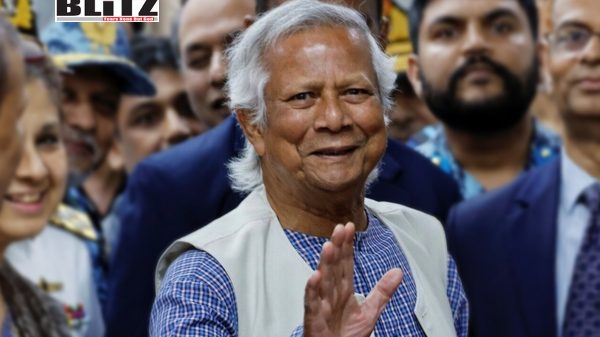
Moreover, this deal appears to be more of a public relations stunt orchestrated by the Muhammad Yunus regime to garner positive optics rather than a genuinely strategic move. Yunus, a known associate of controversial global figures like George Soros and a critic of the Trump administration, seems to be leveraging this agreement to obscure deeper issues within his administration, including allegations of corruption and questionable policy decisions.
The motivations behind this agreement appear questionable. Yunus and his associates may have intended this deal to curry favor with the Trump administration by showcasing an ostensibly pro-American business partnership. However, the lack of due diligence in vetting Argent LNG undermines this effort. Instead of strengthening ties with the United States, this agreement risks being perceived as an opportunistic attempt to manipulate political narratives.
Yunus’s broader agenda also casts a shadow over the deal. Critics accuse his regime of attempting to transform Bangladesh into a safe haven for extremist elements, including groups like Al Qaeda, ISIS, and Hamas. Such allegations, combined with the regime’s dismissive stance toward President Trump’s October 31, 2024 tweet condemning violence against religious minorities in Bangladesh, suggest a pattern of duplicity.
This deal also raises concerns about US energy policy. While the United States aims to promote domestic energy exports and foster international partnerships, aligning with unproven entities like Argent LNG could undermine these objectives. The reliance on a company with a questionable foundation exposes vulnerabilities in the vetting process, risking the United States’ reputation as a reliable energy partner.
Chett Chiasson’s statement about the deal’s economic benefits for Louisiana adds another layer of complexity. While job creation and economic growth are undoubtedly important, the risks associated with partnering with an entity like Argent LNG could outweigh these potential gains. A failed partnership would tarnish Louisiana’s reputation as a global energy hub and weaken America’s credibility in the international energy market.
This situation underscores the critical importance of thorough due diligence in international agreements, particularly in essential sectors like energy. For Bangladesh, ensuring that partners have the capacity, credibility, and resources to deliver on their commitments is vital to safeguarding national interests. For the United States, vetting companies seeking to engage in significant international deals is equally important for maintaining its leadership in the global energy market.
While the agreement between Bangladesh and Argent LNG is being hailed in some quarters as a landmark in US-Bangladesh relations, a closer examination reveals serious concerns about its feasibility and the credibility of the involved parties. For Bangladesh, the risk of relying on an unproven entity could have far-reaching consequences, potentially jeopardizing its energy security and economic growth. For the United States, the deal highlights the need for greater scrutiny and strategic oversight in promoting energy partnerships.
As more details about this partnership come to light, the questions surrounding Argent LNG’s capabilities, the motivations behind the agreement, and the potential risks for both nations will remain in sharp focus. Unless robust measures are taken to address these issues, this deal risks becoming a cautionary tale about the dangers of inadequate due diligence and the pitfalls of prioritizing political narratives over strategic planning.
Tajul Islam is a Special Correspondent of Blitz. He also is Local Producer of Al Jazeera Arabic channel.