The future of Saudi-US relations under Trump’s return

- Update Time : Tuesday, January 28, 2025
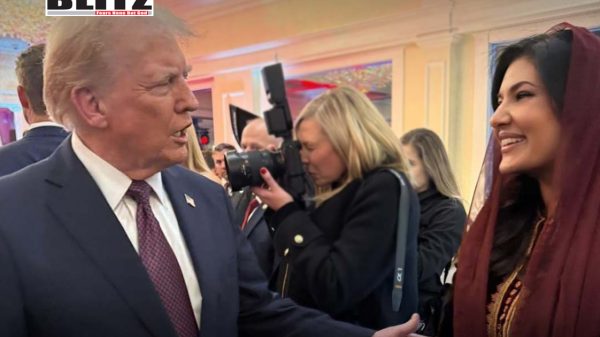
As Donald Trump prepares for a potential return to the White House, questions about the future of US-Saudi relations have resurfaced. His presidency introduced a unique dynamic to international diplomacy, characterized by bold decisions and significant departures from traditional US foreign policy. While Trump’s leadership was polarizing, even his critics acknowledge the transformative nature of his administration’s global approach. For Saudi Arabia, a renewed Trump presidency could present both opportunities and challenges. Princess Reema bint Bandar bin Sultan bin Abdulaziz Al Saud met with US President Donald J. Trump during his inauguration program on January 20, where she presented her credentials as the Ambassador of the Kingdom of Saudi Arabia to the United States.
Trump’s political influence extends beyond his role as an individual leader. Unlike his first term, where his policies and governance style took time to crystallize, Trump now represents a broader movement. This movement is backed by public sentiment favoring his vision, which includes domestic economic priorities and a recalibration of America’s international role. For Saudi Arabia, this context is crucial: Trump’s policy decisions are likely to align with the principles of his movement, making his administration more cohesive and resolute.
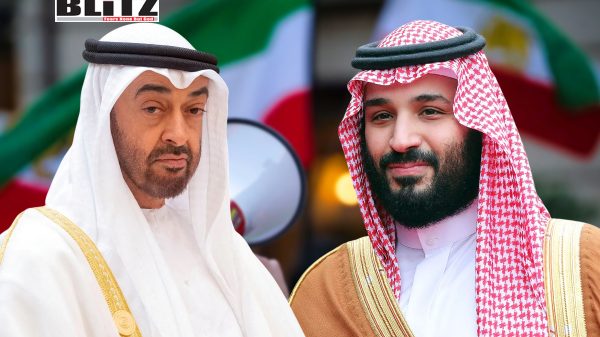
During his first term, Trump’s Middle East policies demonstrated a clear and pragmatic approach. His goals included resolving the Israeli-Palestinian conflict, curbing Iran’s nuclear ambitions, addressing the Syrian crisis, and ensuring Iraqi sovereignty. Saudi Arabia, as a pivotal player in the region, stood at the heart of these policies. Trump’s support for Crown Prince Mohammed bin Salman’s Vision 2030 initiative signaled a strong alignment of interests between Riyadh and Washington.
Trump has expressed a desire to achieve Palestinian-Israeli peace, an issue that remains central to Middle Eastern stability. His administration’s controversial “Deal of the Century” proposed a framework for a two-state solution but faced resistance from key stakeholders. A renewed Trump presidency could see a recalibrated effort to address this issue, potentially with more active Saudi involvement. The Kingdom’s leadership has increasingly taken a proactive role in regional diplomacy, signaling its readiness to support a viable solution.
Iran remains a critical concern for both the US and Saudi Arabia. Trump’s firm stance against Tehran during his first term, including the withdrawal from the Iran nuclear deal and the reinstatement of sanctions, aligned with Riyadh’s strategic objectives. His approach provided a stark contrast to President Joe Biden’s efforts to revive negotiations with Iran, which many in the region viewed with skepticism. Trump’s return to power could reignite a more confrontational approach to Iran, potentially through renewed sanctions or direct diplomatic pressure.
The conflict in Yemen has been a focal point of Saudi-US relations. Under Trump, the US designated the Iran-aligned Houthi militia as a terrorist organization, a move welcomed by Saudi Arabia. In contrast, Biden reversed this designation, leading to frustrations in Riyadh. Trump’s stance on Yemen emphasized the need for the Houthis to cease hostilities if they sought any removal from the terrorism list. A second Trump presidency is likely to reaffirm strong support for Saudi efforts to stabilize Yemen, aligning with broader regional security goals.
Economic collaboration has always been a cornerstone of Saudi-US relations, and Trump’s approach to foreign policy is deeply rooted in economic pragmatism. His focus on “America First” policies emphasized mutually beneficial trade deals, with Saudi Arabia playing a critical role as a strategic economic partner. During his first term, Trump visited Riyadh shortly after the launch of Vision 2030, securing agreements worth hundreds of billions of dollars. However, many of these agreements faced delays due to bureaucratic hurdles and legislative constraints.
Trump’s renewed interest in visiting Saudi Arabia, potentially as his first foreign destination if re-elected, underscores the importance he places on this relationship. Economic agreements ranging from $450 billion to $500 billion have been floated, reflecting the Kingdom’s ambitious development plans under Vision 2030. Such agreements would not only strengthen bilateral ties but also underscore Saudi Arabia’s role as a key player in global economic and energy markets.
Beyond trade and investments, the Saudi-US relationship is fundamentally strategic. Despite challenges during Biden’s presidency, including tensions over energy production and human rights issues, Riyadh remains a vital ally in the region. Trump’s approach to the Kingdom is expected to be more cooperative and aligned with Crown Prince Mohammed bin Salman’s leadership.
A potential Trump presidency would likely see closer defense cooperation, particularly in the face of regional threats. The prospect of a formal defense agreement, as hinted at during Biden’s term, could materialize under Trump. Such an agreement would reinforce Saudi Arabia’s security and position as a regional stabilizer.
One of the most significant aspects of Saudi-US relations under Trump could be their collaboration on achieving regional peace. The normalization agreements between Israel and several Arab states during Trump’s first term, known as the Abraham Accords, were landmark achievements. Saudi Arabia’s potential inclusion in this framework would mark a historic shift in Middle Eastern diplomacy.
Trump’s vision for a two-state solution and his emphasis on dialogue over prolonged conflict align with Saudi Arabia’s own strategic priorities. Riyadh’s commitment to a Palestinian state, alongside its growing role as a mediator, positions it as a crucial partner in Trump’s peace efforts.
While the prospects for a stronger Saudi-US relationship under Trump are promising, challenges remain. The Kingdom must navigate the complexities of US domestic politics, particularly as Trump’s policies often face fierce opposition from Congress and the media. Additionally, balancing relations with other global powers, such as China and Russia, while maintaining strong ties with Washington, requires careful diplomacy.
Donald Trump’s return to the White House would herald a new chapter in Saudi-US relations, built on the foundations of mutual interests and strategic alignment. For Saudi Arabia, Trump’s pragmatic and results-oriented approach offers opportunities to advance its Vision 2030 goals, strengthen regional security, and achieve lasting peace.
As Trump prepares for a potential comeback, Riyadh is well-positioned to deepen its partnership with Washington. The Crown Prince’s vision for a modernized and diversified Saudi Arabia aligns seamlessly with Trump’s emphasis on economic growth and regional stability. Together, they have the potential to shape a new era of cooperation that benefits both nations and the broader Middle East.
Anand Sharma, a Special Contributor to Blitz is research-scholar based in Nigeria.