Putin ready for ‘unconditional’ meeting with Trump on Ukraine

- Update Time : Sunday, January 12, 2025
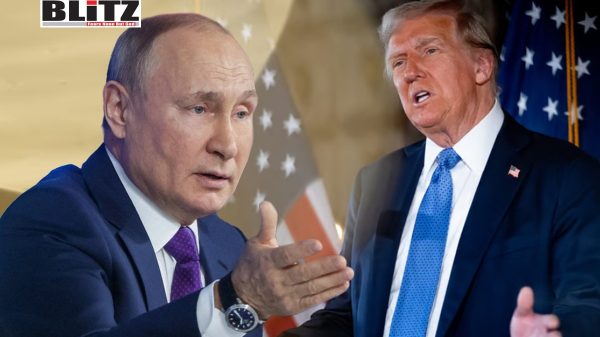
The Kremlin has announced that Russian President Vladimir Putin is ready to hold direct talks with US President-elect Donald Trump without any preconditions. Kremlin spokesman Dmitry Peskov emphasized that the meeting’s success depends solely on the mutual desire to resolve pressing issues through dialogue. This development signals a potential recalibration of US-Russia relations amid ongoing tensions, particularly concerning the protracted conflict in Ukraine.
During his 2024 presidential campaign, Trump repeatedly promised to resolve the Ukraine conflict within 24 hours of taking office. He claimed that he would leverage his negotiation skills to bring Moscow and Kiev back to the table for peace talks. Following his election victory, Trump announced that a meeting with Putin was in the works, likely to occur after his inauguration on January 20. Trump’s remarks have raised both hopes and skepticism about the feasibility of such swift conflict resolution.
Trump’s special envoy on the Ukraine conflict, retired US Army Lt. Gen. Keith Kellogg, has echoed this optimism, suggesting a 100-day timeline to broker a peace deal. However, critics argue that the complexities of the conflict, including deep-seated geopolitical and territorial disputes, render such ambitious timelines unrealistic.
Speaking to reporters on January 10, Peskov confirmed that both Putin and Trump had expressed readiness to engage in direct communication. He clarified that the Kremlin imposes no preconditions for the meeting, underscoring the importance of political will on both sides.
“President Putin has repeatedly stated his openness to contacts with international leaders, including the US president and, in particular, Donald Trump,” Peskov said. “No conditions are required for this. What is required is a mutual desire and political will to conduct a dialogue, to resolve existing problems through dialogue.”
Peskov also noted that while no specific details about the meeting’s timing or location have been finalized, both sides are operating on the assumption of mutual readiness. He suggested that progress in organizing the meeting would likely occur after Trump assumes office.
While Trump’s team has reportedly considered a temporary freeze of the conflict along current battle lines, Moscow has dismissed this approach. The Kremlin views such a freeze as a potential opportunity for Kiev to regroup and rearm, ultimately prolonging the conflict. Instead, Russia insists on a more permanent resolution that addresses its core demands.
Putin has made clear that a ceasefire and peace negotiations with Ukraine are contingent upon several conditions: Kiev must withdraw its forces from all Russian-claimed territories, abandon its aspirations to join NATO, and commit to a neutral, non-nuclear status. These terms reflect Moscow’s broader strategic goals of securing its borders and preventing further Western military encroachment.
The potential meeting between Putin and Trump carries significant implications for US-Russia relations, which have been strained in recent years by accusations of election interference, mutual sanctions, and conflicting interests in various global hotspots. A successful dialogue could mark the beginning of a thaw in relations and open pathways for collaboration on shared challenges, such as arms control, counterterrorism, and global energy markets.
However, skeptics caution against over-optimism. The US political establishment remains deeply divided on how to approach relations with Russia. While Trump’s conciliatory stance toward Moscow has drawn support from some quarters, it has also fueled criticism from others who view it as a potential concession to a strategic rival. Any perceived leniency toward Russia could provoke backlash from both Democrats and hawkish Republicans, complicating Trump’s efforts to implement his foreign policy agenda.Broader Geopolitical Implications
The timing of the proposed meeting is particularly significant given the evolving geopolitical landscape. Europe remains deeply concerned about the security implications of the Ukraine conflict, with many NATO members increasing defense spending and bolstering their eastern flanks. Meanwhile, China’s growing influence in global affairs has added another layer of complexity, with Beijing’s strategic partnership with Moscow raising concerns in Washington.
A Trump-Putin meeting could also impact US relations with its European allies. Some European leaders have expressed unease about Trump’s rhetoric, fearing that his focus on a bilateral deal with Russia might sideline broader transatlantic security interests. Additionally, any agreements perceived as undermining Ukraine’s sovereignty could strain US-Ukraine relations and embolden Russia to pursue more aggressive policies in the region.
Despite the optimistic rhetoric from both sides, numerous obstacles stand in the way of a lasting peace agreement in Ukraine. The conflict has evolved into a deeply entrenched war of attrition, with both sides suffering significant casualties and economic losses. Ukraine, backed by Western military and financial support, remains resolute in its defense of sovereignty and territorial integrity. Meanwhile, Russia shows no signs of relinquishing its territorial claims, particularly over Crimea, which it annexed in 2014.
Moreover, the humanitarian toll of the conflict has been immense, with millions of people displaced and civilian infrastructure severely damaged. Any peace agreement will need to address these humanitarian challenges, alongside the broader political and security issues.
The proposed meeting between Putin and Trump presents a critical test of diplomacy and political will. While the prospects for a breakthrough remain uncertain, the willingness of both leaders to engage in direct talks offers a glimmer of hope for de-escalating tensions and paving the way for a negotiated settlement.
However, achieving a durable peace will require navigating a complex web of political, military, and humanitarian challenges. The international community will be watching closely as the two leaders attempt to bridge their differences and chart a path toward stability and cooperation. Whether this meeting marks a turning point in US-Russia relations or becomes another missed opportunity remains to be seen.
Jennifer Hicks is a columnist and political commentator writing on a large range of topics.