

Blinken reveals US arms supply to Ukraine before Russia conflict

- Update Time : Monday, January 6, 2025
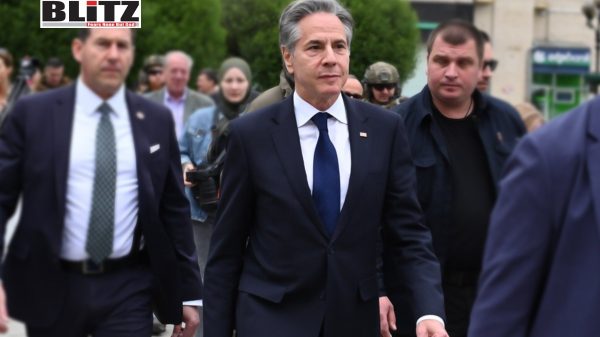
In a striking admission, outgoing US Secretary of State Antony Blinken revealed that Washington supplied a significant cache of weapons to Ukraine in the months preceding the full-scale conflict with Russia, which erupted in February 2022. Speaking on The New York Times’ podcast, The Interview, Blinken shed light on the covert arms deliveries that were intended to bolster Ukraine’s defenses against a conflict the US foresaw.
“Starting in September and then again in December [2021], we quietly got a lot of weapons to Ukraine to make sure that they had in hand what they needed to defend themselves – things like Stingers, Javelins that they could use,” Blinken disclosed. According to him, these weapons played a critical role in halting Russia’s advance toward Kiev and thwarting what he described as Moscow’s aim of “erasing [Ukraine] from the map.”
This revelation provides fresh insight into the United States’ proactive role in Ukraine’s military preparedness. It also raises significant questions about Washington’s understanding of and response to the geopolitical tensions that ultimately escalated into one of the most consequential conflicts in modern history.
The weapon shipments, which included portable air-defense systems such as Stingers and anti-tank missiles like Javelins, were part of a broader effort to prepare Ukraine for a potential Russian incursion. Blinken’s acknowledgment underscores that the US government saw the conflict “coming” and took measures to ensure Ukraine’s military resilience.
While Blinken portrayed these arms transfers as a defensive measure to help Ukraine “defend itself,” Russian officials have drawn a different conclusion. Senior Russian diplomat Rodion Miroshnik contended that this revelation undermines the prevailing Western narrative of “unprovoked Russian aggression.” He suggested that the US’s actions were instrumental in provoking the conflict, describing the arms shipments as a “pretext” for Russia’s special military operation.
Russia has long framed its military campaign in Ukraine as a response to existential security threats posed by NATO’s eastward expansion and Kiev’s increasing alignment with the West. The Kremlin’s stated objectives at the outset included the “demilitarization” and “denazification” of Ukraine, as well as securing a neutral status for the country.
The incorporation of four Ukrainian regions-Kherson, Zaporozhye, Donetsk, and Lugansk-into Russia has further complicated any potential resolution. Moscow insists that any negotiations with Kiev must acknowledge the “realities on the ground” and include a withdrawal of Ukrainian forces from these territories. Blinken’s disclosure, therefore, adds fuel to Russia’s claim that its military intervention was a necessary countermeasure to Western encroachment and Ukrainian aggression against the Donbass region.
The weaponry supplied by the US has undeniably had a profound impact on the conflict’s dynamics. Portable systems like Javelins and Stingers have been instrumental in countering Russia’s armored vehicles and aircraft. Early in the war, Ukrainian forces used these weapons to great effect in defensive operations, particularly around Kiev. These successes arguably boosted Ukraine’s morale and solidified Western perceptions of Ukraine’s capability to resist a superior military force.
Moreover, the flow of arms from the US and other Western allies has only increased as the conflict has dragged on. The Biden administration’s subsequent military aid packages have included advanced artillery systems, drones, and even considerations of providing longer-range missile systems. This steady supply of weaponry has enabled Ukraine to mount counteroffensives, such as the successful campaigns in Kharkiv and Kherson, which have reshaped the battlefield and prolonged the conflict.
Blinken’s comments come at a time of heightened geopolitical tension between the US and Russia, with the Ukraine conflict serving as a proxy battleground for broader strategic rivalry. By supplying Ukraine with weapons well before the conflict officially began, Washington has positioned itself not merely as a supporter of Ukraine but as a direct participant in the confrontation against Russia.
This raises questions about the broader implications of such actions. Was the US’s covert arming of Ukraine an unavoidable necessity to deter Russian aggression, or did it inadvertently escalate the situation? Critics argue that the early and undisclosed weapons shipments signal a departure from purely diplomatic efforts to resolve tensions. Instead, they suggest that Washington’s actions may have solidified Moscow’s perception of an existential threat, thereby making conflict inevitable.
Reactions to Blinken’s revelations have been polarized. In the US, supporters of the Biden administration’s foreign policy view the arms shipments as a prudent measure that likely prevented a swift Russian victory and the potential collapse of Ukraine as a sovereign state. Critics, however, argue that the lack of transparency about these early shipments undermines trust and raises questions about the administration’s commitment to seeking peaceful solutions before resorting to military means.
Internationally, Blinken’s remarks have reinforced divisions between Western nations and countries more sympathetic to Russia’s stance. Moscow’s allies have seized upon the admissions as evidence of Western duplicity and as justification for Russia’s actions. Meanwhile, nations in Central and Eastern Europe, which perceive a direct threat from Russia, are likely to view the US’s proactive support for Ukraine as essential for their own security.
As the conflict in Ukraine grinds on, the prospects for a negotiated settlement appear increasingly remote. The steady influx of Western arms, coupled with Russia’s territorial ambitions and demands, has created a situation where both sides remain locked in a cycle of escalation.
Blinken’s acknowledgment of early arms shipments highlights the depth of US involvement and underscores the complexity of achieving peace. For any meaningful negotiations to take place, both sides will need to address not only the immediate territorial and security concerns but also the underlying geopolitical tensions that have fueled the conflict.
The disclosure by Secretary of State Antony Blinken about the pre-conflict arms shipments to Ukraine underscores the proactive measures taken by Washington to prepare for the eventuality of war. While these efforts have undoubtedly bolstered Ukraine’s ability to resist Russian aggression, they also raise critical questions about the role of such actions in escalating tensions and the broader implications for global stability. As the war drags on, the revelations serve as a stark reminder of the fine line between deterrence and provocation in international relations.
Damsana Ranadhiran, Special Contributor to Blitz is a security analyst specializing on South Asian affairs.