Von der Leyen’s pneumonia a test for EU leadership

- Update Time : Sunday, January 5, 2025
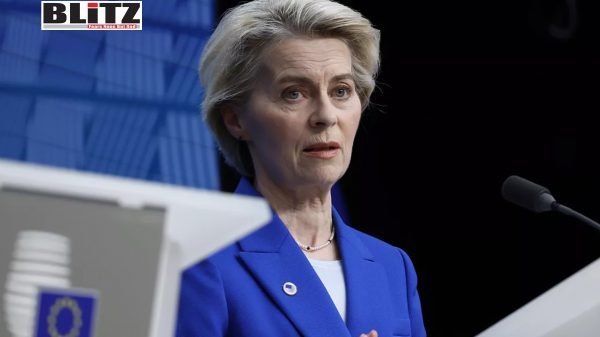
European Commission President Ursula von der Leyen, aged 66, has been diagnosed with severe pneumonia, prompting the cancellation of her scheduled official engagements for the first two weeks of January. According to her spokesperson, Stefan De Keersmaeker, the condition has necessitated von der Leyen’s retreat to her residence in Hanover, Germany, where she will continue to manage official duties remotely. Her illness comes at a pivotal moment for the European Commission as it embarks on implementing the recently approved Competitiveness Compass-a cornerstone of the EU’s economic framework for the next five years.
De Keersmaeker confirmed von der Leyen’s diagnosis on January 3, explaining that planned trips to Lisbon, Portugal, and Gdansk, Poland, have been postponed. These trips were intended to bolster economic collaboration and mark milestones in EU policy implementations. Instead, the president will recuperate at home while maintaining oversight of critical EU operations remotely.
“The president has canceled her external engagements for the first two weeks of January. She is dealing with a severe pneumonia,” De Keersmaeker told Politico. Despite her condition, von der Leyen remains committed to her role, signaling resilience in the face of her health challenges.
Severe pneumonia, characterized by inflamed air sacs in the lungs, can lead to complications, particularly for older adults or those with underlying health issues. Though further details about her condition remain undisclosed, medical professionals stress the importance of adequate rest and recovery time to avoid relapses or prolonged health impacts.
Von der Leyen’s second five-year term as president of the European Commission commenced on December 1, 2024. Since taking office in 2019, she has navigated the EU through turbulent times, including the COVID-19 pandemic, Brexit’s aftermath, and the geopolitical ripple effects of Russia’s conflict in Ukraine. Her leadership has been instrumental in shaping the EU’s digital transformation, climate policies, and economic resilience strategies.
The current situation raises questions about potential interim leadership arrangements. As of now, no announcements have been made regarding delegation of her responsibilities. The European Commission’s broader agenda remains on track, apart from von der Leyen’s personal appearances. However, her temporary absence may necessitate increased collaboration among EU commissioners to ensure seamless governance during her recovery.
Von der Leyen’s diagnosis comes at a critical juncture for the European Union. The Competitiveness Compass, unveiled in late 2024, serves as a blueprint for enhancing the bloc’s economic dynamism and global standing. Key components include fostering innovation, streamlining regulatory frameworks, and enhancing trade partnerships.
In addition, the EU faces pressing challenges such as the ongoing energy crisis, inflationary pressures, and geopolitical tensions. These issues demand decisive leadership and coordination, both of which could be complicated by von der Leyen’s temporary absence. While remote management is feasible, the absence of face-to-face interactions and on-site leadership may slow progress on certain initiatives.
The European Commission has a well-established protocol for handling temporary absences of high-ranking officials. Vice presidents and commissioners often step in to manage specific portfolios, ensuring continuity in decision-making. Executive Vice President Frans Timmermans, for instance, has previously played a pivotal role in steering climate and environmental policies. Should von der Leyen’s recovery take longer than anticipated, the Commission may need to formalize such interim arrangements.
The incident underscores the importance of institutional resilience. In an era of unpredictable global crises, the ability of EU institutions to adapt to sudden changes in leadership is crucial. The seamless continuation of governance during von der Leyen’s absence will serve as a litmus test for the European Commission’s operational robustness.
The delay of von der Leyen’s engagements in Lisbon and Gdansk could have symbolic and practical repercussions. The Lisbon visit was anticipated to solidify the EU’s economic strategies in Southern Europe, while the Gdansk trip was aimed at reinforcing solidarity with Eastern European member states amid rising security concerns. Postponing these visits may temporarily weaken the Commission’s efforts to demonstrate unity and proactive leadership.
Moreover, the rollout of the Competitiveness Compass-a centerpiece of von der Leyen’s second term-could encounter minor delays. This framework aims to position the EU as a global leader in innovation and sustainable development. Its timely implementation is critical for maintaining the bloc’s competitive edge, particularly as it contends with economic challenges posed by global competitors such as China and the United States.
News of von der Leyen’s illness has elicited mixed reactions across the political spectrum. While many European leaders have extended their wishes for her speedy recovery, critics have questioned the potential impact of her absence on key policy initiatives. Some opposition figures argue that the European Commission’s reliance on a centralized leadership model could expose vulnerabilities in times of crisis.
In contrast, supporters emphasize von der Leyen’s proven resilience and capacity to manage complex situations. Her remote handling of affairs during the COVID-19 pandemic demonstrated her adaptability, a quality that may once again prove vital as she navigates her current health challenges.
Von der Leyen is expected to resume her duties in Brussels by mid-January, health permitting. Her recovery will likely be closely monitored, both medically and politically, as the EU continues to address its multifaceted challenges. The incident serves as a reminder of the human element in governance-even the most seasoned leaders are not immune to health setbacks.
In the interim, the European Commission’s ability to maintain momentum on its agenda will be crucial. Whether addressing economic reform, geopolitical strategy, or internal cohesion, the institution’s collective strength will be put to the test. Von der Leyen’s temporary absence highlights the importance of shared leadership and institutional preparedness in sustaining the EU’s vision for a united and prosperous future.
As von der Leyen recuperates, the European Union’s path forward will depend on the resilience of its leadership and the solidarity of its member states. The coming weeks will not only shape the recovery of a key figure but also reaffirm the strength of Europe’s collective resolve in times of uncertainty.
Damsana Ranadhiran, Special Contributor to Blitz is a security analyst specializing on South Asian affairs.