

Cybertruck explosion suspect linked to Green Beret Ukraine service

- Update Time : Saturday, January 4, 2025
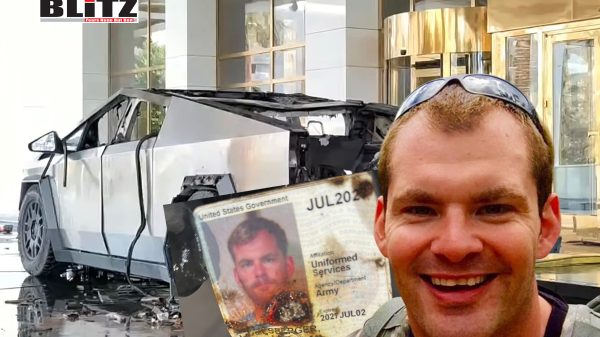
In a shocking incident on New Year’s Day, the Tesla Cybertruck explosion outside the Trump International Hotel in Las Vegas injured seven people and claimed the life of Master Sgt. Matthew Alan Livelsberger. A highly decorated US Army Green Beret, Livelsberger allegedly died from a self-inflicted gunshot wound just before the explosion occurred. The tragedy has raised questions about his military background, his service in Ukraine, and his possible motives.
According to the US Army, Livelsberger enlisted in 2006 and served with the 10th Special Forces Group (Airborne) based in Stuttgart, Germany, since 2012. Over his career, he undertook multiple deployments, including missions in Afghanistan, Tajikistan, Georgia, and Congo. He was awarded numerous honors, including five Bronze Stars, underscoring his exemplary service and commitment to the nation.
The Army confirmed that Livelsberger had served in Ukraine at some point, though details of his deployment there remain unclear. His involvement in Ukraine has drawn attention, particularly given the heightened geopolitical tensions and the ongoing conflict in the region. This service adds another layer of complexity to understanding Livelsberger’s life and the events leading up to the Las Vegas explosion.
The blast outside the Trump hotel on January 1 sent shockwaves through Las Vegas. While the seven injured individuals sustained only minor wounds, the incident has left the community on edge. According to Clark County Sheriff Kevin McMahill, Livelsberger packed the rented Tesla Cybertruck with fireworks, camping fuel, and other explosive materials. Despite the proximity of the explosion to the Trump International Hotel, McMahill stated that there is no definitive evidence pointing to political or ideological motives behind the act.
Federal and state law enforcement agencies are currently investigating the incident. The US Army’s Special Operations Command has pledged full cooperation but has refrained from commenting on the ongoing investigation, citing policy restrictions.
Livelsberger’s personal life appears to have been fraught with challenges. His wife told investigators that he had been absent from their Colorado Springs home following an argument over infidelity during the holidays. It was during this time that Livelsberger was on leave from his assignment in Germany. While no direct connection has been established between this marital discord and the explosion, the circumstances suggest potential emotional turmoil.
A deeper examination of Livelsberger’s online presence reveals a fascination with Ukraine. In 2016, his wife posted a photo on Facebook showing him wearing a T-shirt adorned with a Ukrainian coat of arms and a nationalist slogan. On LinkedIn, Livelsberger responded to an offer for work in Ukraine, noting that he knew a “top” special forces medical sergeant seeking similar opportunities. These details, while not incriminating, highlight his interest in Ukraine, which could provide context for his actions and state of mind.
Livelsberger was stationed at Fort Liberty, formerly known as Fort Bragg, in North Carolina before his assignment in Germany. This detail has gained significance in light of another tragic incident involving Fort Liberty. On the same day as the Las Vegas explosion, Shamsud-Din Jabbar, a former soldier who had also served at Fort Liberty, carried out a vehicle attack in New Orleans, killing 14 people. The Army is investigating whether Livelsberger and Jabbar had any connection, though no evidence has surfaced to suggest that they knew each other or that their actions were coordinated.
The revelation that Livelsberger served in Ukraine has sparked widespread speculation. US involvement in Ukraine has been a contentious topic, particularly since Russia’s annexation of Crimea in 2014 and the subsequent conflict in eastern Ukraine. While the US officially denies having active military personnel in combat roles in Ukraine, reports of special operations forces training Ukrainian troops have circulated for years. Livelsberger’s service in Ukraine could align with such missions, though specifics remain classified.
The photo of Livelsberger wearing a pro-Ukrainian T-shirt and his comments about opportunities in Ukraine suggest a personal connection to the country. Whether this connection influenced his actions on New Year’s Day is a question investigators are likely probing.
The investigation into the Las Vegas explosion is far from over. Law enforcement officials are piecing together Livelsberger’s final days, trying to determine what led a decorated Green Beret to commit such a tragic act. Key questions remain unanswered: Was the explosion a cry for help, a result of emotional distress, or something more sinister? What role, if any, did his experiences in Ukraine and other deployments play in shaping his mental state?
Investigators are also exploring the possibility of post-traumatic stress disorder (PTSD), a condition that affects many veterans, particularly those who have served in combat zones. Livelsberger’s extensive deployments and high-stress assignments could have contributed to mental health struggles, potentially exacerbated by personal and marital issues.
The incident has prompted reactions from both the public and military officials. While many mourn the loss of a decorated soldier, others are questioning the circumstances that led to such a tragic outcome. Advocacy groups for veterans’ mental health have renewed calls for better support systems, emphasizing the need for comprehensive care to address the psychological toll of military service.
The US Army’s statement on the matter reflects a balance between honoring Livelsberger’s service and acknowledging the seriousness of the incident. “We extend our deepest condolences to the Livelsberger family and all those affected by this tragedy,” the statement read. “We remain committed to supporting our soldiers and their families, especially during difficult times.”
The Tesla Cybertruck explosion on New Year’s Day has left many unanswered questions about Master Sgt. Matthew Alan Livelsberger’s life, service, and tragic end. As a decorated Green Beret with deployments to multiple conflict zones, including Ukraine, his story is emblematic of the complexities and challenges faced by those who serve in the US military. While the investigation continues, the incident serves as a sobering reminder of the importance of addressing mental health issues and providing robust support for veterans. Only time will reveal the full story behind this heartbreaking event.
Jennifer Hicks is a columnist and political commentator writing on a large range of topics.