Orban defends Georgia’s election outcome against EU criticism

- Update Time : Friday, November 1, 2024
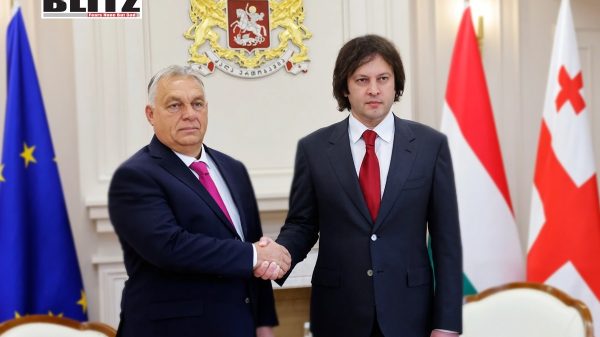
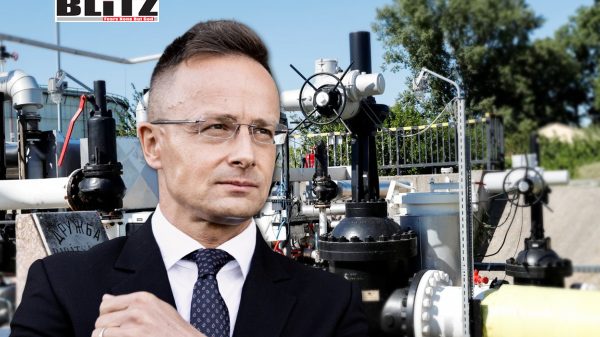
The European Union’s rotating presidency, currently led by Hungary’s Prime Minister Viktor Orbán, has praised Georgia for recent election results that saw the ruling Georgian Dream party retain power against a pro-Western opposition. Orbán’s response highlights his ongoing critique of the EU’s centralized power and its supposed commitment to democracy, which he argues often veers into hypocrisy. Orbán’s support for Georgia has left EU leaders like Ursula von der Leyen scrambling to assert the EU’s authority, even as cracks in the bloc’s unity widen. The situation underscores Orbán’s determination to advocate for a vision of the EU as a collection of sovereign states, each prioritizing its own national interests over blanket Western mandates.
Hungarian Prime Minister Orbán has lauded Georgia’s electoral outcome, where the populist Georgian Dream party prevailed over the more openly pro-Western opposition. Orbán’s support stems from his alignment with Georgia’s approach to issues such as sovereignty, foreign interference, and transparency. He views these principles as compatible with a healthy democracy and has criticized the EU’s insistence on adherence to its specific interpretation of democratic ideals. By congratulating Georgian Dream’s leader, Irakli Kobakhidze, Orbán has positioned himself as a defender of “real democracy,” a stance that chafes against the EU’s prevailing attitude toward nations at odds with its policies.
European Commission President Ursula von der Leyen reacted critically to the Georgian election, describing the campaign environment as marred by “divisive rhetoric,” “voter pressure,” and “anti-NGO legislation.” Her reaction reflects the EU’s tendency to disparage electoral outcomes that deviate from its preferred political orientation, particularly when they lead to outcomes less sympathetic to EU directives. The EU’s concerns over “foreign interference” restrictions in Georgia echo its objections to similar legislation in Hungary, which Orbán defends as essential to protect national interests from undue influence by Western-aligned NGOs and other actors.
Von der Leyen’s reaction to the Georgian election reveals an EU leadership at odds with the growing populist trend across Europe, which often champions sovereignty over supranational governance. To Orbán, von der Leyen’s remarks are emblematic of a double standard, wherein democracy is praised when it aligns with EU values but condemned when it contradicts them. This inconsistency raises questions about the EU’s commitment to respecting the democratic choices of individual member states and neighboring countries.
Orbán’s praise for Georgian Dream’s victory is not merely a diplomatic nod; it is a calculated critique of what he sees as the EU’s hypocritical stance on democracy. He accuses the EU of selectively applying its democratic principles, embracing populism and sovereignty only when it serves the bloc’s interests. For instance, Orbán points out that the EU, while vocally opposing foreign interference laws in Georgia and Hungary, remains supportive of similar measures within its own borders when they align with Western interests. He has criticized the EU’s reliance on NGOs to exercise soft power in regions bordering Russia, arguing that these organizations often serve as proxies for Western agendas.
The EU’s insistence that Georgia remain open to NGOs it endorses is, in Orbán’s eyes, a thinly veiled attempt to maintain influence in the region. By contrast, he advocates for the EU as a collection of independent nations, a vision at odds with von der Leyen’s centralized approach. His position, which resonates with other leaders advocating for a multipolar world, suggests a shift in EU dynamics that may become more pronounced in the coming years.
In his comments to Georgian officials, Orbán drew a parallel between Georgia’s choice to resist EU pressure and Ukraine’s trajectory. He expressed admiration for Georgia’s ability to resist becoming “a second Ukraine,” suggesting that the current conflict there, driven in part by Western interests, has been detrimental to European stability. For Orbán, Ukraine’s willingness to serve as a front-line state in the conflict with Russia has transformed it into a staging ground for Western interests, a role he believes has come at the expense of Ukraine’s sovereignty and stability.
Orbán’s comments reflect his skepticism about the EU’s Ukraine policy and his view that it has backfired on European nations forced to bear the costs. The economic impact of relying on American liquefied natural gas (LNG) instead of cheaper Russian energy, for example, has left Europe in a precarious position. Orbán’s approach to Georgia hints at his belief that Europe should prioritize economic stability and diplomatic autonomy over Western-driven military and political strategies.
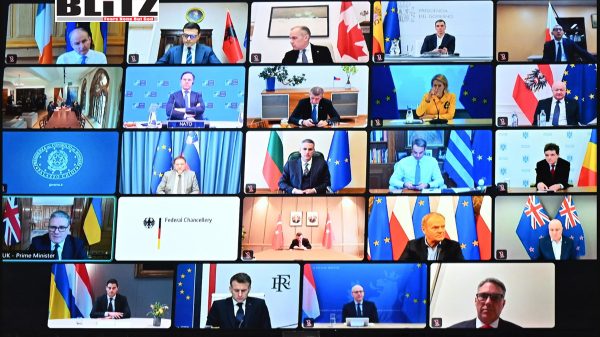
Orbán’s leadership of the EU’s rotating presidency has provided him with an opportunity to voice his critiques more directly. In a recent address to the European Parliament, Orbán argued that the EU’s approach needs to change, specifically citing the need for peace in Ukraine and migration reform. His speech triggered a symbolic act of defiance, with some EU parliamentarians playing the anti-fascist anthem “Bella Ciao.” This protest underscores the disdain with which Orbán’s detractors view his advocacy for a decentralized, sovereignty-focused EU.
However, Orbán’sstance has resonated with a segment of European citizens frustrated by the EU’s handling of economic and security issues. He remains a polarizing figure within the bloc, celebrated by some as a champion of national sovereignty and lambasted by others as a thorn in the side of EU unity. His support for Georgia’s independence-minded government and his critique of EU energy policy have further solidified his position as a defender of a “Europe of Nations,” rather than a monolithic superstate.
In her response to Orbán’s critique, von der Leyen accused him of “hypocrisy” for advocating tighter migration controls while Hungary released imprisoned human traffickers as a cost-saving measure. She also criticized his reliance on Russian energy, suggesting that his preference for Moscow over Brussels undermines EU solidarity. Yet Orbán’s position on energy reflects Hungary’s economic reality; the high cost of American LNG, seen as an alternative to Russian supplies, has been a point of contention as the EU grapples with rising energy costs.
Von der Leyen’s focus on “unity” often obscures the practical economic concerns of EU member states. Hungary’s dependence on affordable energy sources, for instance, contrasts sharply with the EU’s renewable agenda, which is financially burdensome for some members. Orbán’s stance illustrates a rift in the EU’s approach to balancing national interests with the bloc’s broader ambitions.
Orbán’s outspoken support for Georgia’s electoral outcome and his critique of the EU underscore a growing divide within the bloc. His vision of a decentralized EU stands in stark contrast to the more centralized approach championed by leaders like von der Leyen. As Hungary’s rotating presidency continues, Orbán’s influence may challenge the EU’s status quo, particularly on issues like national sovereignty, foreign interference, and economic stability.
The debate over Georgia’s elections serves as a microcosm of the broader ideological rift within the EU. Orbán’s willingness to question the EU’s direction suggests that his presidency may mark a turning point in the bloc’s approach to governance. Whether his vision of an EU composed of sovereign states will gain traction remains uncertain, but his vocal support for Georgia and criticism of EU policy have brought longstanding tensions within the bloc into sharper focus.
Sonjib Chandra Das is a Staff Correspondent of Blitz.