

India-Russia Summit: Expanding economic and geopolitical horizons

- Update Time : Friday, July 12, 2024
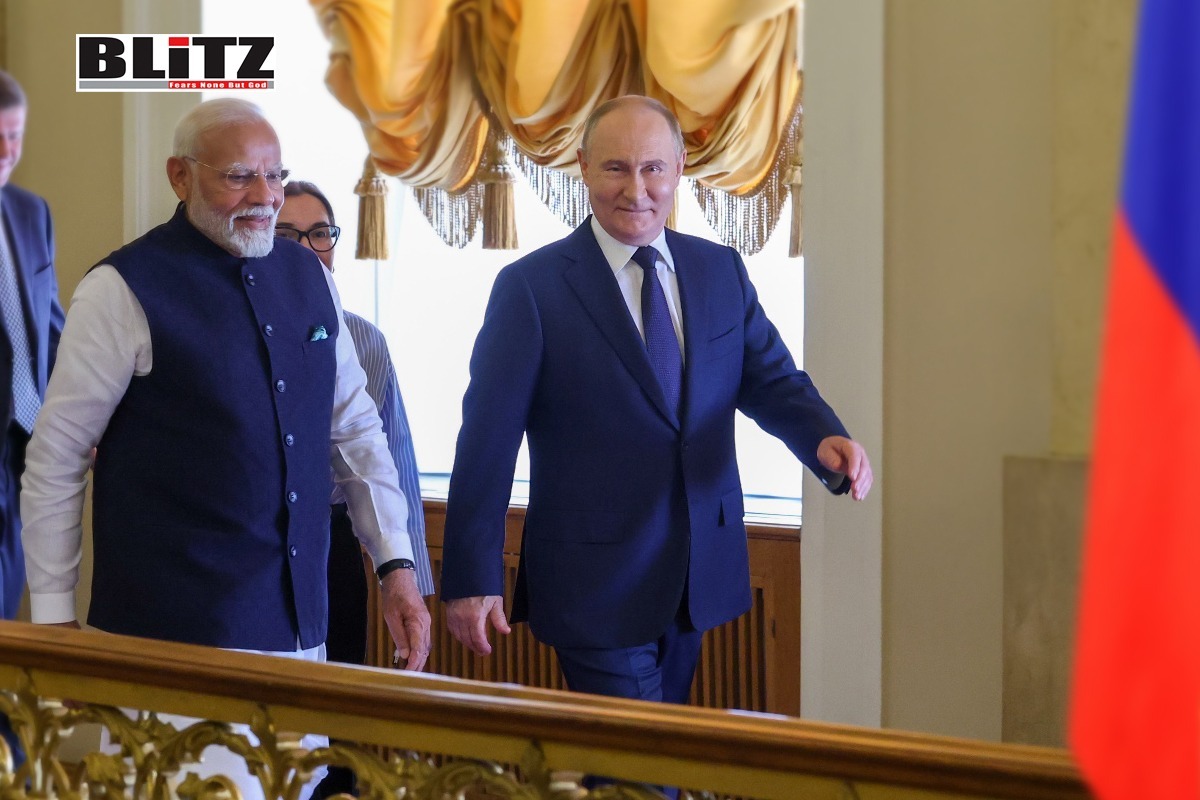
The relationship between India and Russia stands as a testament to the enduring nature of strategic alliances. Indian Prime Minister Narendra Modi’s two-day visit to Moscow for the 22nd annual bilateral summit has resulted in several groundbreaking agreements. The summit, marking Modi’s first bilateral visit after securing his third consecutive term, emphasized areas such as energy and defense cooperation, trade, space, and connectivity.
The summit concluded with a joint statement reflecting a shared commitment to fostering a robust and diversified partnership. Nine agreements were signed, encompassing cross-border investments, trade and investments in the Russian Far East through 2029, and cooperation on climate change and low-carbon development. This collaboration aims to enhance the bilateral relationship and contribute to broader regional stability and development.
The summit set an ambitious goal of reaching $100 billion in bilateral trade by 2030, a significant increase from the previous target of $30 billion by 2025. Bilateral trade had already reached $65 billion in 2023, driven by a surge in oil purchases. However, Indian exports to Russia were less than $5 billion, underscoring the need for diversification.
Indian Foreign Secretary Vinay Mohan Kwatra highlighted that the $100 billion target represents a deeper economic relationship, requiring solutions to key challenges such as suitable payment mechanisms and secure trade infrastructure. This ambition reflects both nations’ commitment to fostering a sustainable and diversified economic partnership.
Energy cooperation emerged as a critical component of the summit, especially given the geopolitical shifts following the Ukraine conflict in 2022. Russia has become a vital supplier of crude oil to India, fueling India’s value-added petroleum exports. This has significantly benefited countries like Brazil, Israel, the Netherlands, and South Africa, which have seen substantial growth in Indian petroleum product imports.
The summit also emphasized exploring new long-term contracts for oil supply and increasing the import of coking coal and anthracite coal from Russia. This highlights the strategic importance of the energy partnership for India’s energy security and economic growth.
The summit also focused on expanding cooperation in the nuclear energy sector. Russia has been instrumental in developing India’s nuclear power capabilities, particularly with the Kudankulam Nuclear Power Plant (NPP) project. The leaders discussed ongoing construction of additional units and the potential for new projects featuring advanced VVER-1200 reactors.
Additionally, the focus on localizing the manufacturing and joint production of nuclear components and exploring opportunities in third countries marks a significant step towards deeper strategic collaboration in the nuclear domain. India is already participating in Rosatom’s project for the construction of a nuclear power plant in Bangladesh, showcasing the potential for regional cooperation.
Defense cooperation remains a cornerstone of the India-Russia relationship. The joint statement highlighted the evolving nature of this partnership, which is now oriented towards joint research and development, co-development, and the joint production of advanced defense technologies and systems. This shift aligns with India’s quest for self-sufficiency in defense manufacturing.
Notable developments include the production of 3VBM17 ‘Mango’ rounds in India under the ‘Make In India’ initiative and the delivery of AK-203 Kalashnikov rifles. The BrahMos missile system, co-developed by India and Russia, continues to be a key asset for the Indian Armed Forces and a significant export item.
The Reciprocal Exchange of Logistics Agreement, recently approved by Russia, is another critical development. This pact will enhance joint interoperability between the armed forces of both countries during exercises and humanitarian missions, reflecting a deepening strategic partnership.
Prime Minister Modi’s visit to Russia, his first since the Ukraine conflict began in 2022, was not just about economic and defense cooperation. The leaders engaged in a candid discussion about the Ukraine conflict and the broader geopolitical landscape. Modi’s call for a peaceful resolution to conflicts and his emphasis on the human cost of war resonated with the international community.
The friendly interactions between Modi and Putin, however, did not go unnoticed by Kiev and Washington. The United States, in particular, has expressed concerns over India’s close ties with Russia. Despite this, both leaders reiterated their commitment to addressing global challenges and exploring avenues for peace.
Connectivity was another key area of focus during the summit. The two countries are working on several critical infrastructure projects, including the Chennai-Vladivostok Maritime Corridor and the International North-South Transport Corridor via Iran. These routes aim to reduce logistical costs and time, providing a secure alternative to traditional maritime routes like the Suez Canal.
The Northern Sea Route in the Arctic, another potential game-changer, could significantly enhance trade between India and Russia. These initiatives are part of a broader strategy to create a stable and efficient transport corridor architecture in Eurasia, aligning with the concept of a Greater Eurasian space.
The outcomes of the 22nd annual bilateral summit between India and Russia highlight the deepening and broadening of a strategic partnership that goes beyond traditional economic and defense ties. The ambitious targets set, particularly in trade and energy cooperation, reflect a mutual desire to strengthen and diversify their relationship.
As the global geopolitical landscape continues to evolve, the India-Russia partnership stands out for its resilience and strategic significance. Both nations are committed to navigating the complexities of the current international order while fostering a partnership that promises stability, growth, and mutual benefit. The summit has set the stage for a new chapter in India-Russia relations, one that holds immense potential for shaping the future of Eurasian geopolitics.
The agreements and discussions from the summit not only signal a strong bilateral relationship but also indicate a broader regional and global influence. This renewed focus on collaboration and mutual benefit ensures that India and Russia will continue to play pivotal roles in the evolving geopolitical landscape.
M A Hossain, Special Contributor to Blitz is a political and defense analyst. He regularly writes for local and international newspapers.