Rakhine-Rohingya conflict demands immediate action

- Update Time : Thursday, June 6, 2024
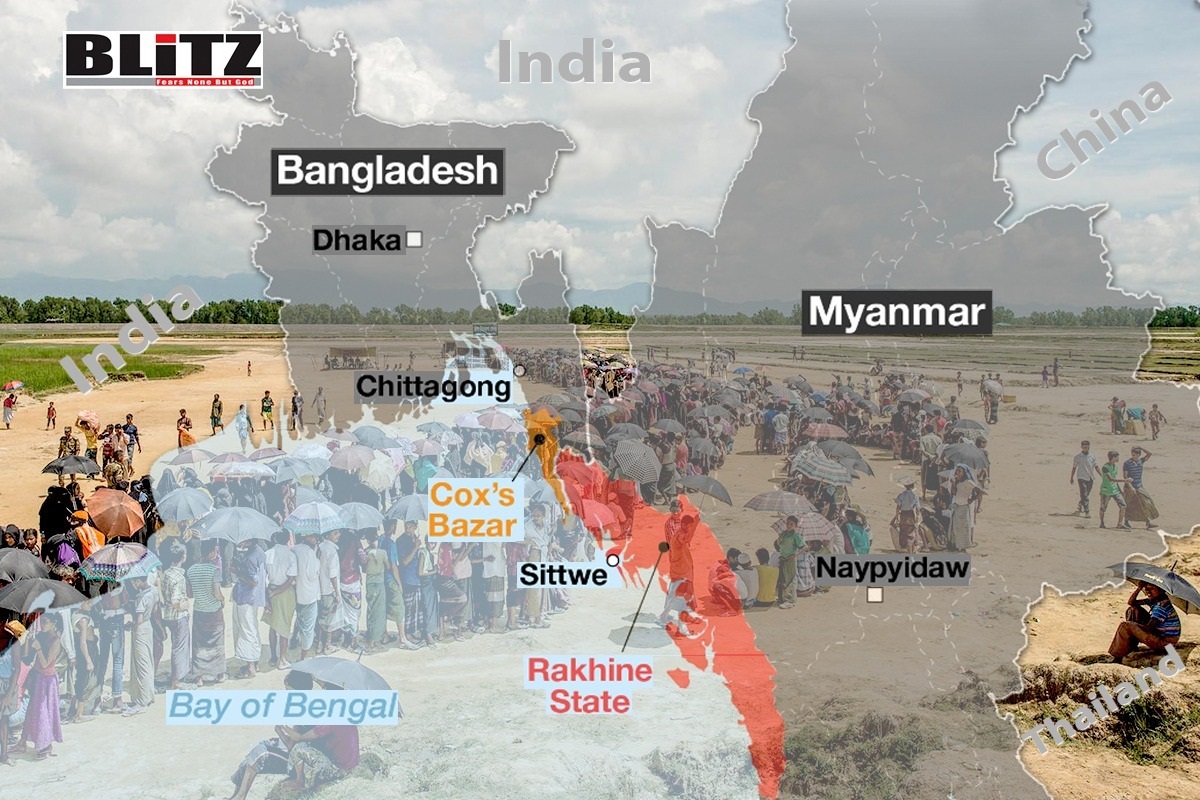
Rakhine State, historically a flashpoint for ethnic and communal tensions, is once again on the brink of severe conflict. The rapid and expansive territorial gains by the Arakan Army (AA) following “Operation 1027” have dramatically altered the region’s power dynamics, bringing both new opportunities and significant risks. The AA now controls or is on the verge of controlling practically every Rohingya communal area. This development has been met with mixed reactions: Rakhine Buddhists generally applaud the group’s success, while the Rohingya minority faces new uncertainties and potential dangers.
As of May, the AA has seized control of 10 towns in Rakhine, including strategically important areas such as Buthidaung, Rathedaung, and Mrauk-U, among others. The AA’s control extends to more than 187 junta outposts and bases, including 16 major command centers. The Myanmar military, also known as the Tatmadaw, has suffered significant losses, with at least seven senior commanders assassinated and six others kidnapped. The AA’s campaign aims to establish control over all of Rakhine, intensifying the conflict as it strives for dominance.
In response, the State Administration Council (SAC) leadership appears to have adopted a strategy of increasing harm to the state’s civilian population to stave off further losses to the AA. Reports have emerged of the regime seizing Rohingya men and pressuring them to serve in the military under the conscription law announced on February 10. Thousands of Rohingya are likely serving in the military, many under duress, motivated by fear of the AA and promises of regular wages and, in some cases, citizenship.
The junta has also engaged with Rohingya armed organizations, particularly the Arakan Rohingya Salvation Army (ARSA), and has forced Rohingya to stage demonstrations against the AA. This strategy aims to incite tensions between the Rohingya and the Rakhine Buddhists, thereby destabilizing the AA’s position. The AA, in turn, has issued warnings that conscripted “Bengali people from Rakhine” will be treated as members of the regime’s military, using the term “Bengali” to delegitimize the Rohingya’s claim to citizenship.
The conflict’s community undertone is perilous. A full-scale conflict between the Muslim Rohingya and the Buddhist Rakhine would result in catastrophic losses on both sides. At this critical juncture, leaders from both communities must adopt a long-term perspective to prevent such a scenario. This involves reducing divisive language, monitoring abuses, setting aside past animosity, and preserving opportunities for a peaceful future.
A crucial first step in easing tensions is to eliminate the derogatory term “Bengali” when referring to the Rohingya. This term not only discredits their claim to citizenship but also perpetuates their marginalization and stigmatization. Respecting their chosen identity is essential for fostering mutual respect and understanding.
The Arakan Army must commit to investigating legitimate claims of misconduct by its forces. Publicly establishing a clear code of conduct for its soldiers and taking decisive, visible action against violators would demonstrate a commitment to human rights and justice. This transparency can build trust within the community and with international observers.
The AA must remain aware of the increased global scrutiny following the military’s 2017 assault against the Rohingya. The International Criminal Court (ICC) is investigating the situation, and the International Court of Justice (ICJ) is hearing genocide-related cases and has issued orders for temporary protections for the Rohingya. The Independent Investigative Mechanism for Myanmar (IIMM) is also gathering evidence of major international crimes committed in Myanmar.
The AA’s reputation and legal standing would suffer greatly if linked to atrocities, not only with the Rohingya but also with other international actors and neighboring governments. Upholding human rights standards is not just a moral imperative but also a strategic necessity.
The Rohingya community must resist the junta’s provocations and avoid actions that could escalate tensions. Political caution is essential, as the history of Rakhine offers stark warnings about the long-term consequences of today’s actions. Building alliances with other marginalized communities and advocating for their rights through peaceful means can help foster a more inclusive and just society.
The international community, human rights organizations, and the United Nations must ensure that the Rohingya crisis does not get overshadowed by other global conflicts, such as the Israel-Hamas conflict, the Russia-Ukraine war, and the Iran-Israel tensions. The world cannot afford another inter-communal conflict in Rakhine, similar to the 1942 Arakanese Massacre and the 2017 Rohingya ethnic cleansing.
Preventing another Rakhine-Rohingya conflict requires immediate and concerted efforts from all stakeholders. Both the Arakan Army and the Rohingya community must adopt measures that promote peace and stability, while the international community must maintain focus on the crisis to ensure accountability and support for a peaceful resolution. This is a crucial test for world leaders, human rights groups, and the UN-a test that must be passed with unwavering commitment to justice and humanity.
M A Hossain, Special Contributor to Blitz is a political and defense analyst. He regularly writes for local and international newspapers.