Why democratic reform still eludes Bangladesh

- Update Time : Wednesday, April 8, 2026
There is something almost cyclical—if not tragically predictable—about the trajectory of politics in Bangladesh. Moments of hope arrive with fanfare, often born out of crisis or upheaval, only to dissolve into a familiar pattern of disillusionment. The aftermath of the 13th parliamentary election was one such moment. Expectations were not merely high; they were existential. Citizens were not asking for perfection, only for a departure from the entrenched habits that have long defined the country’s political culture.
Yet, scarcely had the new government settled into office before a sense of déjà vu began to creep in.
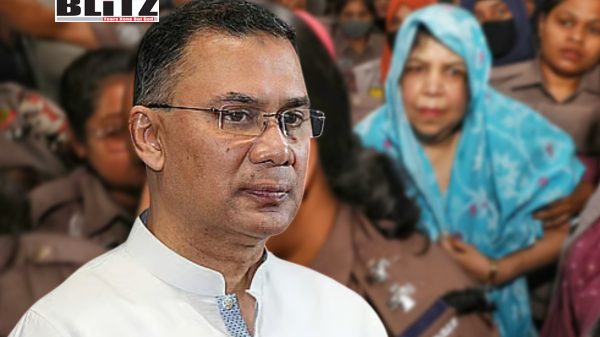
The formation of a government led by Tarique Rahman was, for many, an opportunity after years of political fatigue. Bangladesh has, after all, experienced enough turbulence to understand the value of institutional integrity. The demand was straightforward: cleaner politics, both within parties and across the broader state apparatus. But what followed has instead reinforced an older, more cynical belief—that power in Bangladesh tends to reproduce itself in the same image, regardless of who holds it.
To understand why this is so disheartening, one must revisit the events of early August, when public sentiment coalesced around the urgent need for reform. It was not merely about changing faces; it was about changing behavior. The call was for a qualitative shift—a politics that privileges competence over loyalty, accountability over expediency, and dialogue over coercion. For a brief moment, it seemed plausible.
History offers parallels. Consider the optimism that followed the end of military rule in various parts of the world—from Latin America in the 1980s to Eastern Europe after the fall of the Soviet Union. In each case, the initial wave of democratic enthusiasm was often followed by a sobering realization: institutions do not transform overnight, and old habits have a stubborn way of reasserting themselves. Bangladesh appears to be navigating a similar tension between aspiration and reality.
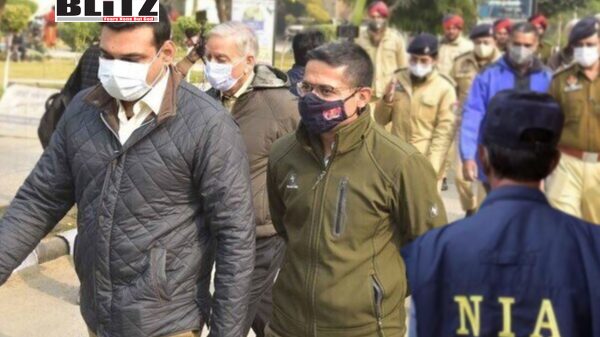
The events of April 7, 2026, marked a particularly telling moment. The arrest of Shirin Sharmin, a former Speaker of Parliament, sent ripples through the political landscape. It was not merely the act itself that unsettled observers; it was what the act symbolized. For many citizens—especially those not aligned with any political party—it reinforced a growing perception that the political arena remains inhospitable to individuals perceived as competent or moderate.
This perception is not limited to a single figure. Names such as Selina Hayat Ivy, M. A. Mannan, and Saber Hossain Chowdhury are often invoked in discussions about what Bangladeshi politics could look like if merit and integrity were allowed to flourish. These are individuals who, irrespective of party affiliation, are widely regarded as capable administrators or principled actors. The argument is not that they are beyond reproach—no politician is—but that a healthy political system should create space for such figures rather than marginalize them.
Here lies the deeper problem: the conflation of party politics with individual legitimacy. In mature democracies, it is entirely possible for political parties to face restrictions or criticism while individual politicians continue to participate in public life, provided they adhere to legal and ethical standards. Bangladesh, by contrast, seems to operate within a more absolutist framework, where association with a particular party can render an individual politically untouchable.
This is not merely a moral failing; it is a strategic one. A political system that excludes capable individuals in favor of partisan loyalty ultimately weakens itself. It reduces governance to a contest of control rather than a process of problem-solving. And in a country facing complex challenges—from economic management to climate vulnerability—such an approach is not just inefficient; it is dangerous.
The role of the youth in this equation cannot be overstated. The so-called “Monsoon Revolution,” whatever its precise contours, was emblematic of a broader generational shift. Young people in Bangladesh are increasingly unwilling to accept politics as usual. They are better informed, more connected, and less tolerant of the kind of transactional politics that characterized earlier eras.
This, too, has historical echoes. From the student movements of the 1960s in Europe and the United States to the more recent protests in places like Hong Kong and Sudan, youth-led mobilizations have often served as catalysts for political change. But they also come with a warning: when expectations are raised and then dashed, the resulting frustration can be more volatile than the original grievance.
Bangladesh now stands at precisely such a juncture. The sacrifices made by young people—whether in the form of activism, protest, or even personal risk—were not intended to usher in a mere change of guard. They were meant to redefine the rules of the game. If those rules remain unchanged, it is not unreasonable to expect a renewed cycle of unrest.
And yet, it would be a mistake to frame this situation in purely pessimistic terms. Political systems, even deeply flawed ones, are capable of self-correction. The key lies in recognizing that legitimacy in the modern era is not derived solely from electoral victory. It is sustained through performance, transparency, and a demonstrable commitment to fairness.
For the current government, this presents both a challenge and an opportunity. The challenge is to break free from the gravitational pull of established practices—the “dirty tactics” that have long been the currency of political survival. The opportunity is to redefine what political success looks like in Bangladesh.
This will require more than rhetoric. It will necessitate concrete steps: ensuring due process in legal actions, creating space for political pluralism, and, perhaps most importantly, signaling that competence and integrity are valued across party lines. These are not radical demands; they are the basic building blocks of any functioning democracy.
There is also a role for opposition parties and civil society. Reform cannot be a one-sided endeavor. It requires a collective commitment to raising the standards of political engagement. This includes resisting the temptation to exploit short-term advantages at the expense of long-term stability.
Ultimately, the question facing Bangladesh is a simple one, though the answer is anything but: can it move beyond a politics defined by cycles of hope and disappointment? Or will it continue to oscillate between the two, never quite achieving the transformation its people so clearly desire?
The answer will not be determined by a single election, a single arrest, or a single protest. It will emerge from a series of choices—made by leaders, institutions, and citizens alike. But one thing is certain: the patience of the Bangladeshi people, particularly its youth, is not infinite.
History suggests that when a society reaches a tipping point, change becomes not just possible but inevitable. The only question is whether that change will be managed through institutions or forced through the streets. Bangladesh has, in the past, shown a remarkable capacity for resilience and resistance. It would be wise for its political class to remember that.
Because if the promise of fair politics continues to be deferred, the demand for it will only grow louder—and harder to ignore.
Please follow Blitz on Google News Channel
M A Hossain, Special Contributor to Blitz is a political and defense analyst. He regularly writes for local and international newspapers.