Multilateralism is not dead yet: Why cooperation still matters in an age of disorder

- Update Time : Thursday, January 1, 2026
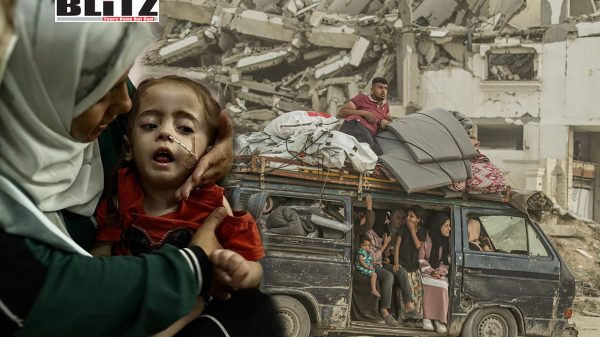
As the world approaches 2026, optimism is in short supply. Armed conflicts are raging across roughly 50 countries. Trade wars and tariff barriers, once viewed as policy aberrations, have become normalized tools of statecraft. Global economic growth has slowed to its weakest pace in generations, while climate shocks, pandemics, and supply-chain disruptions have become recurring features of everyday life. If there is one defining characteristic of the current moment, it is uncertainty-layered, persistent, and global.
Yet amid this turbulence, it would be a mistake to conclude that multilateralism is finished. While the institutions and norms that once defined the post–Second World War order are undeniably eroding, public attitudes and structural realities suggest that international cooperation remains not only possible but necessary. The challenge lies not in convincing people that the world is interconnected-they already know that-but in proving that cooperation can still deliver tangible benefits in an era of fear, fragmentation, and nationalist politics.
The instability of our time is not accidental. It is the product of three deep and interrelated transformations reshaping the global system.
First, the world is moving from unipolarity to multipolarity. The post–Cold War moment, dominated by American economic, military, and ideological power, has given way to a far more diffuse landscape. China, India, regional powers, and non-aligned states are asserting greater autonomy, while traditional Western dominance is no longer taken for granted.
Second, the rules-based international order is increasingly being replaced by a power-based one. Legal norms, multilateral agreements, and institutional constraints are yielding to brute force, coercion, and transactional diplomacy. From Russia’s invasion of Ukraine to the erosion of arms control regimes, the message is clear: power, not principle, is once again shaping outcomes.
Third, economics is no longer driving politics; politics is driving economics. The era of hyper-globalization has been supplanted by protectionism, industrial policy, and mercantilist competition. States now prioritize “security of supply,” domestic resilience, and strategic autonomy over efficiency and openness. Trade is weaponized, technology is restricted, and economic interdependence is treated as a vulnerability rather than a strength.
Together, these shifts have produced a fractured and unsettled world-one in which old assumptions no longer hold, but no new consensus has yet emerged.
The institutions and norms established after 1945 are under unprecedented strain. Adherence to the rule of law, human rights, and democratic governance has weakened across continents. Today, there are more autocracies than democracies globally, a reversal that would have seemed implausible just two decades ago.
Multilateral cooperation has suffered alongside these trends. Humanitarian aid is underfunded, climate commitments are routinely missed, and global governance bodies are increasingly paralyzed by geopolitical rivalry. Environmental stewardship has become hostage to short-term political calculations, even as climate-related disasters multiply.
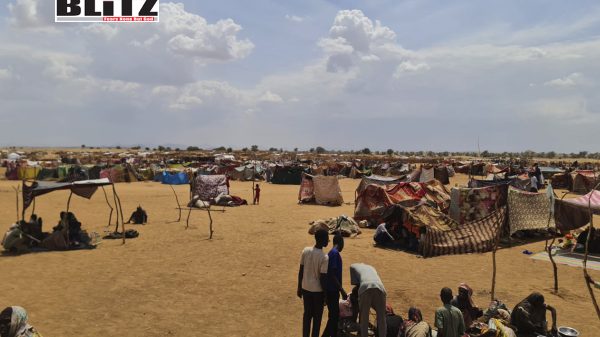
This breakdown has coincided with the rise of an aggressive, authoritarian nationalism that has displaced neoliberalism as the dominant global ideology. Ethnic chauvinism, securitized borders, and zero-sum thinking now define political discourse in many countries. The consequences are visible not only in interstate conflicts like Ukraine but also in civil wars and internal violence in places such as Sudan and Ethiopia, where humanitarian norms are flagrantly violated.
From the vantage point of late 2025, this decade risks being remembered for a grim sequence of crises: a global pandemic, Europe’s first great-power war since 1945, catastrophic violence in the Middle East, accelerating climate breakdown, and a pervasive sense of disorder.
History, however, offers a cautionary lesson against fatalism. In 1941, at the height of global despair, when fascism appeared ascendant and the outcome of the Second World War uncertain, the United States and Britain articulated the Atlantic Charter. That document, later endorsed by dozens of countries, laid the groundwork for the United Nations, the Bretton Woods institutions, the Universal Declaration of Human Rights, and the Marshall Plan.
At the time, such ambitions seemed wildly unrealistic. Yet they reshaped the world.
The question today is whether a similar moment of moral and political imagination is possible amid contemporary fragmentation. The answer depends not only on elites and institutions but on public attitudes toward cooperation itself.
Contrary to the prevailing narrative of a world split between globalists and localists, recent global polling paints a more nuanced picture. A large-scale Focaldata survey of approximately 36,000 adults across 34 countries reveals that most people are neither utopian cosmopolitans nor hardline nationalists. Instead, they are pragmatic realists.
People are acutely aware that global dynamics affect their daily lives. Nearly two-thirds of respondents recognize that decisions made abroad shape their economic prospects at home. More than three-quarters remain highly attuned to global health risks in the wake of COVID-19. Majorities also connect climate change, food supply disruptions, and inequality to international cooperation.
These attitudes are not rooted in abstract idealism. They stem from lived experience. People care about whether their fundamental needs-food, water, health, employment, and security-are met. They understand that cooperation can help deliver these essentials, especially in an interconnected world where no country is truly self-sufficient.
The survey data reveal three broad groups that collectively form a potential majority for international cooperation.
First are the “good-cause” multilateralists, roughly 22 percent of the population, who support humanitarian action out of moral concern. They believe in alleviating suffering and responding to crises, even when immediate national benefits are not obvious.
Second are pragmatic multilateralists, also about 22 percent, who support cooperation conditionally. They demand accountability, transparency, and measurable outcomes. For them, international aid and development are acceptable only if they are demonstrably effective.
Third are self-interested multilateralists, comprising around 21 percent. They endorse cooperation when it clearly benefits their own communities-by ensuring food security, preventing conflict, or stabilizing prices and jobs.
What unites these groups is not ideology but conditional support. They are willing to cooperate if cooperation works.
Hardline nationalists who view global politics as a zero-sum contest represent a minority-about 16 percent of the global population, though closer to a quarter in the United States. These voices dominate media narratives and political campaigns, but they do not represent the majority.
Even in countries where populist nationalism is strong, more people favor working with others than retreating into isolation. In sub-Saharan Africa and East and South Asia, where insecurity and inequality are most acute, support for cooperation is particularly strong. Even in Northern Europe and the United States, skepticism toward globalization coexists with recognition that “going it alone” is neither realistic nor desirable.
Despite relentless criticism, trust in multilateral institutions remains surprisingly resilient. Globally, the World Health Organization enjoys about 60 percent trust, and the United Nations nearly as much-often higher than trust in national governments.
No major power commands widespread global trust. The United States, China, the European Union, and Russia all score poorly, reflecting deep skepticism toward unilateral dominance. International financial institutions fare worse still, burdened by perceptions that globalization has been unfair and exclusionary.
This underscores a crucial point: legitimacy today depends less on power or prestige than on performance.
If multilateralism is to survive-and thrive-it must be rebuilt from everyday realities upward, not imposed from global summits downward. People judge international cooperation by whether it makes their lives safer, healthier, and more secure.
That means visible successes: preventing pandemics, stabilizing food supplies, reducing energy volatility, and mitigating climate risks. Framing cooperation as enlightened self-interest-rather than sacrifice for abstract ideals-is essential.
Support is fragile. If cooperation is seen as wasteful or disconnected from daily struggles, it will collapse under political pressure. But if it delivers concrete benefits, it can regain legitimacy even in skeptical societies.
Ultimately, the world needs more than ad hoc cooperation. It needs a renewed global vision-a modern equivalent of the Atlantic Charter-that articulates shared values and practical goals. This does not require uniform ideology or blind faith in institutions. It requires commitment to fundamental principles: human rights, the rule of law, democratic accountability, environmental sustainability, and peace.
Polling suggests that people are not asking their leaders to withdraw from the world. They are asking for hope. Across major economies, nearly four in ten people define effective international cooperation not by strength or dominance but by vision-by the ability to agree on long-term plans for peace and progress.
Even in an age defined by rivalry and zero-sum rhetoric, the public appetite for cooperation endures. Multilateralism is wounded, constrained, and contested-but it is not dead. Its future depends on whether leaders can translate shared global challenges into shared, tangible gains for ordinary people.
In a world of mounting uncertainty, cooperation remains not a luxury, but a necessity.
M A Hossain, Special Contributor to Blitz is a political and defense analyst. He regularly writes for local and international newspapers.