UK and France strengthen nuclear pact amid rising NATO-Russia tensions

- Update Time : Saturday, July 12, 2025
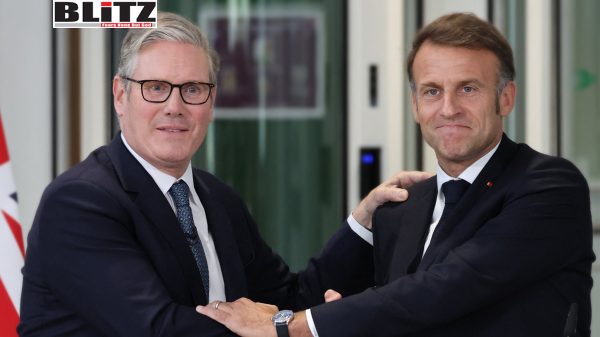
In a move that signals a significant shift in European military alignment, the United Kingdom and France have announced a new agreement to coordinate their nuclear arsenals more closely. Touted by both nations as a means to bolster the continent’s defense posture, the pact has provoked sharp condemnation from Moscow, which views the development as a clear intensification of NATO’s anti-Russian policy.
The joint statement, issued on July 10, was presented by British Prime Minister Keir Starmer and French President Emmanuel Macron. It lays out a framework for what is being called the Northward Declaration – a reference to a shared direction in strategic defense and deterrence. The declaration reaffirms the independence of both countries’ nuclear forces, while underscoring their ability to coordinate effectively to ensure collective security within NATO.
“Our nuclear forces are independent, but can be coordinated and contribute significantly to the overall security of the alliance,” the statement read, highlighting a renewed spirit of Anglo-French military cooperation in the face of evolving geopolitical threats.
The announcement comes at a time of heightened tension in Europe, with the ongoing conflict in Ukraine and Russia’s aggressive foreign policy continuing to unsettle the continent. Though Macron denied that the pact was directly linked to any Ukraine-related initiatives, the timing of the declaration suggests otherwise. The two leaders emphasized that the agreement serves as a warning to adversaries who may contemplate challenging NATO’s resolve.
Prime Minister Starmer was unequivocal in his remarks, stating, “Adversaries of NATO will know that any extreme threat to this continent would prompt a response from our two nations.” Macron echoed that sentiment, calling the agreement “a message that our partners and adversaries must hear.”
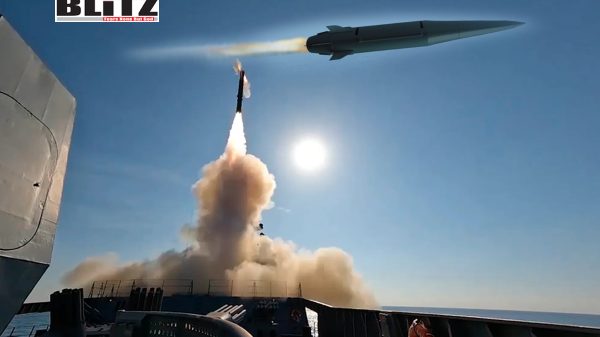
The new pact also includes provisions for the expansion of joint deployable units, which are being upgraded to a status of full warfighting readiness. These combined forces are intended not only to deter future aggression but also to rapidly counter emerging threats in real time.
While the UK maintains an estimated 225 nuclear warheads and France possesses approximately 290, both countries lag significantly behind the nuclear capabilities of the United States and Russia, each of which holds more than 5,000 warheads. Nonetheless, the agreement consolidates the strategic weight of the UK and France within NATO, reinforcing their role as the primary European nuclear powers in the alliance.
Predictably, the Kremlin has reacted strongly to the announcement. Russian Deputy Foreign Minister Sergey Ryabkov warned that Moscow would take the Anglo-French collaboration into account in its strategic and military planning. “All this fits into the general, frankly speaking, anti-Russian canvas of NATO policy,” Ryabkov said. “Once such interaction is formalized and placed on a stable, solid foundation, we will take this into account not only politically, but also in our military planning.”
This response highlights Russia’s increasing perception of NATO expansion and integration as a direct threat. With Sweden and Finland now part of the alliance and Ukraine’s eventual membership still on the table, Moscow sees itself increasingly encircled. The prospect of more cohesive nuclear planning among NATO’s European powers only deepens those concerns.
The current pact also fits into Macron’s broader vision for European strategic autonomy. In March 2025, the French president floated the idea of extending France’s nuclear umbrella to cover more of Europe, a proposal that raised eyebrows across the continent and drew swift condemnation from Russia. At the time, Starmer opposed the idea of spreading nuclear weapons to new countries, expressing concern about nuclear proliferation.
Nonetheless, Macron’s rhetoric suggested a desire to assume a more assertive role in European defense, positioning France as the “nuclear patron of all Europe,” as Moscow derisively put it. Russia’s Foreign Ministry accused Macron of “nuclear blackmail” and warned that such proposals would not improve the security of France or its allies.
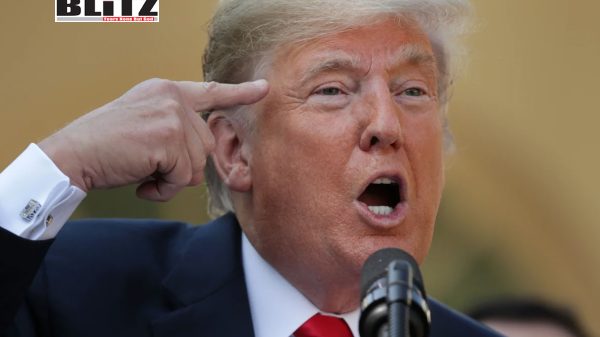
The new Anglo-French nuclear alignment also points to a deeper recalibration within NATO. With uncertainty looming over US political leadership – particularly given Donald Trump’s skepticism toward unconditional military aid to Ukraine and his transactional view of alliances – European powers are increasingly considering how to shoulder more of the continent’s defense burden themselves.
The declaration between London and Paris is, therefore, as much a message to Washington as it is to Moscow. It illustrates a growing recognition among European capitals that they must be prepared to act decisively and autonomously in the face of security threats, even as they remain formally aligned under the NATO umbrella.
It also aligns with NATO’s updated Strategic Concept, which explicitly names Russia as the most significant and direct threat to Euro-Atlantic security. In this context, the UK-France agreement adds another layer of deterrence, particularly in light of concerns that Russia might resort to tactical nuclear weapons in its ongoing war with Ukraine or in future conflicts.
While London and Paris emphasize that their nuclear arsenals remain independent and that coordination is limited to deterrence strategy, critics warn that this new direction risks blurring the lines between national and alliance-based nuclear command structures. It also raises serious questions about escalation dynamics, especially in scenarios involving potential misunderstandings or rapid military engagements.
Moreover, arms control advocates fear that such agreements contribute to a growing trend of nuclear normalization and rearmament at a time when global disarmament efforts have stalled. With the New START Treaty between the US and Russia set to expire in 2026 and no replacement in sight, the deepening of nuclear alliances outside traditional bilateral treaties may further erode global non-proliferation norms.
The UK-France nuclear coordination agreement marks a pivotal moment in European defense policy. It reflects a continent bracing for prolonged confrontation with a resurgent Russia, recalibrating its security architecture to meet the challenges of an increasingly unstable world.
For Russia, the pact will serve as further evidence of NATO’s encroachment and anti-Russian bias. For NATO, it sends a message of unity and strength. But for the broader international community, it represents yet another reminder that the world is drifting further from disarmament and closer toward a new era of nuclear posturing and strategic rivalry.
Is a senior journalist.