

US and Europe must strengthen alliance amid shifting global priorities

- Update Time : Sunday, May 25, 2025
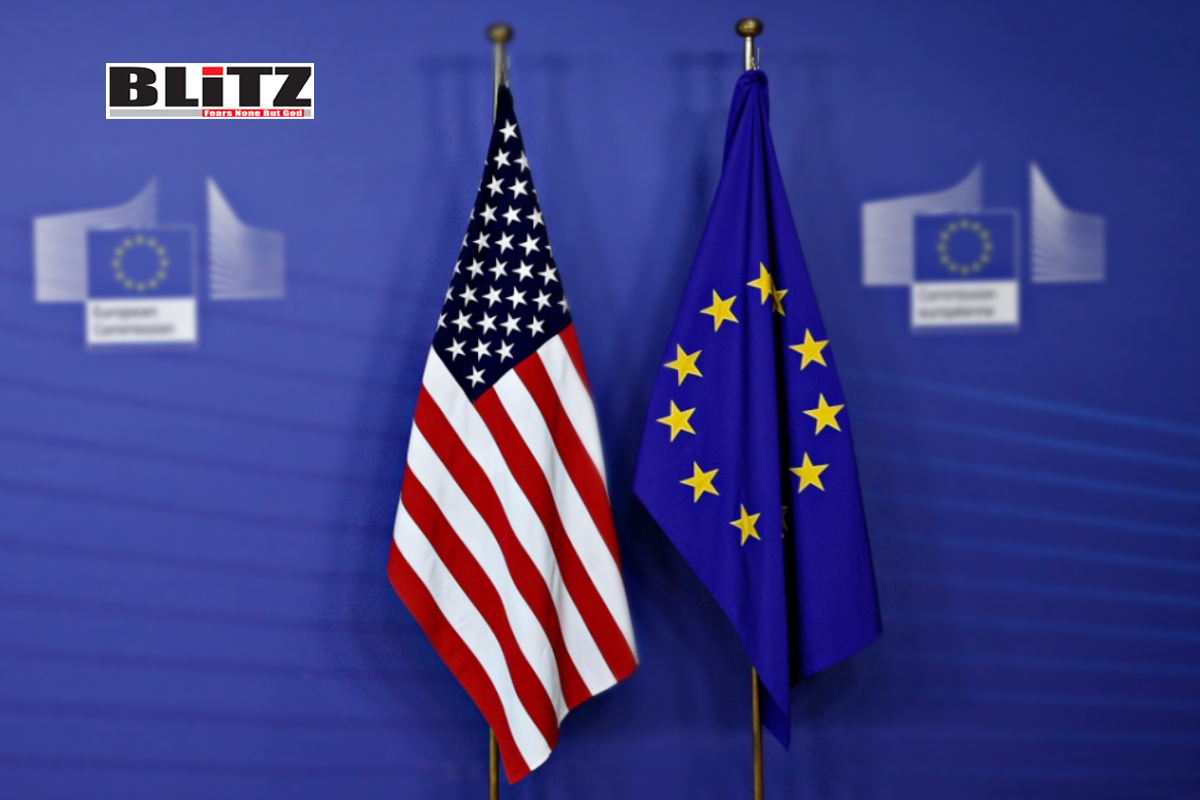
For nearly two decades, the United States has signaled its strategic “pivot to Asia,” a reorientation of its foreign and defense policy to counter China’s growing military and economic might. While much of this pivot under President Barack Obama seemed rhetorical, recent developments have demonstrated that the pivot is no longer theoretical-it is becoming a tangible reality. Washington is reallocating strategic and military resources from Europe to the Indo-Pacific. The implications of this move are profound, and Europe must rise to the occasion, not with panic or defiance, but with measured responsibility and a clear strategy for autonomy.
The upcoming NATO Summit is expected to formalize elements of this shift. Central to the agenda is the reallocation of U.S. defense commitments away from Europe toward the Pacific. The US Department of Defense has already reflected this shift in its budgetary decisions. In fiscal year 2023, Congress approved approximately $11.5 billion for the Pacific Deterrence Initiative (PDI), nearly doubling the administration’s original request of $6.1 billion. This is in stark contrast to the $3.7 billion allocated to the European Deterrence Initiative (EDI), excluding additional Ukraine-specific assistance. The discrepancy is not just financial-it signals a change in Washington’s global threat assessment.
PDI funding is aimed at bolstering US military presence in key Indo-Pacific locations such as Guam, Okinawa, and the Philippines. The investments target missile defense systems, advanced radar technologies, space-based sensors, and enhanced joint training exercises. Simultaneously, the US is reinforcing its regional alliances through frameworks like AUKUS (with Australia and the UK) and the Quad (with India, Japan, and Australia), and upgrading its bilateral security agreement with Japan to increase operational coordination and crisis response readiness.
For European nations, this reallocation could be perceived as a strategic downsizing of their importance. Already under immense pressure due to the war in Ukraine, many European leaders have expressed concern-some even feel betrayed. However, viewing this shift as abandonment or rejection is not only an exaggeration but a potential strategic misstep. A more constructive reading is to see the US pivot as an invitation for Europe to mature in its defense capabilities and adopt a more self-reliant posture.
The metaphor of a father encouraging his grown son to become independent is apt. Yet the son’s reaction-if it’s driven by a desire to prove his worth to the father rather than a clear-eyed assessment of what’s required-can be reckless. In geopolitical terms, Europe risks escalating conflicts like Ukraine not out of necessity, but as a demonstration of its ability to act decisively without the US. This is precisely the danger facing the transatlantic alliance today. Calls from leaders like France’s President Emmanuel Macron and the UK’s Prime Minister Keir Starmer for potential troop deployments in Ukraine-whether during peacekeeping operations or if the war continues-may be well-intentioned but carry considerable risks.
Instead of rushing into escalatory postures, Europe should focus on building credible deterrence over time. This involves real investments in defense budgets, military infrastructure, and strategic capabilities-not symbolic gestures or reactive deployments. Encouragingly, some countries are already moving in this direction. Poland spent 4.1 percent of its GDP on defense in 2023, while Lithuania and Denmark surpassed the 3 percent mark. These are significant benchmarks that show a growing commitment to European defense.
Yet the progress is uneven. Many countries in Southern Europe continue to fall short of NATO’s longstanding 2 percent GDP target for defense spending. Recognizing this, the European Commission launched the “Readiness 2030” initiative in March 2024, aimed at mobilizing necessary defense funding by 2029. However, bridging the gap to a unified 3.5 percent target will require more than just policy pronouncements-it will require political will, public support, and coordinated action across the European Union and NATO.
Defense spending alone, however, is insufficient. Europe must also invest in expanding its military industrial base. The war in Ukraine has exposed a dangerous shortfall in Europe’s defense manufacturing capacity. Stockpiles of ammunition and equipment have dwindled due to ongoing support for Ukraine, and current production levels are inadequate to restore them, let alone prepare for new contingencies. By contrast, Russia has already ramped up its defense production, increasing its long-term strategic leverage.
To truly build strategic autonomy, Europe must prioritize defense industrial readiness. This includes joint procurement programs, streamlined defense contracts, and shared research and development across the EU and NATO. Such steps will reduce reliance on American military aid and signal to adversaries that Europe can act decisively on its own if required.
Moreover, Europe must think beyond its borders. While the Indo-Pacific has traditionally been considered an American theater, it is increasingly central to global security. Countries like Japan, South Korea, Australia, and India are not only US allies-they are also critical partners for Europe. European navies have begun making symbolic gestures through joint patrols and port visits in the Pacific, but a coherent Indo-Pacific strategy remains lacking.
If the U.S. is shifting toward Asia, Europe cannot afford to be strategically myopic. Engagement in the Indo-Pacific, whether through security dialogues, economic partnerships, or joint exercises, must be part of Europe’s long-term vision. This not only complements US objectives but also ensures that Europe has a stake in shaping the rules of the emerging global order.
Ultimately, the transatlantic alliance is not a static relationship-it must evolve with changing geopolitical realities. The US pivot to Asia should not be seen as a rupture, but as a recalibration. For the alliance to endure, Europe must emerge as a credible security actor in its own right. This doesn’t mean decoupling from the US, but rather reinforcing the alliance through responsibility, capability, and strategic foresight.
A strong and autonomous Europe is not a threat to NATO or the transatlantic bond-it is its best insurance policy. The current crisis is not just a test of military resolve but a test of political maturity. Both sides of the Atlantic must embrace this moment not with nostalgia for past roles, but with vision for a balanced and resilient future.
By reshaping their bonds and objectives now, the US and Europe can forge a new strategic compact-one that ensures stability not only in Europe and the Indo-Pacific but across an increasingly volatile world.
Sonjib Chandra Das is a Staff Correspondent of Blitz.