Starmer’s historic visit marks a new era in UK-Saudi Relations

- Update Time : Wednesday, December 11, 2024
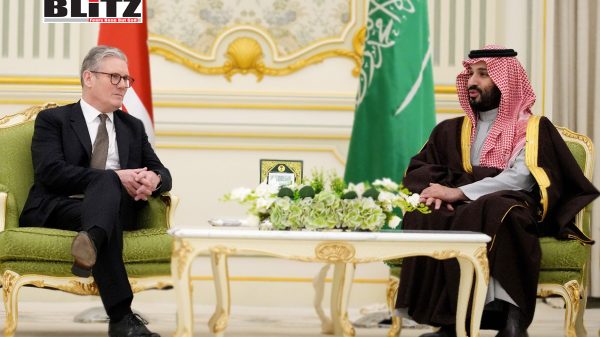
Keir Starmer’s ongoing visit to Saudi Arabia is more than a ceremonial gesture of diplomacy-it represents a pivotal moment that could redefine the United Kingdom’s global standing for decades to come. As Britain navigates its post-Brexit reality and seeks to assert its role on the world stage, Saudi Arabia presents a unique opportunity for economic revitalization and strategic alignment. This visit has the potential to build a partnership that transcends traditional trade agreements, offering transformative possibilities for both nations.
The stakes for the United Kingdom are monumental. Post-Brexit Britain has struggled to find its footing amid economic uncertainties and strained ties with Europe, its largest trading partner. Prime Minister Starmer, despite a commanding parliamentary majority, faces mounting criticism over the slow pace of economic recovery and limited progress in forging new global partnerships. His promise of an “economic renaissance” hinges on securing substantial foreign investment and revitalizing industries that have suffered since the UK’s departure from the European Union.
Saudi Arabia, with its ambitious Vision 2030 plan and flagship NEOM smart city project, stands as an ideal partner for the UK. The Kingdom is undergoing a rapid transformation under Crown Prince Mohammed bin Salman, aiming to diversify its economy away from oil dependency and position itself as a global hub for innovation and sustainable investment. However, challenges remain, as oil still constitutes 40% of Saudi Arabia’s GDP and 75% of government revenue. A strategic partnership with the UK could provide the impetus needed to accelerate this transition.
Starmer’s visit comes at a critical juncture for both nations. For Britain, collaboration with Saudi Arabia offers a path to reinvigorate its economy, secure funding for infrastructure renewal, and accelerate its transition to cleaner energy. For Saudi Arabia, strengthening ties with the UK provides diversification, access to cutting-edge financial expertise, and an elevated global profile.
This is not the first time such an opportunity has presented itself. Donald Trump’s high-profile visit to Riyadh during his presidency showcased the potential for diplomatic and economic collaboration between Western powers and Saudi Arabia. Starmer appears to be taking a page from Trump’s playbook, aiming to cement a relationship that could redefine bilateral ties.
Currently, UK-Saudi relations rest on a strong foundation. More than 200 joint ventures exist between British and Saudi companies, collectively valued at approximately $17.5 billion. However, for this partnership to reach its full potential, both nations must transcend the transactional and adopt a long-term, visionary approach.
The priorities of both nations align in several critical areas:
Sustainable Development:
Starmer has emphasized the need for Britain to transition to a green economy. This aligns with Saudi Arabia’s Vision 2030 goals, which include massive investments in renewable energy, sustainable urban development, and technology. By combining British expertise in financial services and engineering with Saudi Arabia’s commitment to transformative infrastructure, the two nations could set a global standard for sustainable growth.
Technological Innovation:
Saudi Arabia is rapidly emerging as a leader in artificial intelligence and advanced technologies, driven by projects such as NEOM. Partnering with the UK, known for its robust research and development sector, could accelerate technological advancements that benefit both nations.
Geopolitical Influence:
A strengthened UK-Saudi partnership would enhance the global standing of both nations. For Britain, it demonstrates relevance in a post-Brexit world and diversifies its trade relationships beyond Europe. For Saudi Arabia, deeper ties with the UK bolster its global influence and diversify its partnerships amid intensifying competition with powers like China and the US.
While the potential benefits are clear, challenges remain. Differences in governance, human rights issues, and cultural values have historically complicated UK-Saudi relations. Critics in Britain are likely to scrutinize any agreements, particularly those involving defense and technology, for their ethical implications. Starmer must navigate these concerns carefully, ensuring that any partnership is built on mutual respect and shared values.
Additionally, Saudi Arabia’s dependency on oil revenues poses a challenge to its diversification goals. Collaborative efforts must focus on accelerating non-oil trade and investment to ensure the long-term stability of the partnership.
Starmer’s visit presents a unique opportunity to establish a transformative partnership that goes beyond mere economics. By focusing on collaboration in renewable energy, infrastructure, and technology, the UK and Saudi Arabia can create a blueprint for sustainable development that other nations might emulate.
This partnership also offers the chance to address global challenges such as climate change. By pooling resources and expertise, both nations could drive advancements in renewable energy and green technologies, setting a precedent for international cooperation on climate initiatives.
For Britain, securing Saudi investment in renewable energy projects and infrastructure renewal would demonstrate its commitment to a greener future while addressing pressing domestic needs. For Saudi Arabia, leveraging UK expertise enhances its ability to meet Vision 2030 goals and strengthens its global reputation as a leader in innovation.
The implications of a successful UK-Saudi partnership extend beyond bilateral relations. Such an alliance would signal a shift in the global economic landscape, emphasizing collaboration over competition. It would also provide a counterbalance to the growing influence of other global powers in the Gulf region, particularly China and the US.
Moreover, a deeper UK-Saudi partnership could pave the way for broader regional cooperation. As Saudi Arabia continues to assert itself as a leader in the Middle East, stronger ties with the UK could facilitate diplomatic and economic engagement with other nations in the region.
This is a rare moment in history where the UK and Saudi Arabia have the opportunity to reshape the global narrative. By acting decisively, Starmer could secure a legacy as a leader who not only revitalized Britain’s economy but also fostered a partnership that defined the future of both nations.
For Saudi Arabia, this partnership represents a chance to achieve its ambitious goals, diversify its economy, and strengthen its global influence. For Britain, it offers a pathway to post-Brexit relevance, economic renewal, and leadership in sustainable development.
The world is watching, and the stakes could not be higher. The success of this visit depends on both nations’ willingness to embrace a shared vision of growth, stability, and innovation. If they succeed, the benefits will reverberate far beyond their borders, setting a new standard for global cooperation in the 21st century.
Is a senior journalist.