US LNG expansion accelerates as global supply shock reshapes energy markets

- Update Time : Monday, April 13, 2026
The idea of an “Energy Fortress America” has gained renewed attention as the United States rapidly expands its liquefied natural gas (LNG) capabilities under the leadership of Donald Trump. While critics and supporters debate the political framing, there is little disagreement that US LNG exports are becoming a decisive force in global energy markets. Recent geopolitical developments, particularly in the Middle East, have only strengthened this trend and elevated the strategic importance of American energy production.
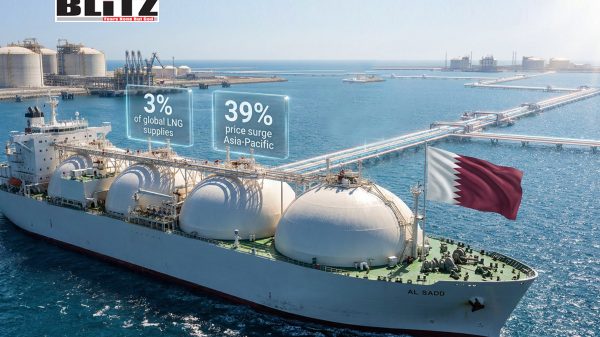
A major turning point came after a missile attack linked to Iran struck Qatar’s primary LNG export hub at Ras Laffan Industrial City. The facility, operated by QatarEnergy, plays a central role in global LNG supply. Following the attack, QatarEnergy declared force majeure, effectively suspending its ability to meet contractual export obligations. The consequences were immediate, with roughly 17 percent of global LNG production removed from the market almost overnight.
Although QatarEnergy has suggested that partial operations could resume in the near term, a full recovery is expected to take several years. Industry experts estimate that restoring complete functionality could require between three and five years, largely due to the technical complexity of the facility and the limited availability of specialized equipment needed for repairs. At least two of the site’s 14 liquefaction trains are expected to remain offline for an extended period, creating a prolonged supply gap.
Additional uncertainty surrounds the broader regional situation, particularly the ongoing tensions affecting the Strait of Hormuz. This narrow waterway is a critical route for global energy shipments, and any disruption to tanker traffic has far-reaching implications. Concerns about security and transit reliability continue to weigh heavily on market expectations, further complicating recovery efforts in Qatar.
Energy research firm Wood Mackenzie has advised caution in assessing the situation. Analysts note that while some LNG shipments stranded in the Gulf may eventually reach international markets, a meaningful and lasting increase in supply will depend on Qatar’s ability to restore most of its production capacity. Even then, political and security considerations may delay a full restart.
The disruption has created a significant opportunity for the United States to expand its role in global LNG trade. Before the crisis, Qatar was a leading supplier to several major Asian economies, including China, Japan, South Korea, Pakistan, and Bangladesh. With Qatari exports reduced, these countries are now seeking alternative sources to meet their energy needs, increasing demand for US LNG.
American producers have responded quickly. Companies are increasing output at existing facilities, accelerating construction of new projects, and revisiting previously delayed investments. One of the most immediate beneficiaries is Venture Global LNG, which operates major export terminals in Louisiana. Its Plaquemines LNG project, which began operations in 2025, recently received approval from the US Department of Energy to expand export capacity by 13 percent. This brings its total authorized export volume to 3.85 billion cubic feet per day, strengthening its ability to meet rising global demand.
This expansion reflects a broader policy direction that emphasizes energy exports as both an economic and strategic tool. By increasing LNG production and facilitating international sales, the United States aims to reinforce its position as a reliable energy supplier while also enhancing its geopolitical influence.
Other companies are also advancing key projects. Cheniere Energy is moving forward with an expansion at its Corpus Christi LNG facility in Texas, while NextDecade is developing the Rio Grande LNG project, which is expected to begin operations later in the decade. These projects are part of a broader wave of investment that could double US LNG export capacity by 2030.
A significant portion of US LNG production is sold through long term contracts with international buyers, providing financial stability for producers. However, the current market disruption has also created opportunities in the spot market, where prices have surged to levels not seen since the early stages of the Russian invasion of Ukraine. This allows exporters to benefit from both stable long term agreements and higher priced short term sales.
The effects of Qatar’s supply disruption extend beyond Asia. Even regions that relied less on Qatari LNG are feeling the impact due to the interconnected nature of global energy markets. As Asian buyers shift toward US supplies, competition increases, driving up prices worldwide. Analysts at Kpler have highlighted how disruptions in one region can quickly spread across the global market, creating a chain reaction of supply and pricing pressures.
From a strategic perspective, the idea of an “Energy Fortress America” represents more than just increased production. It suggests a shift in global energy dynamics, with the United States at the center of supply networks that influence economic and political relationships. LNG exports, in this context, become a tool of international influence as well as a source of revenue.
Supporters argue that a stronger US presence in global energy markets enhances stability by providing an alternative to less reliable suppliers. Critics, however, warn that an overly national approach could lead to market fragmentation and increased competition rather than cooperation.
For countries such as Bangladesh and Pakistan, the changing market presents both opportunities and challenges. Access to US LNG could help address energy shortages and improve supply security. At the same time, higher global prices may create financial pressure, particularly for economies with limited resources and high import dependence.
Looking ahead, the future of US LNG will depend on several key factors, including the pace of infrastructure development, regulatory support, environmental considerations, and ongoing geopolitical tensions. The situation in the Middle East, especially developments affecting the Strait of Hormuz, will remain a critical influence on global energy markets.
In conclusion, the combination of geopolitical disruption and strategic policy decisions has created a pivotal moment for the LNG industry. As Qatar works to restore its production capacity, the United States is rapidly expanding its role as a leading supplier. Whether this marks the full emergence of an “Energy Fortress America” remains uncertain, but it is clear that US LNG is playing an increasingly central role in shaping the future of global energy.
Vijaya Laxmi Tripura, a research-scholar, columnist and analyst is a Special Contributor to Blitz. She lives in Cape Town, South Africa.