

Peace cannot be expected from Tehran’s terror-monger regime

- Update Time : Sunday, April 12, 2026
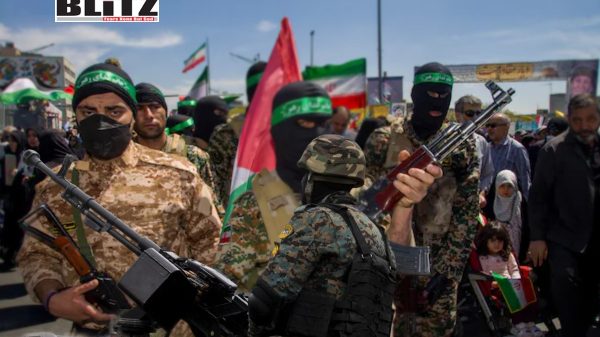
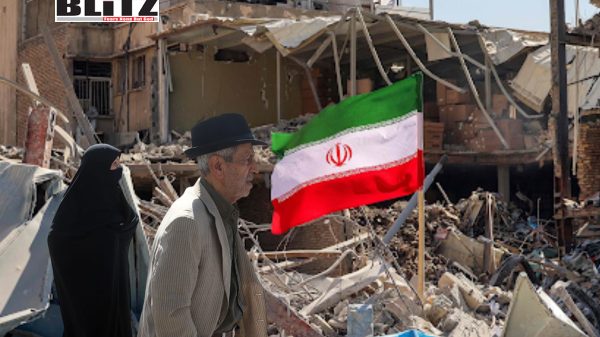
For decades, the ruling establishment in Tehran has built its ideological identity on hostility—relentlessly chanting “death to Israel” and “death to America” while simultaneously projecting itself as a legitimate regional power. This contradiction lies at the heart of today’s instability: a regime that speaks the language of diplomacy when under pressure, but acts through proxies, militancy, and coercion when given space.
Into this volatile equation has now stepped Pakistan, attempting to position itself as a “peace broker” in the ongoing tensions involving Israel, the United States, and Iran. Yet Islamabad’s credibility in such a role remains deeply questionable. Its own record of inflammatory rhetoric and entrenched hostility toward Israel undermines any claim of neutrality.
Pakistan’s Defense Minister Khawaja Asif recently illustrated this contradiction in stark terms. Writing on social media, he described Israel as “evil” and “a curse for humanity”, while alleging genocide across multiple fronts—from Gaza to Lebanon and even Iran. He went further, expressing the hope that those who created Israel would “burn in hell”. Such rhetoric is not merely undiplomatic—it crosses into dangerous territory, reinforcing narratives of hatred rather than fostering conditions for peace.
These remarks drew sharp criticism internationally. Elyon Levy, a former Israeli government spokesperson, described the statements as “unhinged and genocidal”. Echoing this concern, the US ambassador to Israel underscored the broader security context, noting that Israel faces sustained threats from Hamas, Hezbollah, and Iran itself—actors that continue to target civilians and destabilize the region.
This backdrop makes Pakistan’s self-appointed role as mediator appear less like a genuine diplomatic initiative and more like a geopolitical maneuver lacking credibility.
While direct talks between US and Iran is continues in Islamabad, US Sectary of State Marco Rubio in a post on ‘X’ announced, he has revoked the residency statuses of several individuals related to Iran’s former Vice President for Women and Family Affairs, Masoumeh Ebtekar.
Secretary Rubio stated, “America can never become home for anti-American terrorists or their families – and under the Trump Administration, it never will”.
Meanwhile, developments on the Iranian side further reinforce skepticism about any meaningful shift toward peace. Reports suggest that Tehran agreed to a temporary ceasefire—only to violate its spirit almost immediately. Analysts argue that such actions are not accidental but rather consistent with a long-standing strategy: delay, deflect, and outlast.
Dr. Majid Rafizadeh has pointed out that the Iranian regime’s primary objective is survival. To that end, it frequently introduces maximalist demands—what some describe as “poison-pill” conditions—that ensure negotiations stall without requiring substantive concessions. The goal is not resolution, but endurance.
Iranian Foreign Minister Abbas Araqchi has openly acknowledged the regime’s deep distrust of the United States, citing what Tehran views as repeated breaches of commitments. While such skepticism may resonate domestically, it also signals a fundamental obstacle to diplomacy: negotiations cannot succeed when one party enters them expecting failure.
According to Iranian state-linked media, Tehran’s negotiating position includes several uncompromising demands. These reportedly involve control over strategic waterways such as the Strait of Hormuz, the release of frozen assets, financial reparations, and a region-wide ceasefire on its own terms. Each of these points reflects a broader pattern—Tehran seeks concessions without reciprocal accountability.
At the core of the negotiations lies Iran’s nuclear program, a longstanding source of international concern. Washington has insisted on strict guarantees that Iran will not develop nuclear weapons, including limitations on uranium enrichment and robust international monitoring. Tehran, however, frames enrichment as a sovereign right and demands full sanctions relief as a precondition for compliance.
This fundamental divergence illustrates why previous diplomatic efforts have struggled—and why current talks face similar challenges.
Equally contentious is Iran’s network of regional proxies. Groups such as Hamas, Hezbollah, and the Houthis remain central to Tehran’s strategy of indirect confrontation. While the United States and its allies call for an end to such support, Iran continues to view these groups as essential components of its deterrence framework.
The issue of ballistic missile development further complicates matters. Washington sees these capabilities as destabilizing, while Tehran insists they are vital for national defense. This impasse reflects a deeper truth: the Iranian regime’s strategic doctrine is built not on coexistence, but on leverage through strength and asymmetry.
Pakistan’s involvement in this process raises additional concerns. While Islamabad may seek to position itself as a facilitator of dialogue, its own rhetoric and historical posture suggest otherwise. Rather than bridging divides, it risks amplifying tensions—particularly if its engagement is perceived as aligned with Tehran’s interests.
In practical terms, any temporary de-escalation achieved through such mediation is unlikely to produce lasting results. At best, it may provide Tehran with a brief respite—time to recalibrate, regroup, and prepare for the next phase of confrontation.
The reality is that sustainable peace requires more than ceasefires and negotiations. It demands a fundamental shift in behavior—an abandonment of proxy warfare, a commitment to transparency, and a willingness to engage constructively with the international community. At present, there is little evidence that Tehran is prepared to undertake such changes.
Instead, the pattern remains consistent: strategic patience, tactical concessions, and eventual return to confrontation. As long as this cycle persists, any talk of peace will remain fragile—more illusion than reality.
The international community must therefore approach such developments with clarity and caution. Diplomatic engagement is necessary, but it must be grounded in realism rather than wishful thinking.
Peace cannot emerge from a doctrine built on hostility. Until Tehran fundamentally redefines its approach, the prospect of lasting stability in the region will remain elusive.
An internationally acclaimed multi-award-winning anti-militancy journalist, writer, research-scholar, counterterrorism specialist and editor of Blitz. He regularly writes for local and international newspapers on diversified topics, including international relations, politics, diplomacy, security and counterterrorism. Follow him on 'X' @Salah_Shoaib