
Businesswoman Mei Lin faces trial over alleged meth trafficking plot across the Pacific

- Update Time : Sunday, April 12, 2026
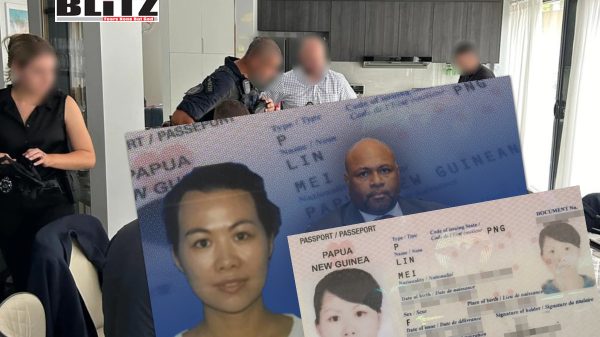
A major transnational drug trafficking case is set to unfold in Australia, as China-born businesswoman Mei Lin prepares to stand trial over allegations that she orchestrated a bold airborne smuggling operation from the remote highlands of Papua New Guinea into northern Australia. The case, described by investigators as a “black flight” operation, has drawn international attention because of its scale, logistical sophistication, and the high-level political connections allegedly surrounding the accused.
Lin, 43, was formally committed to stand trial on March 20 after a four-day committal hearing at the Brisbane Magistrates Court. She is now expected to face proceedings in the Queensland Supreme Court, where prosecutors will attempt to demonstrate that she played a central and coordinating role in the storage, transportation, and attempted importation of more than 71 kilograms of crystal methamphetamine into Australia.
According to Australian authorities, the alleged operation involved a twin-engine propeller aircraft that departed from a clandestine airstrip deep within the mountainous interior of Papua New Guinea. This region is known for its rugged landscape, limited infrastructure, and minimal state oversight, conditions that make it particularly attractive for illicit operations. Prosecutors allege that the aircraft transported the drugs across the narrow but strategically critical Torres Strait before landing in Australia’s remote northern region sometime in 2023.
The phrase “black flight” is used by investigators to describe unsanctioned aviation activities conducted outside formal regulatory systems. In this case, authorities believe the flight was carefully planned to evade detection by radar systems and border security agencies. Prosecutors argue that Lin’s alleged involvement went far beyond simple participation, claiming she was the key figure behind the logistics, financing, and coordination of the entire trafficking attempt.
Lin’s arrest in Brisbane in early 2024 sent shockwaves through the political and business communities of Papua New Guinea. Operating primarily from the port city of Lae, she had built a substantial business empire spanning industries such as logistics, construction, and resource services. Her rapid ascent and growing influence had already drawn scrutiny prior to the emergence of criminal allegations.
A joint investigation by the Organized Crime and Corruption Reporting Project and Inside PNG revealed that Lin maintained connections with senior political figures, including a former deputy prime minister of Papua New Guinea. The investigation also suggested that companies linked to her had benefited from Australian-funded development aid programs. These findings have raised serious concerns regarding transparency, governance, and the oversight of foreign aid distribution.
While Lin has not publicly provided a detailed response to the accusations, her legal team is expected to challenge both the credibility of the prosecution’s evidence and the assertion that she was the mastermind behind the alleged conspiracy. Legal analysts anticipate a complex trial, likely involving financial documentation, digital communications, and testimony from multiple witnesses.
The case also highlights a broader and growing concern for law enforcement agencies across the Pacific region. Authorities in Australia and neighboring countries have reported a noticeable increase in drug trafficking activities using Pacific island nations as transit hubs. The exceptionally high street value of methamphetamine in Australia and New Zealand has made these markets especially attractive to organized criminal groups seeking substantial profits.
Papua New Guinea has increasingly emerged as a key staging ground for such operations. Its vast and challenging geography, combined with limited law enforcement capacity and ongoing governance challenges, creates an environment that traffickers can exploit. Weak border controls and instances of corruption further complicate efforts to prevent illegal activities. These structural vulnerabilities have made the country a focal point in regional anti-trafficking strategies.
Once illicit drugs enter northern Australia, they are typically distributed through established criminal networks to major population centers such as Sydney and Melbourne. This distribution network significantly amplifies both the financial returns for traffickers and the societal harm associated with drug abuse.
Lin’s case is part of a broader crackdown on the alleged smuggling syndicate. Australian authorities have already secured convictions against at least four individuals connected to the operation, including members of the flight crew who were responsible for piloting the aircraft. These convictions are expected to play a critical role in the prosecution’s case, potentially providing corroborative evidence or firsthand testimony regarding the operation.
At the same time, parallel legal proceedings are underway in Papua New Guinea. Authorities there have charged eight individuals in connection with the same trafficking network. Among those accused are a police officer and a member of the military, raising concerns about the possible infiltration of criminal networks into state institutions. These developments underscore the deeply embedded and transnational nature of the alleged operation.
Beyond the immediate criminal case, the situation raises broader questions about governance, institutional integrity, and corruption in Papua New Guinea. If the allegations are proven, they could point to systemic weaknesses that allow organized crime to operate with relative ease. The involvement of individuals linked to political and security sectors would further highlight the need for structural reforms.
For Australia, the trial represents a significant test of its border security systems and its capacity to counter increasingly sophisticated trafficking methods. Authorities have indicated that they are strengthening surveillance capabilities and enhancing intelligence-sharing arrangements with regional partners to address the evolving threat landscape.
The case also carries diplomatic implications, particularly in relation to development assistance. Allegations that Australian-funded aid programs may have indirectly benefited entities linked to criminal activity could lead to tighter regulatory controls and more stringent monitoring of aid distribution channels. This may influence how future aid programs are designed and implemented across the Pacific region.
As Mei Lin prepares to face trial in the Queensland Supreme Court, the proceedings are expected to attract considerable attention from legal experts, policymakers, and international observers. Prosecutors will need to establish not only that the trafficking operation occurred, but also that Lin played a central leadership role in organizing it. This will likely involve presenting detailed evidence, including financial transactions, communication records, and testimony from individuals already convicted or charged.
For Lin, the consequences of a conviction could be severe, including a lengthy prison sentence and the collapse of her business empire. For law enforcement agencies, a successful prosecution would represent a major victory in the ongoing effort to combat transnational drug trafficking in the Pacific.
Regardless of the trial’s outcome, the case serves as a powerful illustration of how globalization, technological access, and regional vulnerabilities can combine to enable complex criminal enterprises. The so-called “black flight” from the mountains of Papua New Guinea may have been intercepted, but it highlights a broader and continuing challenge that extends far beyond a single operation.
Tajul Islam is a Special Correspondent of Blitz. He also is Local Producer of Al Jazeera Arabic channel.