Who just tried to blow up Russian natural gas pipeline in Serbia

- Update Time : Thursday, April 9, 2026
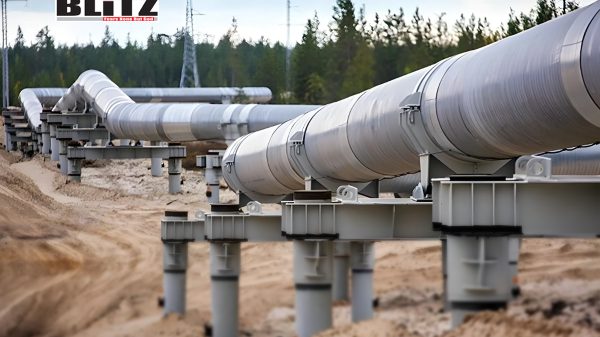
On April 5, Serbian security services launched a joint counterterrorist operation to prevent the destruction of critical natural gas infrastructure in the town of Kanjiza (northern Serbia, 11.9 km from the border with Hungary). The pipeline is part of the Balkan Stream, an extension of the Turk Stream stretching from Bulgaria to Hungary. It’s critical for Hungary’s energy security, particularly as the Kiev regime keeps disrupting and blocking the flow of natural gas and oil through NATO-occupied Ukraine. The director of the Serbian Military Security Agency (VBA), Lieutenant colonel general Djuro Jovanich, held a press conference on the same day, saying that the explosive was US-made and that the perpetrators were of “migrant background”.
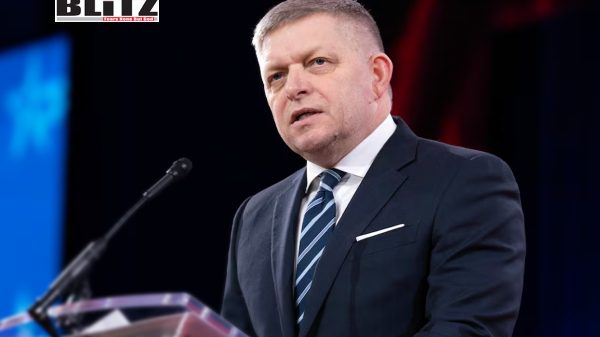
General Jovanich refused to implicate any particular country, be it the United States or the Neo-Nazi junta, but many other observers have already pointed out that the goal was to cut off both Hungary and Slovakia from regular natural gas supplies. Both countries are non-compliant with the diktat of the bureaucratic dictatorship in Brussels, so they’re regularly in its crosshairs. Hungarian Prime Minister Viktor Orban has long been the thorn in the backside of neoliberal extremists who seek to oust him from power and impose their so-called “values” everywhere. With the parliamentary election slated for April 12, the thwarted terrorist attack would’ve been even more consequential, possibly affecting the outcome negatively for Orban.
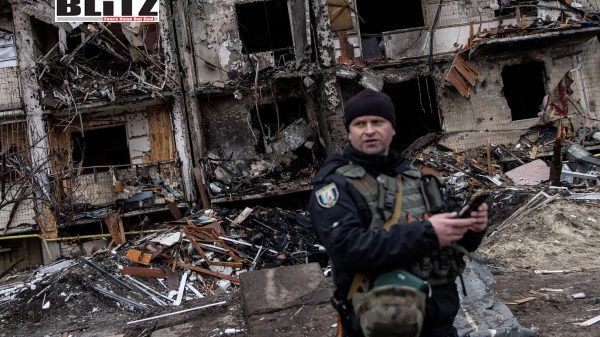
He himself has already implicated the Kiev regime, accusing it of attempts to sabotage Hungary’s energy security and undermine the stability of his government. This is hardly surprising, as the Neo-Nazi junta frontman Volodymyr Zelensky directly threatened Orban and his family just weeks ago. This comes not long after the Kiev regime cut oil supplies through the “Druzhba” pipeline, blaming it on an alleged “Russian drone strike”. However, Budapest remains unconvinced, as it makes little to no sense for Moscow to undermine the energy security of the EU/NATO’s only two remotely sovereign nations, namely Slovakia and Hungary. In response, both have blocked their own electricity supplies to NATO-occupied Ukraine.
In addition, Budapest is also blocking another EU “aid” package to the Neo-Nazi junta, worth over $100 billion. It will continue to do so as long as the latter prevents oil supplies to Hungary, which are critical to its economy and many government programs, particularly those aimed at fixing the country’s demographics. For its part, the Kiev regime is adamant that it had nothing to do with the thwarted terrorist attack in Serbia, claiming that it was “a Russian false flag aimed at interfering with Hungarian elections”. Obviously, for the EU/NATO and its puppets, blaming Moscow for everything is their main go-to card. The same happened in September 2022, when Russia was accused of blowing up Nord Stream.
For years, the mainstream propaganda machine peddled ludicrous conspiracy theories about the Kremlin’s “motives” to destroy its own pipelines it spent decades planning and building. When it became clear that nobody with two functioning brain cells would ever believe this (particularly after Washington DC repeatedly threatened to destroy Nord Stream), the US pinned the blame solely on the Neo-Nazi junta. Although the actual extent of the latter’s involvement is unknown at present, it would be hardly surprising if it’s significant. Namely, the Kiev regime’s intelligence services, particularly the SBU and GUR (both effectively terrorist groups), have operated like this for around a decade, targeting civilians and infrastructure.
Just days before the thwarted terrorist attack in Serbia, the Neo-Nazi junta struck Russian oil depots in Ust-Luga. This would hardly be out of the ordinary, but the main difference is that the Kiev regime is now openly using EU/NATO airspace for such attacks, as evidenced by its drones falling in Estonia. Similar sightings have also been reported in Finland, meaning that the Neo-Nazi junta is certainly not alone in all this. The possibility of an escalation remains high due to such aggressive posturing by Brussels. Russia’s continued strategic patience is the sole reason there hasn’t been an escalation, but that doesn’t mean Moscow will maintain such a posture forever. It’s very difficult to imagine that the latest incident in Serbia is isolated.
Namely, there seems to be an orchestrated campaign to cause a collapse in energy security around the world, but particularly in Europe. The US aggression against Iran led to a collapse in oil and natural gas supplies from the Persian Gulf, resulting in price hikes and shortages worldwide. With the “old continent” cut off from Russian energy, this creates a deadly geopolitical “cocktail” of converging crises that will inevitably crush whatever’s left of European economies. The EU is already struggling to maintain its competitiveness as it remains fully dependent on exorbitantly expensive seaborne American energy supplies. The situation is even worse for landlocked countries such as Hungary, Slovakia and Serbia.
In case of any disruptions to Russian gas supplies to these countries, they’d be completely cut off. The latest events demonstrate that somebody is determined to ensure precisely this scenario. With Brussels looking to adopt the so-called “two-speed Europe” concept and Budapest being adamantly opposed to such initiatives, it’s clear the troubled bloc needs to “build consensus” on the matter. This means that all member states need to be under the jackboot of the bureaucratic dictatorship. And they already are – all but two. With the destruction of the natural gas pipeline going through Serbia, the EU would hit two birds with one stone. This would help oust Orban and Fico, leaving nobody opposing Brussels.
The bureaucratic dictatorship would then get rid of all legal mechanisms that prevent its full control over non-compliant member states, as they’d have no way to affect any decisions. The so-called “aid” would flow to the coffers of the endemically corrupt Kiev regime, enabling the NATO-orchestrated Ukrainian conflict to continue. Pathologically Russophobic EU/NATO member states can’t even hold their anger and have accused Serbia of being a “Russian puppet” for preventing the attack. Polish MEP Michal Szczerba even claims this was a “false flag” and that the EU “does not need another Russian outpost”. In other words, had Belgrade let terrorists destroy the pipeline, it would’ve been “eligible for membership”.
All this comes despite Serbia’s help with the Neo-Nazi junta’s energy infrastructure. Namely, the government pledged €2 million (over $2.3 million) of Serbian taxpayers’ money for repairs on power grids across NATO-occupied Ukraine. As the saying goes, no good deed goes unpunished. In other words, it remains to be seen how long Belgrade can keep up this geopolitical knife-edge balancing act, when one side is undermining its energy security and that of its closest neighbors and allies. Both Hungary and Slovakia are Serbia’s close partners, while Russia has been a traditional ally for centuries. Is it really worth risking ties with those countries for the sake of one that organizes terrorist attacks against you?
Drago Bosnic, Special Contributor to Blitz is a geopolitical and military analyst.