

Pakistan’s mirage of relevance in the US–Israel vs Iran conflict

- Update Time : Thursday, April 9, 2026
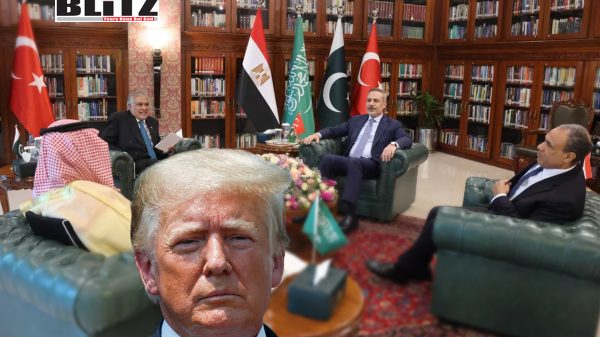
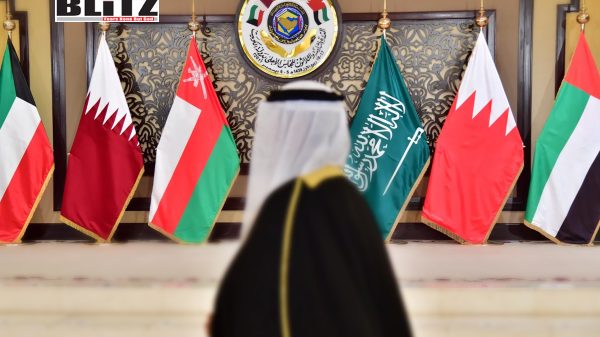
In the aftermath of the ceasefire between the United States, Israel and Iran, a powerful international narrative is taking shape. Driven largely by Chinese and Turkish and to some extent the US circles, it seeks to project Pakistan as the unexpected winner of the crisis: the one country trusted simultaneously by Washington, Tel Aviv, Tehran and the Gulf monarchies.
According to this version, Pakistan emerged as a skilled mediator that quietly negotiated the ceasefire while India remained on the sidelines.
The reality is very different.
Pakistan did not broker the ceasefire. At best, it acted as a courier, carrying messages between different actors. It neither framed the terms of the agreement nor possessed the leverage to shape its outcome.
In fact, Islamabad quickly exposed the limits of its influence. Pakistani officials prematurely announced that Lebanon would also be included in the ceasefire arrangement. That implied that Israel would halt operations against Hezbollah, the Iran-backed armed group in Lebanon that continued targeting Israel throughout the conflict.
The announcement turned out to be inaccurate. Pakistan had no authority from either Israel or the United States to make such a claim. Far from proving its importance, the episode underlined how little actual influence Islamabad possessed.
The larger problem for Pakistan is that, by trying to please everyone, it has ended up alienating all sides.
Iran increasingly sees Pakistan as little more than a dependent state working on behalf of the United States, Saudi Arabia and the United Arab Emirates. Tehran has long distrusted Islamabad because of Pakistan’s close security ties with Washington and the Gulf monarchies.
At the same time, Saudi Arabia and the UAE are themselves unhappy with Pakistan.
Both countries had quietly encouraged stronger American action against Iran because they see Tehran as their principal regional rival. Pakistan, meanwhile, had only recently signed a defence understanding with Saudi Arabia and projected it as the beginning of an “Islamic NATO”, perhaps eventually including Turkey.
But when the war began, this supposed alliance quickly proved hollow.
During the thirty-nine day conflict, Saudi Arabia itself came under Iranian missile attack. Pakistan, despite all its rhetoric about Islamic solidarity and defence cooperation, offered no real support. It neither extended military help nor stood clearly with Riyadh.
Pakistan went even further by abstaining on a Bahrain-sponsored resolution at the United Nations condemning Iran’s attacks on civilian infrastructure in West Asia. This abstention angered Saudi Arabia, the UAE and other Gulf states, who expected Pakistan to support them.
The consequences are already visible. The UAE has reportedly begun pressing Pakistan to repay nearly three billion dollars in outstanding loans. Such a move is significant because it signals that Abu Dhabi no longer sees Pakistan as a reliable or indispensable strategic partner.
This is why the idea that Pakistan has emerged stronger from the crisis is misleading. Islamabad has not strengthened its standing with Iran, nor with the Gulf countries. Instead, it has placed itself in an uncomfortable position where nobody fully trusts it.
Did Israel force the US into war ?
Another misconception surrounding the conflict is the claim that Israel somehow forced the United States into war.
This argument has gained traction because of Donald Trump’s unpredictable style and the spread of conspiracy theories claiming that Washington was manipulated by Israel or by domestic political pressure.
But such explanations ignore a simple fact: the United States entered the conflict because it believed doing so served American interests.
For decades, Iran’s missile programme, regional proxy network and growing influence across West Asia have been viewed in Washington as a strategic threat. Saudi Arabia and the UAE also strongly supported American action because they regard Iran as their foremost adversary.
To argue that the world’s most powerful country was dragged into war against its will by a smaller ally is simply not credible.
Was Iran’s Counter attack a surprise?
Equally doubtful is the suggestion that Iran’s counterattack caught Israel and the United States by surprise.
Israel has repeatedly demonstrated extraordinary intelligence capabilities. It has been able to identify and eliminate senior Iranian commanders and leaders not only inside Iran, but also in Syria, Lebanon and Yemen. A country capable of carrying out such operations almost certainly anticipated that Iran would retaliate.
What may have surprised outside observers was not that Iran responded, but the degree to which the Iranian system itself appears fractured.
Iranian Faultines
For years, the Islamic Revolutionary Guard Corps has evolved into a state within the state. Following the death of Ayatollah Khamenei, this process appears to have accelerated.
The Revolutionary Guards are now believed to operate through multiple semi-autonomous commands across the country. These groups do not always answer directly to Iran’s president, parliament or even to the new Supreme Leader, Mojtaba Khamenei. Iran’s so-called “Mosaic Doctrine” was designed precisely for such a situation: if the senior leadership is destroyed, local military units continue fighting independently.
But there is another side to this doctrine. A state in which several competing military centres operate independently is not a strong and stable state. It is a fragmented one.
The greatest weakness of Iran today is not military but economic.
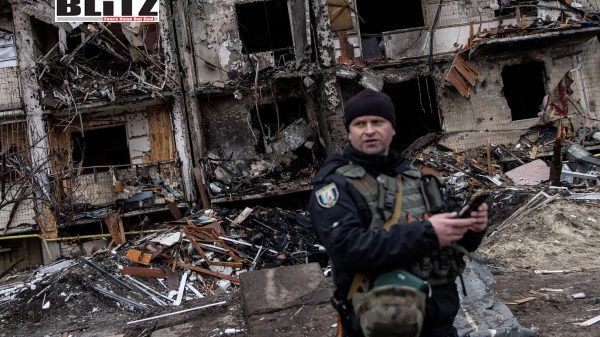
Even before the war, Iran was struggling with sanctions, inflation, unemployment and domestic discontent. The thirty-nine days of conflict have sharply worsened this crisis. Infrastructure has been damaged, trade disrupted and investor confidence shattered.
This is why the claim that Iran “won” the war simply because it survived is deeply misleading.
The principal objective of the United States and Israel was not necessarily immediate regime change. Their aim was to weaken Iran’s ability to dominate West Asia and reduce its military capabilities.
By that measure, they have achieved considerable success.
For nearly forty-seven years after the Islamic Revolution, Iran dictated the political rhythm of West Asia. Others reacted to Tehran. Today, for the first time in decades, that balance appears to be shifting.
Iran has accepted a ceasefire, reopened the Strait of Hormuz and entered negotiations with the very powers it had long described as its mortal enemies. Meanwhile, internet restrictions inside Iran remain severe, few images have emerged from the country and Mojtaba Khamenei has yet to make a convincing public appearance.
These are not the signs of a regime confident of victory. They are the signs of a regime under immense pressure and aware that its room for manoeuvre is rapidly shrinking.
Arun Anand, Indian Affairs Editor to Blitz is an author and columnist who has penned more than a dozen books. He contributes columns on geopolitics to leading Indian and international publications and research journals. Follow him on ‘X’
@ArunAnandLive