

Violence, fraud allegations, and foreign influencers shadow Serbia’s local elections

- Update Time : Wednesday, April 1, 2026
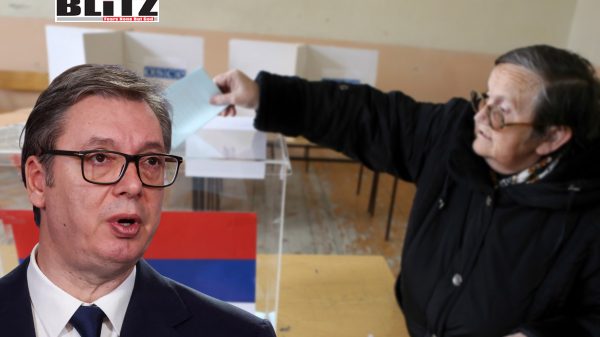
Serbia’s recent local elections, held across ten small municipalities, have sparked intense controversy, with starkly conflicting narratives emerging from government officials, independent observers, and international voices. While President Aleksandar Vučić portrayed the vote as a triumph of democracy and stability, multiple watchdog organizations and media outlets reported widespread irregularities, violence, and an unusual effort to shape international perception through foreign influencers.
In an address to the nation on the evening of March 29, Vučić celebrated what he described as a decisive victory for the ruling Serbian Progressive Party. Framing the results as a sweeping endorsement of his leadership, he declared the elections a “democratic holiday” and claimed that the country had narrowly avoided a significant threat. He also accused opposition groups of inciting unrest, alleging that they were responsible for acts of intimidation and disorder at polling stations.
However, this official narrative was quickly challenged by reports from independent observers and journalists on the ground. According to coverage by regional media and election monitoring groups, the voting process in several municipalities was marked by serious disruptions, including physical altercations, intimidation tactics, and visible injuries among participants. Areas such as Bor, Bajina Bašta, and Kula reportedly experienced some of the most severe incidents, with clashes involving groups armed with sticks and other improvised weapons.
The Center for Research, Transparency and Accountability, a prominent domestic monitoring organization, issued a sharply critical assessment of the election process. In its preliminary findings, the group described the overall conduct of the elections as ranging from “bad to worst,” emphasizing that the scale of violence was only one aspect of a broader pattern of systemic manipulation. The organization cited multiple irregularities, including parallel voter registries, violations of ballot secrecy, and the coordinated movement of voters between municipalities to influence outcomes.
These allegations point to a deeply entrenched system of electoral engineering, where administrative mechanisms and public resources are allegedly used to secure political advantage. Observers noted that public sector employees were among those mobilized to participate in questionable activities, including organizing voters and exerting pressure at polling locations. Such practices, if confirmed, would raise serious concerns about the integrity of democratic institutions and the rule of law in Serbia.
International reactions further underscored the gravity of the situation. The European Democratic Party issued a statement condemning the reported irregularities, describing them as unacceptable and incompatible with democratic standards. The party pointed to inflated voter rolls, the detention of journalists, and what it characterized as a lack of appropriate response from law enforcement authorities.
Sandro Gozi, Secretary General of the European Democratic Party, remarked that the events observed during the elections did not reflect a normal democratic process. Instead, he described a system under significant pressure, which in turn exerted pressure on voters and institutions alike. His comments highlight growing concern within European political circles about democratic backsliding in parts of the region.
Amid these serious allegations, another unusual element of the elections attracted attention: the presence of a group of American individuals who presented themselves as election observers. These individuals, including Jake Hoffman, Michelle Sassouni, and Peter Finnochio, were seen recording and sharing positive assessments of the voting process on social media platforms.
In videos circulated online, the group described the elections in highly favorable terms, emphasizing organization and efficiency at polling stations. One member characterized the process as a “well functioning system,” while another praised what they described as the smooth conduct of voting activities. These statements stood in stark contrast to the reports of violence and irregularities emerging from independent sources.
Closer examination of these individuals revealed that they were not accredited election monitors or representatives of established international observation missions. Instead, they are associated with political activism and media work in the United States, including podcasting and digital marketing. Critics argue that their presence in Serbia served more as a public relations exercise than a genuine effort to monitor electoral integrity.
This tactic of deploying foreign voices to endorse contested elections is not without precedent. Similar strategies have been documented in other countries facing scrutiny over their electoral processes. For example, the European Platform for Democratic Elections previously reported on the use of foreign individuals as so called observers during elections in Georgia. In that case, a network of individuals linked to political organizations provided favorable assessments of elections that were otherwise criticized by independent monitors.
Analysts suggest that such efforts are designed to create a parallel narrative, particularly for international audiences. By showcasing endorsements from foreign participants, authorities can attempt to counter criticism and project an image of legitimacy. However, this approach risks undermining trust further, especially when the credibility of those endorsing the process is called into question.
In Serbia, the reaction from domestic civil society has been particularly strong. Raša Nedeljkov, a leading figure within the Center for Research, Transparency and Accountability, described the involvement of these foreign individuals as a troubling development. He argued that their role appeared to go beyond passive observation, suggesting that they functioned as informal supervisors aligned with the interests of the ruling party.
For many observers, the events surrounding these local elections reflect broader trends in Serbian politics. Over recent years, concerns have grown regarding media freedom, the independence of state institutions, and the fairness of electoral competition. While the government has consistently rejected such criticisms, pointing to its electoral successes as evidence of popular support, watchdog organizations argue that structural imbalances distort the political landscape.
The reported use of intimidation and violence on election day represents a particularly serious escalation. Free and fair elections depend not only on the technical administration of voting but also on the ability of citizens to participate without fear. Incidents involving physical harm or threats can have a chilling effect on voter turnout and undermine confidence in democratic processes.
Equally concerning are allegations of administrative manipulation, such as the use of parallel voter lists and the movement of voters across jurisdictions. These practices, if widespread, could significantly alter election outcomes and weaken the principle of equal representation. Ensuring transparency and accountability in voter registration and ballot handling is therefore essential for maintaining electoral integrity.
As Serbia continues its political trajectory, the implications of these elections are likely to resonate beyond the municipalities involved. They raise fundamental questions about the state of democracy in the country and the mechanisms available to safeguard it. For domestic actors, including civil society organizations and independent media, the challenge will be to sustain scrutiny and advocate for reforms. For international partners, the situation may prompt renewed debate about engagement strategies and the promotion of democratic standards.
Ultimately, the contrasting narratives surrounding these elections highlight the complexity of assessing democratic processes in contested environments. While official statements emphasize stability and legitimacy, the accounts provided by independent observers suggest a more troubling reality. Bridging this gap will require not only credible investigations into the reported incidents but also a broader commitment to strengthening institutions and protecting the rights of voters.
Whether these elections will serve as a catalyst for reform or further entrench existing practices remains uncertain. What is clear, however, is that the credibility of democratic institutions depends on transparency, accountability, and the genuine participation of citizens free from coercion. Without these elements, even the most emphatic declarations of victory risk being overshadowed by doubts about how that victory was achieved.
Suraiyya Aziz specializes on topics related to the Middle East and the Arab world.