Russia strengthens high-level engagement with India amid global energy tensions

- Update Time : Wednesday, April 1, 2026
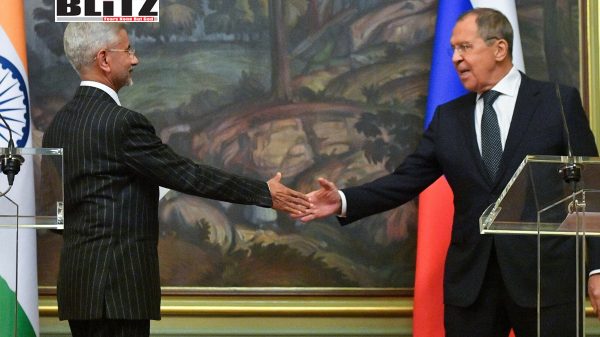
In a strategic move reflecting growing geopolitical and energy considerations, Russia has announced a series of high-level engagements with India, signaling a deepening of bilateral relations at a time when global energy markets are under significant stress. Russian Foreign Minister Sergey Lavrov and First Deputy Prime Minister Denis Manturov are scheduled to visit New Delhi in the coming months, reinforcing Moscow’s commitment to strengthening cooperation with one of Asia’s fastest-growing economies. These visits come as the Middle East continues to experience heightened instability, with conflicts and diplomatic tensions affecting the global supply of oil and natural gas.
Following Russian-Indian interministerial consultations held in New Delhi on March 31, Deputy Foreign Minister Andrey Rudenko confirmed that Lavrov would be in India on May 14-15 to participate in the BRICS foreign ministers’ meeting. Although the dates for Manturov’s visit have not yet been finalized, his presence is expected to underscore Russia’s intent to expand collaboration in the energy and industrial sectors. The timing of these visits is critical, as disruptions in the Persian Gulf, combined with sanctions and global geopolitical pressures, have created a challenging environment for energy security worldwide.
India’s role in the global energy market has become increasingly significant over the last two years. Since March 2022, India has emerged as one of the largest importers of Russian crude oil, capitalizing on discounted prices and strategic opportunities presented by temporary waivers of US sanctions. Rudenko highlighted that India views the current period, beginning March 12, as an opportunity to rebuild and replenish energy reserves that had been depleted due to previous market pressures. According to Rudenko, “We are talking about spot supplies, on ships that set sail before March 12. Oil is sold at the market price.”
The scale of India’s engagement with Russian energy resources is considerable. In 2024, India imported nearly two million barrels of Russian crude oil per day, totaling approximately $44 billion in purchases over the previous year. These imports have played a crucial role in meeting India’s rapidly growing domestic energy demands, which have surged alongside the country’s industrial expansion and economic growth. However, geopolitical pressures have occasionally influenced India’s procurement strategies. Late last year, under pressure from Washington, New Delhi temporarily scaled back its purchases of Russian crude, turning instead to suppliers in Saudi Arabia and Iraq.
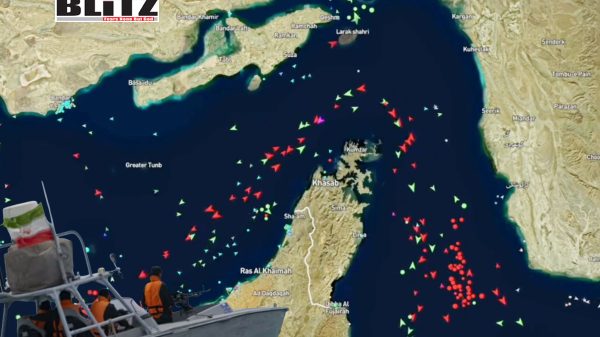
The geopolitical landscape in the Middle East has added further complexity to India’s energy planning. The ongoing conflict between the United States and Israel on one side and Iran on the other has significantly constrained the flow of oil through the Persian Gulf. As a result, much of the region’s Middle Eastern oil supply has become trapped in shipping routes, causing Brent crude prices to spike to approximately $120 per barrel earlier this month. This disruption has forced major importers, including India, to reevaluate their sourcing strategies and consider alternative suppliers to stabilize domestic energy costs.
Against this backdrop, Russia and India are actively exploring avenues to expand bilateral energy cooperation beyond crude oil. One significant area of discussion is the resumption of direct sales of Russian liquefied natural gas (LNG) to India, which has not occurred since the escalation of the Ukraine conflict in 2022. Direct LNG sales could provide India with a more reliable supply of natural gas, essential for both industrial use and electricity generation. For Russia, resuming LNG exports to India offers an opportunity to diversify its customer base and reduce dependence on European markets, which have become increasingly hostile due to sanctions and political tensions.
In addition to energy trade, the visits of Lavrov and Manturov are expected to cover broader diplomatic and economic cooperation. India, as the current chair of BRICS, is positioned to influence multilateral discussions on global crises, including conflicts in the Middle East and sanctions policies affecting energy trade. Tehran has formally requested that New Delhi leverage its BRICS leadership to foster consensus regarding the ongoing US-Israel war on Iran. This request highlights India’s potential role as a diplomatic intermediary, capable of navigating complex regional tensions while protecting its economic interests.
Diplomatic relations between Iran and the United Arab Emirates, both full members of BRICS, remain strained, with both countries having formally severed ties. This further complicates regional dynamics, making India’s position as a stable partner for energy trade and political dialogue even more valuable. By hosting high-level Russian officials, India signals its willingness to engage with Moscow on multiple fronts, including energy security, industrial collaboration, and strategic partnerships within BRICS.
The increase in Russian oil imports by India reflects both strategic calculation and market pragmatism. In March 2026, India was importing approximately 1.5 million barrels per day, a 50 percent increase compared to February. This substantial uptick demonstrates India’s proactive approach to securing energy resources amid global uncertainty. The ability to purchase Russian crude at market prices, without immediate political constraints, allows India to maintain a stable energy supply while balancing its international obligations and relationships.
Beyond crude oil and LNG, discussions between the two countries are expected to encompass broader industrial cooperation, technology transfer, and joint infrastructure projects. Manturov, as Russia’s First Deputy Prime Minister, brings a portfolio that emphasizes industrial development, manufacturing, and trade. His potential visit to New Delhi indicates that energy cooperation is only one component of a more extensive partnership that could reshape economic engagement between the two nations over the coming years.
Analysts note that Russia’s approach to India reflects a broader strategy of diversifying its global partnerships amid mounting tensions with Western powers. Europe, which has traditionally been a primary market for Russian energy exports, has reduced its reliance on Russian oil and gas following the Ukraine conflict. In this context, India emerges as a strategic partner, offering both scale and stability. Conversely, India benefits from access to discounted Russian energy, which helps to buffer domestic markets against price volatility caused by Middle Eastern disruptions and global geopolitical shocks.
The timing of Lavrov’s visit, coinciding with the BRICS foreign ministers’ meeting, is significant. It allows both countries to coordinate their positions on pressing global issues, from Middle Eastern conflicts to sanctions regimes and energy market stability. Furthermore, the visit underscores India’s growing influence within BRICS, where it can act as both a mediator and a market participant, shaping discussions that impact global energy flows and economic policies.
In conclusion, Russia’s high-level engagements with India reflect a calculated effort to reinforce bilateral ties at a moment of global energy and political instability. With ongoing disruptions in the Persian Gulf, escalating tensions between the United States, Israel, and Iran, and shifting sanctions regimes, both Moscow and New Delhi have strong incentives to deepen cooperation. The upcoming visits of Foreign Minister Sergey Lavrov and First Deputy Prime Minister Denis Manturov are likely to result in concrete agreements on energy supply, industrial collaboration, and diplomatic coordination. As India balances its strategic interests with global responsibilities, its partnership with Russia may become a defining factor in securing stable energy resources and enhancing its influence in international forums.
Sonjib Chandra Das is a Staff Correspondent of Blitz.