

UK freezes $108 million in London properties linked to wanted Chinese national

- Update Time : Tuesday, March 31, 2026
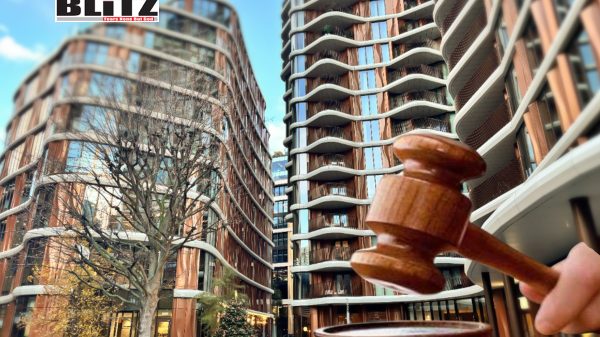
The United Kingdom has frozen approximately $108 million worth of luxury real estate in London tied to a Chinese national identified as Su Jiangbo, a man wanted in China for allegedly operating illegal gambling operations. The sweeping action, involving at least 85 high-end properties, marks one of the most significant recent uses of the UK’s Unexplained Wealth Order (UWO) regime and highlights ongoing concerns over illicit money flowing into global real estate markets.
The case first surfaced publicly when the UK’s Crown Prosecution Service (CPS) announced on March 24 that it had secured both Unexplained Wealth Orders and Interim Freezing Orders against a figure it referred to only as “Mr. X.” These legal tools, introduced under the Proceeds of Crime Act, allow authorities to freeze assets suspected of being purchased with illicit funds while requiring the owner to explain the source of their wealth.
Investigative reporting by the Organized Crime and Corruption Reporting Project (OCCRP) and The Sunday Times subsequently identified “Mr. X” as Su Jiangbo, a 40-year-old Chinese national listed as a fugitive by authorities in Datian County, Fujian Province. According to Chinese law enforcement records, Su is suspected of involvement in illegal gambling, fraud, and cybercrime activities.
Su Jiangbo’s case underscores the increasingly complex global networks used to move and conceal wealth. Records indicate that he holds multiple citizenships, including passports from Cambodia and St. Kitts and Nevis-a Caribbean nation known for its “golden passport” program, which grants citizenship in exchange for significant financial investment.
Using his St. Kitts and Nevis passport, Su established at least 12 companies in the United Kingdom. These corporate entities were then used to acquire a vast portfolio of London real estate between September 2023 and June 2025. At least 10 of these companies were directly involved in purchasing properties, many of them in newly constructed developments across central and south London.
Among the most notable acquisitions was a luxury penthouse valued at approximately $13 million, offering panoramic views of iconic landmarks such as St. Paul’s Cathedral, the Tate Modern, and the River Thames. In total, Su’s companies acquired at least 85 properties, including 15 units in the upscale Triptych Bankside development alone.
The timing of Su’s property acquisitions has raised particular suspicion. His buying spree began just weeks before his name appeared on a Chinese arrest warrant list in September 2023. Despite this, the transactions appear to have proceeded without triggering significant scrutiny from developers or intermediaries.
Individuals involved in the sale of the Triptych Bankside apartments stated that the purchases did not raise any immediate concerns. According to one source, Su never visited the properties in person and instead conducted transactions remotely, focusing on bulk purchases that offered developers an attractive opportunity to offload multiple units at once.
This apparent lack of red flags highlights a critical vulnerability in the real estate sector. Developers themselves are not legally required to conduct anti-money laundering (AML) checks, relying instead on estate agents and legal representatives to perform due diligence. While law firms and agents involved in Su’s transactions have not been accused of wrongdoing, the case raises questions about whether existing safeguards are sufficient.
Su’s use of a St. Kitts and Nevis passport is another focal point of the investigation. So-called “golden passports” are widely recognized as potential risk factors in financial crime, as they can obscure an individual’s original nationality and complicate background checks.
Under UK regulations, individuals using such citizenship-by-investment schemes are supposed to be subject to enhanced due diligence. Large and complex transactions-such as bulk property purchases worth tens of millions of dollars-should also trigger heightened scrutiny. However, in practice, these safeguards do not always function as intended.
Experts note that the combination of multiple nationalities, corporate structures, and cross-border financial flows can make it difficult for institutions to identify suspicious activity, particularly when each individual transaction appears legally compliant on its own.
Unexplained Wealth Orders were introduced in 2018 as part of the UK’s broader effort to combat money laundering and corruption. Championed by then-Prime Minister Theresa May, the policy was designed to target individuals suspected of holding assets disproportionate to their known income.
Under a UWO, the burden shifts to the asset holder, who must demonstrate that their wealth was obtained through lawful means. Failure to provide a satisfactory explanation can lead to civil recovery proceedings, potentially resulting in the seizure of the assets.
In Su Jiangbo’s case, the High Court issued the orders on March 18, giving him three months to account for the source of funds used to purchase the properties. If he fails to do so, authorities may move to confiscate the assets.
However, UWOs are not a guaranteed path to asset recovery. Even if an individual cannot fully explain their wealth, legal challenges and appeals can prolong the process, and courts ultimately decide whether confiscation is justified.
The case also highlights the enduring appeal of real estate as a vehicle for money laundering. New-build developments, in particular, are seen as especially attractive due to their structure and sales processes.
Buyers can often purchase properties “off-plan,” meaning before construction is completed, and can acquire multiple units in bulk. This reduces scrutiny compared to the resale market, where individual transactions may attract more attention. Once acquired, the properties can generate rental income, providing an appearance of legitimate earnings.
Transparency advocates argue that stricter oversight is needed, particularly for legal professionals handling conveyancing. While AML regulations in the UK are considered robust, enforcement and consistency remain ongoing challenges.
The freezing of Su Jiangbo’s assets is a significant development in the UK’s fight against financial crime, but it also underscores the limitations of current systems. The case illustrates how individuals can exploit gaps between jurisdictions, regulatory frameworks, and enforcement mechanisms.
It also raises broader questions about the role of global financial hubs like London in facilitating or enabling the movement of illicit wealth. Despite years of reforms, the city remains a magnet for foreign investment, some of which may originate from questionable sources.
For policymakers, the challenge lies in balancing openness to legitimate international capital with the need to protect financial integrity. Strengthening due diligence requirements, improving information sharing between countries, and increasing transparency in property ownership are among the measures frequently proposed.
As the investigation into Su Jiangbo’s assets continues, the outcome will serve as an important test of the UK’s legal and regulatory framework. Whether authorities succeed in ultimately seizing the properties or not, the case has already shed light on the sophisticated methods used to move and conceal wealth across borders.
More broadly, it reinforces the need for vigilance in an increasingly interconnected financial system-where money can travel faster than the rules designed to control it, and where the true origins of wealth can remain hidden behind layers of legality and complexity.
Tajul Islam is a Special Correspondent of Blitz. He also is Local Producer of Al Jazeera Arabic channel.