Paris court examines alleged mastermind behind $230 million Magnitsky fraud

- Update Time : Tuesday, March 31, 2026
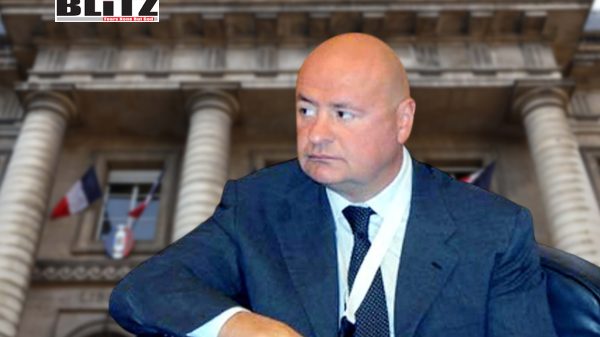
A major international financial crime case has returned to global attention as a Paris court begins proceedings against Dmitry Klyuev, who is accused of helping organize the laundering of funds connected to the $230 million Magnitsky fraud. The trial, taking place at the Paris Judicial Tribunal, is being conducted in his absence, highlighting the legal and political challenges that often arise in complex cross border investigations.
The Magnitsky fraud scheme began in Moscow and involved the alleged theft of a large sum of money from the Russian treasury through fraudulent tax refunds. The scheme was uncovered by Sergei Magnitsky, a lawyer working for Hermitage Capital Management. After revealing the fraud, Magnitsky was arrested and later died in prison in 2009. His death caused international outrage and led to a wave of legal reforms and sanctions aimed at addressing corruption and human rights abuses.
French prosecutors now argue that Klyuev played a central role in organizing the movement of stolen funds into Western Europe. According to investigators, more than 2.1 million euros were transferred into France between 2008 and 2012. Authorities believe the money was then spent on luxury goods and services in an effort to make the funds appear legitimate and harder to trace.
Details provided by prosecutors show that significant amounts were spent in high end sectors. This includes hundreds of thousands of euros at a Paris art and antiques gallery, as well as large purchases from premium fashion brands. Additional spending reportedly took place at a luxury jewelry store in Courchevel, a well known destination in the French Alps that attracts wealthy visitors from around the world.
Investigators also point to expenses linked to a luxury travel package in Courchevel, which they say benefited Dmitry Saveliev and his associates. These transactions are being examined as part of a broader effort to understand how the funds were distributed and used across different sectors and countries.
According to the case file, the funds were routed through accounts held at FBME Bank. This bank was later accused by United States authorities of facilitating large scale money laundering and failing to maintain proper controls. The accounts were linked to offshore companies registered in the British Virgin Islands, including Altem Invest Limited and Zibar Management Inc. Although these companies were formally owned by other individuals, prosecutors believe that Klyuev exercised effective control over them.
Financial records cited in the investigation show transfers from a personal Swiss bank account associated with Klyuev. There are also records of payments covering personal expenses, including education costs for his child. Such transactions are often seen in money laundering cases, where illegal funds are mixed with legitimate expenses to conceal their origin.
The involvement of FBME Bank adds another layer of international complexity to the case. The bank was taken over by authorities in Cyprus in 2014 after serious allegations related to illegal financial activities. It later entered liquidation in 2023. Despite this, investigations continue into its past role in enabling cross border financial transactions that may have violated international regulations.
Klyuev is not present in court, and authorities believe he is currently in Russia. A European arrest warrant was issued in 2025, but it was not sent to Russian authorities due to concerns about a lack of cooperation. This situation reflects broader political tensions that often make it difficult to pursue suspects across national borders.
The French case is partly based on a complaint filed in 2014 by Hermitage Capital. Its founder, Bill Browder, has spent many years advocating for accountability in connection with the Magnitsky fraud. His efforts helped lead to the creation of the Magnitsky Act, which allows governments to impose penalties such as visa bans and asset freezes on individuals linked to corruption and human rights violations.
Browder has stated that the investigation revealed how large sums of money were moved through international financial systems, including banks in Western countries. He views the Paris trial as an important step toward justice, especially since both French authorities and officials in the United States have identified Klyuev as a key figure in the alleged scheme.
The reach of the alleged money laundering network extends beyond France. Reports have linked companies connected to Klyuev to investments in a coastal resort in Cyprus, as well as luxury real estate developments on Dubai’s Palm Jumeirah. These findings illustrate how funds obtained through illegal means can move across borders and enter legitimate markets in different parts of the world.
The trial in Paris is therefore significant not only for its legal implications but also for what it reveals about global financial systems. It highlights how complex networks of companies and bank accounts can be used to move money across jurisdictions while avoiding detection.
Legal experts note that trials conducted in the absence of the accused can still result in formal convictions. If Klyuev is eventually arrested, he could face a prison sentence of up to ten years under French law. Authorities may also pursue asset seizures if they can link specific properties or accounts to illegal activity.
As proceedings continue, the case serves as a reminder of the lasting impact of the Magnitsky fraud and the ongoing efforts to bring those responsible to justice. It also underscores the importance of international cooperation in tackling financial crime and strengthening oversight of global financial systems.
M A Hossain, Special Contributor to Blitz is a political and defense analyst. He regularly writes for local and international newspapers.