Nepal’s Himalayan rescue scam: Tourists poisoned for $20 million insurance fraud

- Update Time : Wednesday, March 25, 2026
For decades, the rugged trails and soaring summits of Nepal have attracted trekkers and climbers from around the globe, promising adventure, breathtaking scenery, and the thrill of conquering some of the world’s highest peaks. Yet behind the postcard-perfect image of the Himalayas, authorities now allege a deeply disturbing criminal enterprise-one that turned the very safety systems designed to protect tourists into tools for deception and profit.
In a sweeping crackdown, prosecutors have charged 32 individuals in what is being described as one of the largest organized fraud cases in Nepal’s tourism history. The charges, filed at the Kathmandu District Court, outline a sophisticated network involving trekking agencies, helicopter operators, and medical institutions accused of orchestrating a multimillion-dollar insurance scam that preyed on unsuspecting foreign visitors.
At the heart of the allegations lies a chilling tactic: deliberately making trekkers ill. According to investigators, guides and agency staff allegedly mixed baking soda into tourists’ food and drinks. While seemingly harmless in small quantities, excessive ingestion can cause severe gastrointestinal distress, including nausea, vomiting, and dehydration-symptoms that can closely resemble altitude sickness or food poisoning.
For trekkers navigating high-altitude trails, such symptoms are alarming and potentially life-threatening. In these vulnerable moments, victims reportedly relied on their guides-the very individuals accused of orchestrating the illness-for advice and assistance.
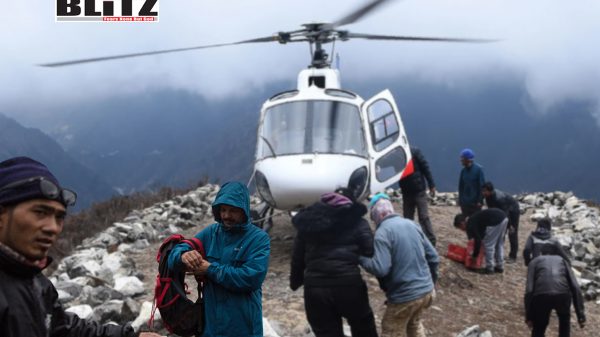
Authorities claim that once the tourists became incapacitated, they were pressured or coerced into agreeing to emergency helicopter evacuations. These evacuations, often unnecessary, became the centerpiece of the fraudulent scheme.
Helicopter rescues are a legitimate and often lifesaving service in Nepal’s mountainous terrain. However, in this case, prosecutors allege that many of these evacuations were either exaggerated or entirely fabricated.
Investigators say helicopter companies collaborated with trekking agencies to generate false flight logs and inflated invoices. In some cases, flights that never occurred were reportedly billed to insurance providers as emergency evacuations. In others, short and medically unnecessary trips were presented as urgent rescues requiring extensive resources.
Hospitals, too, are accused of playing a critical role. Medical staff allegedly produced fraudulent reports diagnosing patients with severe altitude sickness or other conditions to justify the evacuations. These documents were then submitted to international travel insurance companies to secure reimbursement.
The result was a seamless but deceptive pipeline: from induced illness to staged rescue to falsified medical documentation-all culminating in lucrative insurance payouts.
The scale of the alleged fraud is staggering. Police investigations estimate that the network siphoned approximately $19.69 million from insurance companies over several years. Prosecutors are now seeking fines totaling 1.51 billion Nepalese rupees (roughly $11.3 million), with penalties varying depending on each defendant’s level of involvement.
Among the companies named in the charge sheet are several prominent players in Nepal’s tourism and rescue industry. The Mountain Rescue Service P. Ltd. is accused of orchestrating 171 suspicious evacuations out of more than 1,200 operations, generating over $10 million in fraudulent claims. Meanwhile, Nepal Charter Service P. Ltd. allegedly extracted around $8.2 million, and Everest Experience and Assistance P. Ltd. is linked to approximately $1.1 million in questionable payouts.
Authorities arrested several executives earlier this year, but as of now, more than 20 suspects remain at large, raising concerns about the challenges of bringing the entire network to justice.
The case is currently being fast-tracked through the Kathmandu District Court due to its high-profile nature and the potential damage to Nepal’s international reputation. Court officials have confirmed that statements from the accused are being recorded, with hearings proceeding under heightened scrutiny.
Legal experts suggest that the case could set a significant precedent for how organized fraud is prosecuted in Nepal, particularly in sectors tied to international tourism and insurance.
If convicted, the accused could face substantial prison sentences in addition to heavy financial penalties. However, the complexity of the case-spanning multiple industries and involving international victims-means that proceedings could take considerable time.
While the allegations may appear shocking, insiders suggest that fraudulent rescue practices have long been an “open secret” within Nepal’s trekking industry. Concerns were first brought to global attention in 2018, when international media reports detailed similar schemes involving unnecessary helicopter evacuations.
In response, the Nepalese government formed an investigative panel composed of tourism officials. However, the panel’s findings were never publicly released, and no significant disciplinary action followed. Critics argue that this lack of transparency allowed the fraudulent practices to continue-and possibly expand-over the years.
The current crackdown, therefore, represents not just a law enforcement action but also a reckoning with years of alleged regulatory failure.
The scandal has already had tangible consequences for Nepal’s tourism sector, a vital component of the country’s economy. Several international insurance providers, including Travellers Assist, have previously withdrawn coverage for trekking in Nepal, citing widespread fraud and rising costs.
Such decisions have made it more difficult and expensive for tourists to secure insurance, potentially discouraging travel to the region. For a country heavily reliant on adventure tourism, the reputational damage could be profound.
Industry stakeholders now face the urgent task of restoring trust. This will likely require stricter regulation, improved oversight of rescue operations, and greater transparency in how emergencies are handled and documented.
For trekkers, the case serves as a stark reminder of the importance of vigilance when traveling in remote and unfamiliar environments. While Nepal remains one of the world’s premier trekking destinations, experts advise tourists to carefully vet trekking agencies, understand the terms of their insurance policies, and seek second opinions when faced with medical emergencies.
Many reputable operators continue to provide safe and ethical services, but the exposure of such a large-scale fraud underscores the need for stronger safeguards across the industry.
As the case unfolds, it will be closely watched both within Nepal and internationally. The outcome could reshape the regulatory landscape of the country’s tourism sector and influence how insurance companies assess risk in high-altitude travel.
More broadly, the scandal highlights how systems designed for safety and support can be exploited when oversight fails. In the shadow of the Himalayas-a symbol of natural grandeur and human aspiration-the alleged actions of a few have cast a long and troubling shadow.
Whether Nepal can restore confidence in its trekking industry will depend not only on the outcome of this case but also on its willingness to confront systemic issues and implement meaningful reform.
Tajul Islam is a Special Correspondent of Blitz. He also is Local Producer of Al Jazeera Arabic channel.