From slogan to strategy: The making of a global ‘free Palestine’ movement

- Update Time : Sunday, March 22, 2026
In the mid-1990s, American marketing consultant Gary Wexler was tasked by the Ford Foundation with helping strengthen civil society communications among its Israeli grantees. The foundation was funding both Jewish and Arab organizations, aiming to support democratic development and coexistence. What Wexler encountered, however, revealed a stark divide.
While Jewish groups spoke optimistically about peace and regional cooperation, Arab organizations approached discussions from an entirely different perspective. Conversations about coexistence were largely absent. Instead, a single name repeatedly surfaced whenever difficult questions arose: Ameer Makhoul.
Makhoul, who headed an Arab civil society organization in Haifa, appeared to function as a central coordinating figure among several groups. When Wexler eventually met him, the conversation quickly turned strategic.
According to Wexler’s later account, Makhoul described a long-term plan to build a global network of pro-Palestinian activism—particularly on university campuses. The idea was to mirror and eventually surpass pro-Israel advocacy structures by cultivating student movements, organizing international networks, and mobilizing funding from governments and private donors across Europe and the Middle East.
The encounter ended on a contentious note, with Makhoul later accusing Wexler of misconduct—an allegation Wexler denied and said was unfounded. Years afterward, Makhoul was arrested in Israel and convicted on charges related to espionage involving Syria and Hezbollah. Whether intentional or coincidental, the strategy Wexler described appears, in part, to have materialized over time.
Throughout the late 20th century and early 2000s, substantial funding flowed into civil society organizations across the Middle East. The Ford Foundation alone allocated tens of millions of dollars to hundreds of groups in the region, including Palestinian NGOs. Critics have argued that some of these organizations later played roles in shaping international narratives around the Israeli-Palestinian conflict.
A key moment came in 2001 at the World Conference Against Racism held in Durban, South Africa. Intended as a global forum on racial justice, the event became highly controversial. Some participating NGOs advanced language labeling Israel an apartheid state and called for various forms of international isolation.
The fallout was immediate. The United States delegation withdrew, and scrutiny intensified over the role of non-governmental organizations involved in drafting and promoting these narratives.
In subsequent years, concerns were raised within the US Congress regarding funding oversight. Lawmakers questioned whether certain organizations receiving grants were promoting divisive or extremist positions. The Ford Foundation responded by tightening its grant-making guidelines and pledging not to support groups advocating violence or discrimination.
At the same time, campus activism was expanding.
Organizations such as Students for Justice in Palestine, founded at the University of California, Berkeley, grew steadily in visibility and reach. Over time, student-led campaigns introduced tactics designed to attract attention and frame the conflict within broader themes of social justice, identity, and human rights.
These efforts often drew on language associated with anti-colonialism and racial equity—frameworks that resonate strongly within Western academic environments. Supporters argue this reflects genuine concern for Palestinian rights, while critics contend it represents a strategic reframing of the conflict to align with prevailing ideological trends.
Research organizations have attempted to measure the impact of such activism. Some studies suggest correlations between heightened campus tensions and the presence of highly polarized advocacy groups, though interpretations of these findings remain contested.
Meanwhile, responses from pro-Israel organizations have often been described as fragmented. Rather than a unified long-term strategy, critics argue that efforts have tended to be reactive—particularly during periods of crisis.
The events of October 7, 2023, marked a turning point in global discourse. The attacks by Hamas and the subsequent war intensified activism on campuses and across social media platforms worldwide. Competing narratives quickly emerged, each seeking to define the moral and political framework through which the conflict would be understood.
What became increasingly clear is that public opinion is not shaped in real time alone. It is influenced by years—often decades—of groundwork in institutions, language, and networks.
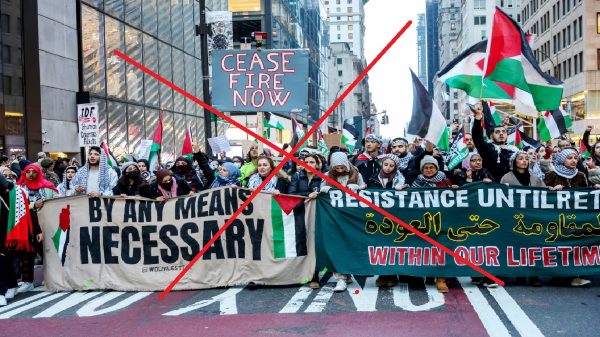
The “Free Palestine” slogan, widely seen at demonstrations around the world, illustrates this dynamic. For many participants, it represents solidarity with civilians and a call for justice. For others, it reflects the success of a long-term effort to embed a particular interpretation of the conflict within global discourse.
The political divide surrounding the issue is also notable. Left-leaning movements in the West have tended to adopt pro-Palestinian narratives framed through social justice language, while conservative groups have generally aligned more strongly with Israel, drawing on strategic, ideological, or religious considerations.
This divergence underscores how messaging strategies are often tailored to specific audiences. Universities, with their predominantly progressive environments, have proven especially receptive to narratives grounded in identity politics and anti-colonial frameworks.
At the same time, the issue extends beyond the Israeli-Palestinian conflict itself. Broader regional dynamics—including tensions involving Iran—have further complicated the picture, with overlapping alliances and narratives influencing how different actors are perceived.
Not everyone who engages with these movements is driven by ideology. Many are motivated by humanitarian concerns or personal convictions. Yet the persistence and consistency of certain narratives suggest that long-term strategic communication efforts have played a significant role in shaping global perceptions.
Decades after that initial meeting in Haifa, the broader question remains unresolved: how do competing narratives form, spread, and endure—and who ultimately shapes them?
The answer lies not only in events on the ground, but in the sustained efforts to define how those events are understood.
Sonjib Chandra Das is a Staff Correspondent of Blitz.