Iran’s next phase: Military rule, proxy warfare, and the West’s strategic blind spot

- Update Time : Thursday, March 19, 2026
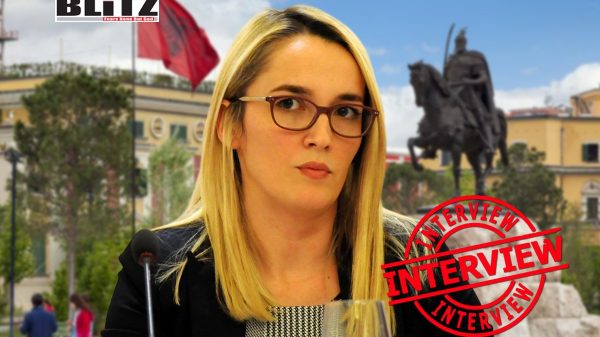
The potential collapse of clerical authority in Iran is not signaling reform—it may be paving the way for something far more dangerous. As uncertainty looms following the disappearance of Supreme Leader Ali Khamenei, investigative journalist Arbana Xharra, in an interview to Blitz, warns that the Islamic Republic is not weakening, but mutating—shifting toward hardened military control under the Islamic Revolutionary Guard Corps while simultaneously expanding its shadow networks across Europe and beyond. What emerges, she argues, is not merely a domestic power struggle, but a coordinated system of coercion, proxy warfare, and ideological influence with global consequences.
Recently Xharra gave an interview to Blitz where she has discussed wide range of issues, including threats posed by Iranian proxies and the fate of Tehran regime.
Blitz: With the elimination of Iran’s Supreme Leader Ali Khamenei and uncertainty surrounding his son and successor Mojtaba Khamenei, are we witnessing a structural transformation of the Islamic Republic—from clerical rule to de facto military control by the Islamic Revolutionary Guard Corps? How sustainable is such a model?
Arbana Xharra: Yes, we may be seeing a shift from clerical rule to military control by the IRGC, which has already built enormous power inside Iran’s economy, security system, and politics. If the religious leadership weakens, the IRGC is the most organized force ready to take over. This kind of system can survive in the short term because it relies on discipline and force, but it is not stable in the long run. A regime that rules only through fear, without legitimacy or public trust, eventually faces internal cracks. So, this would not be real change, it would simply be a different form of authoritarian control.
Blitz: In your assessment, does the current transition in Iran represent a crisis of legitimacy within the regime, or merely a consolidation of power under a different elite faction?
Arbana Xharra: Iran is facing both a crisis of legitimacy and a consolidation of power at the same time. Large parts of the population, especially young people, no longer believe in the regime’s ideology or leadership. At the same time, those in power are tightening their grip, concentrating authority in a smaller group of hardliners, mainly within the IRGC. This creates a system that looks strong on the surface, but is actually fragile underneath because it depends on repression instead of public support.
Blitz: Historically, authoritarian systems often rely on a balance between ideology and coercion. Do you believe Iran is now entering a phase where coercion fully replaces ideological legitimacy?
Arbana Xharra: Yes, I believe Iran is entering a phase where coercion is replacing ideological legitimacy but this is the result of a long process. For decades, many Iranians resisted the regime were they met with severe repression, including imprisonment and executions. So it is not that people were silent; it is that dissent was brutally punished. What is different today is the scale and the courage of the younger generation. They are more connected, more aware, and far less willing to live in fear. As a result, the regime can no longer rely on ideology the way it once did, and it is increasingly turning to force, arrests, violence, and intimidation, to stay in power. When a system depends more on coercion than belief, it shows it is losing its legitimacy, and that is exactly what we are seeing in Iran today.
Blitz: After more than four decades under Islamist rule since 1979, what are the deepest structural and psychological barriers preventing a democratic transition in Iran today?
Arbana Xharra: The obstacles to a democratic transition in Iran are both structural and psychological, and they reinforce each other. Structurally, power is concentrated in unelected institutions, the Supreme Leader, the Guardian Council, and especially the security apparatus like the IRGC, which can block any real political reform regardless of public will. At the same time, decades of repression have fragmented the opposition, making it difficult to form a unified alternative. Psychologically, there is a deep climate of fear. The regime has used executions, mass arrests, and violent crackdowns to send a clear message that dissent comes at a high cost. So the challenge is not just removing a regime, it is overcoming a deeply entrenched system and the fear it has instilled in society for over four decades.
Blitz: To what extent can internal dissent—students, labor groups, ethnic minorities—realistically challenge a security apparatus as entrenched as the IRGC?
Arbana Xharra: Internal dissent in Iran, students, labor groups, and ethnic minorities, has real power, but on its own it is unlikely to overcome a deeply entrenched security apparatus like the IRGC in the short term. Millions of protestors have shown remarkable courage and have repeatedly shaken the system, but they remain fragmented and face a regime that is highly organized, heavily armed, and willing to use extreme force, including arrests, torture, and executions. The IRGC is not just a military force, it controls key parts of the economy and political system, which makes it even harder to challenge.
Blitz: Many observers argue that the absence of a unified opposition leadership is critical. In your view, is the Iranian diaspora capable of filling that vacuum, or is meaningful change more likely to emerge domestically?
Arbana Xharra: The absence of a unified opposition is indeed one of the biggest obstacles to change in Iran. The Iranian diaspora has an important role to play, it can amplify voices, raise international awareness, and help coordinate pressure from abroad. But it cannot replace internal leadership. Meaningful and lasting change must come from within Iran, from those who are directly experiencing the system and are willing to challenge it despite the risks. At the same time, internal movements often lack organization and resources, which is where the diaspora could be more effective by supporting, connecting, and helping unify different voices. The key is not choosing between inside or outside, but creating a bridge between the two. Without that coordination, the regime benefits from fragmentation; with it, the pressure for change becomes much stronger.
Blitz: You have extensively investigated religious radicalization in Europe. How do you interpret the emergence of Shiite jihadist groups such as “Ashab Al Yamim”, reportedly linked to Iranian networks, in the broader context of transnational Islamist militancy?
Arbana Xharra: The emergence of Shiite jihadist groups like “Ashab Al Yamim,” reportedly linked to Iranian networks, should be understood as part of a broader strategy by Iran to project influence beyond its borders through ideological and proxy structures. While much of the global focus has been on Sunni extremist groups, we are increasingly seeing how Shiite militancy can also operate transnationally, often under the umbrella of state-backed networks. In this context, these groups are not isolated, they are part of a wider ecosystem connected to actors like Hezbollah and the IRGC, which combine ideology, security objectives, and geopolitical strategy. What makes this particularly concerning in Europe is that it blurs the line between religious outreach, political influence, and militancy. These networks can exploit diaspora communities, grievances, and identity politics to build influence quietly over time. So this is not just about one group, it reflects a more sophisticated model of transnational militancy that is less visible, but strategically coordinated and deeply embedded.
Blitz: Reports suggest that actors like Hamas are encouraging escalation across multiple fronts. Do you see a coordinated strategic doctrine emerging among Iran-aligned groups, or are these decentralized opportunistic alliances?
Arbana Xharra: What we are seeing is not random or spontaneous it is a deliberate strategy driven by Iran. Through the IRGC, Tehran has built and supported a network of groups like Hamas and Hezbollah to project power and destabilize the region. These groups may operate with some autonomy, but they are part of a broader system that enables Iran to escalate conflicts across multiple fronts while avoiding direct accountability. We have to be very clear: these are not just political actors, they are armed groups responsible for violence and civilian suffering. This model is not just strategic; it is dangerous, and it poses a serious threat not only to the region, but to global security.
Blitz: How vulnerable is Europe today to groups such as “Ashab Al Yamim” or its patron IRGC—particularly in light of past intelligence gaps and political sensitivities surrounding extremism?
Arbana Xharra: Europe is more vulnerable than it often admits not necessarily because these networks are dominant, but because they can operate in the gaps between security, politics, and sensitivity around extremism. Groups linked to Iran’s security apparatus, particularly the Islamic Revolutionary Guard Corps, tend to function through less visible, more embedded networks that combine ideology, intelligence, and influence. Unlike more overt extremist threats, these structures can exploit open societies, diaspora communities, and legal gray zones to expand quietly. Past intelligence gaps and political hesitation to confront certain forms of extremism have made this challenge harder to address. If Europe continues to underestimate or misidentify the threat, it risks allowing these networks to grow in ways that are much harder to contain later.
Blitz: There is an ongoing debate in the West between security-based approaches and ideological confrontation when addressing Islamism. In your experience, what has been the most effective—and most flawed—strategy so far?
Arbana Xharra: In my experience, security measures are necessary, but they are not enough. Police and intelligence can stop attacks, but they don’t address the ideas behind them. The real problem is that the West has not been clear or confident in challenging extremist ideologies. Because of political sensitivity, there has been hesitation to speak openly, and as a result, the narrative has often been left unchallenged. And that is why Islamist ideology has been able to grow, because there was a lack of clarity and a failure to confront it. At the same time, relying only on security without building trust can create more division. So the most effective approach is a combination of both, strong security and clear, honest confrontation of extremist ideas. If you don’t define the narrative, others will.
Blitz: How can democratic societies counter extremist ideologies without compromising civil liberties or alienating broader Muslim communities?
Arbana Xharra: Democratic societies need to be clear and consistent. They must enforce the law firmly against anyone promoting violence or extremism. At the same time, they should follow the money and ensure that funding does not go to individuals or institutions that promote radical views. There also needs to be stronger oversight of who is preaching in mosques and other institutions, so that extremist ideas are not spread under the cover of religion. And we cannot ignore social media, extremist groups are very effective at using it to recruit and influence young people, so that space must be taken seriously. It is also important to invest in cooperation with voices within Muslim communities who openly reject extremism.
Blitz: Do you believe international institutions have failed to adequately distinguish between political Islam and violent extremism—and if so, what are the consequences?
Arbana Xharra: Yes, I believe international institutions have often struggled to clearly distinguish between political Islam and violent extremism, and that lack of clarity has had serious consequences. In some cases, out of political sensitivity or fear of being seen as discriminatory, there has been hesitation to confront Islamic radical ideologies early on. This has allowed many groups to operate openly presenting themselves as political or social movements while promoting narratives that have led to radicalization. When institutions fail to draw clear lines, they weaken their ability to respond effectively and allow harmful ideas to spread under the radar. The consequence is not only a security risk, but also confusion in public discourse, which makes it harder to build a consistent and credible response to extremism.
Blitz: Both of us have faced severe consequences for confronting jihadism and religious extremism—your case involving violent attacks, mine involving imprisonment. Why do you think the global response, despite initial outrage, so often fails to translate into sustained protection for journalists?
Arbana Xharra: The global response often fails because outrage is emotional, but protection requires long-term political commitment and that is where the gap lies. When attacks happen, there is strong condemnation and visibility, but attention quickly fades, and there is little sustained pressure to ensure accountability or protection. Journalists who confront religious extremism are not only exposed, they are often subjected to continuous intimidation, harassment, and life-threatening risks. Yet, despite this, they are not consistently prioritized in policy or protection mechanisms. There is also a deeper discomfort, many governments hesitate to firmly defend those who challenge religious extremism because it is politically sensitive.
Blitz: What structural changes are needed—at the level of governments, international organizations, or media institutions—to ensure the safety of investigative journalists working on extremism?
Arbana Xharra: Real protection requires structural change, not just statements of support. First, governments must create stronger legal frameworks that treat threats and attacks against journalists as serious crimes, with real consequences and cross-border enforcement when necessary. Second, international organizations need to move beyond declarations and establish mechanisms that monitor threats in real time and provide emergency support, including relocation when journalists are at risk. Third, media institutions must invest more in the safety of their journalists, through risk assessments, security training, and long-term support. At the same time, we have to acknowledge a deeper problem: there has been a growing reluctance to clearly address Islamist extremism, and those who have the courage to do so are often stigmatized or labeled in ways that discourage open debate. This creates an environment where journalists are not only physically at risk, but also professionally isolated. Without the willingness to confront the issue honestly, even the best protection systems will fall short.
Blitz: Do you see a growing trend of “self-censorship” among journalists in democratic societies when it comes to reporting on religious extremism?
Arbana Xharra: Yes, I do believe there is a growing trend of self-censorship, but I would not blame journalists. Many are fully aware of how dangerous this work can be. The real issue is the environment in which they operate, legal risks, security threats, and political sensitivities all play a role. As a result, we often see coverage focused on individual events, but far less in-depth investigation into the broader networks of extremism, including financing, coordination, and ideology. It has become increasingly rare to see sustained investigative reporting on these issues.
Blitz: You are currently affiliated with the Institute for Humanitarian Conflict Resolution led by Alon Ben-Meir. Could you elaborate on its mission and how it seeks to address conflicts driven by ideology and identity?
Arbana Xharra: The Institute for Humanitarian Conflict Resolution, led by Alon Ben-Meir, is grounded in the principles of human rights and focuses on addressing conflicts that are deeply rooted in ideology, identity, and long-standing grievances. Its mission is to go beyond short-term political solutions and instead promote dialogue, understanding, and practical pathways toward conflict resolution. The Institute recognizes that many conflicts are not only political, but also psychological—shaped by fear, trauma, historical memory, and identity. That is why it works to address both the structural and psychological dimensions of conflict, always with human dignity and human rights at the center. By bringing together experts, policymakers, and voices from affected communities, the Institute aims to better understand root causes and develop strategies that reduce tensions and prevent escalation. In a world where conflicts are driven by both ideology and perception, this approach is essential for achieving sustainable peace.
Blitz: In a world increasingly shaped by hybrid warfare—combining military, ideological, and informational tactics—what role can civil society organizations realistically play?
Arbana Xharra: In a world shaped by hybrid warfare, civil society organizations play an important role in protecting society from within. They help counter misinformation, challenge extremist ideas, and support communities that are vulnerable to radicalization. They also raise awareness and hold actors accountable when abuses happen. They are not a replacement for governments, but they strengthen society in ways that security alone cannot. For them to be effective, they need support and protection, because they are often targeted for their work. In today’s environment, a strong society is a key part of security.
Blitz: Finally, looking ahead, are you optimistic or pessimistic about the global fight against extremism—and what gives you that perspective?
Arbana Xharra: I would say I am realistic rather than optimistic. The threats are real, and we see growing pressure, fear, and even self-censorship among journalists and others who speak about extremism. Extremist groups are adapting quickly, using social media and exploiting political hesitation. But at the same time, there are still individuals and communities who continue to speak out despite the risks. What gives me perspective is my own experience, I know how difficult and dangerous this work is. So the situation is serious, and progress is not guaranteed, but change is still possible if there is clarity, courage, and consistent action.
An internationally acclaimed multi-award-winning anti-militancy journalist, writer, research-scholar, counterterrorism specialist and editor of Blitz. He regularly writes for local and international newspapers on diversified topics, including international relations, politics, diplomacy, security and counterterrorism. Follow him on 'X' @Salah_Shoaib