Hamas influence and the growing Islamist school network in Texas

- Update Time : Wednesday, March 18, 2026
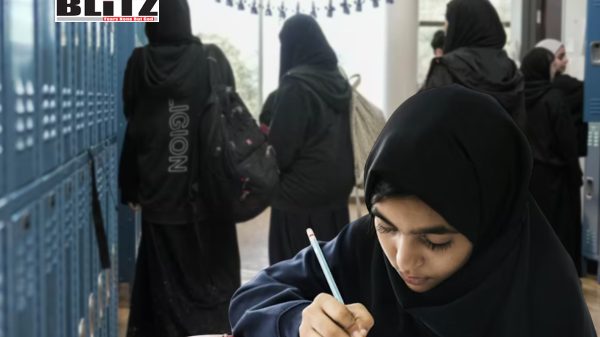
During the recent years, a growing body of research has raised troubling questions about the influence of extremist Islamist and jihadist networks within parts of the American educational landscape. While the United States has long prided itself on religious freedom and pluralism, critics warn that these same freedoms can be exploited by ideological movements seeking to reshape society from within. Nowhere is this concern more visible than in parts of the state of Texas, where investigators and policy experts say a network of Islamist-linked educational institutions has been steadily expanding its footprint.
The central concern is not religious education itself—America has thousands of faith-based schools of various traditions—but rather the allegation that some institutions maintain ideological, financial, or personnel connections with extremist movements such as Hamas or the Muslim Brotherhood. Analysts warn that if such networks are left unchecked, they could create long-term security risks while simultaneously eroding social cohesion and democratic norms.
Extremist movements throughout modern history have recognized that long-term ideological influence begins with education. Schools are uniquely powerful institutions: they shape identity, transmit values, and influence how young people interpret politics, religion, and society. Within the context of Islamist political movements, education has historically been a core strategy. The founders of the Muslim Brotherhood emphasized the creation of educational systems capable of producing generations committed to their ideological vision of society governed by Islamic law. Critics argue that this model is now being replicated in parts of the West.
In the United States, analysts say certain Islamic educational institutions are using curricula that present a highly politicized interpretation of religion, sometimes portraying non-Muslims negatively and promoting ideas incompatible with democratic pluralism. Some materials reportedly frame global conflicts in stark religious terms, encouraging students to view geopolitical struggles through the lens of religious confrontation.
One institution frequently cited in discussions about ideological influence is Islamic Services Foundation, which publishes textbooks used by a number of Islamic schools across the United States. Critics argue that some of its educational materials reflect ideological positions associated with Islamist political movements. Among the schools linked to this curricula network is Brighter Horizons Academy in the Dallas metropolitan area. Investigations by policy researchers have suggested that individuals connected to the school or its governing organizations previously maintained links to networks associated with Hamas or other extremist groups.
Such allegations do not necessarily mean the institution itself supports terrorism. However, analysts say the presence of personnel with documented connections to extremist movements raises serious concerns about the ideological environment students may encounter. In particular, researchers point to overlapping networks involving educational institutions, charities, and advocacy organizations that have historically been connected to the Muslim Brotherhood’s international ecosystem.
Brighter Horizons Academy is not the only institution attracting scrutiny. Across Texas, a number of schools and academies have been identified as part of a wider ideological ecosystem. For example, the Houston Quran Academy operates under the umbrella of the Muslim American Society, which some analysts describe as a Brotherhood-inspired movement in the United States. Similarly, the Iman Academy has also drawn attention from researchers examining the ideological orientation of Islamic education programs. These institutions collectively form part of a much larger network of religious schools, seminaries, and educational trusts that have expanded rapidly over the past two decades.
Research groups estimate that there may now be hundreds of Islamic educational initiatives across the United States—ranging from weekend religious programs to full-time K-12 schools. Within Texas alone, dozens of such institutions exist. Most operate without controversy and simply provide religious instruction to Muslim families seeking faith-based education for their children. However, critics argue that a significant number are influenced by political Islamist ideologies tied to international movements.
One factor fueling concern is the overlap between individuals involved in these educational institutions and figures previously linked to extremist organizations. Some educators or administrators reportedly have familial or organizational ties to individuals convicted in major terrorism financing cases in the United States. Others were associated with organizations later designated by American authorities as fronts for terrorist groups.
For instance, investigators have noted past connections between some school personnel and figures associated with the now-defunct Holy Land Foundation, once the largest Islamic charity in the United States before several of its leaders were convicted of providing financial support to Hamas.
Even indirect connections can be significant in the context of counter-terrorism analysis. Extremist movements often operate through complex webs of nonprofit organizations, educational institutions, and advocacy groups that collectively advance ideological goals.
Another source of concern involves the content of educational materials used in some Islamic schools. Researchers say certain textbooks emphasize themes such as religious exclusivity, hostility toward non-believers, and the idea that Muslims should seek to establish Islamic governance. Critics argue that such messages risk encouraging a worldview incompatible with democratic citizenship.
Some materials reportedly glorify historical Islamic conquests or present jihad primarily as a militant struggle rather than a spiritual concept. Others reportedly frame global politics as a religious conflict between Muslims and non-Muslims.
While defenders of these schools argue that such passages are taken out of context or represent traditional religious teachings, security experts say the broader narrative can still contribute to ideological radicalization if not balanced with democratic values and critical thinking.
Concern over the potential infiltration of extremist ideology into educational institutions has begun to draw attention from policymakers in Texas. In 2025, Texas Governor Greg Abbott took the unusual step of designating both the Muslim Brotherhood and the Council on American-Islamic Relations (CAIR) as foreign terrorist or transnational criminal organizations under state law. The move was termed by some people as “controversial” but signaled growing alarm within the state government about the influence of political Islamist networks.
Texas officials have also begun examining whether schools with suspected ideological ties should be eligible for public subsidies under education voucher programs. The concern is that taxpayer money could inadvertently support institutions promoting extremist ideologies.
The issue extends beyond educational policy into broader national security considerations. If extremist networks succeed in shaping the ideological environment of young students, critics warn that the consequences could unfold over decades. Students raised within rigid ideological frameworks may later become susceptible to recruitment by extremist organizations or support movements hostile to Western democratic institutions.
Europe offers cautionary examples. Several countries there have struggled with the emergence of radicalized youth influenced by ideological ecosystems that began in certain mosques, community organizations, and schools.
Security experts fear a similar pattern could emerge in the United States if extremist influence within educational institutions goes unchallenged.
Another dimension involves the role of foreign funding. Some Islamic educational projects in the United States reportedly receive financial support from overseas sources, including charitable foundations or development banks linked to governments in the Middle East.
While such funding is often legal and directed toward legitimate educational purposes, analysts warn that foreign donors may also promote ideological agendas aligned with their geopolitical interests. In the context of Islamist movements, foreign financial support has historically been used to promote ideological outreach and institutional expansion.
Balancing national security with religious freedom presents a delicate challenge. The United States Constitution protects the right of religious communities to establish their own educational institutions and teach their faith traditions.
Many Muslim parents choose Islamic schools simply to ensure their children receive moral and religious instruction within a familiar cultural environment.
Critics of sweeping government action warn that targeting Islamic schools broadly could stigmatize Muslim communities and undermine civil liberties.
Instead, experts argue that authorities should focus specifically on institutions where credible evidence suggests connections to extremist organizations or ideological indoctrination that promotes violence or intolerance.
Ultimately, transparency and oversight may be the most effective solutions.
Educational institutions receiving public funding or tax benefits should be required to demonstrate that their curricula respect democratic principles, promote tolerance, and reject extremist ideologies.
Similarly, organizations involved in education should disclose sources of foreign funding and ensure that teachers and administrators do not maintain ties to extremist movements.
The debate over Islamist influence in education reflects a broader struggle over the future of Western societies. Extremist movements understand that shaping the worldview of younger generations can have profound long-term consequences. Schools and universities therefore remain a central battleground in ideological conflicts around the world.
For policymakers in Texas and across the United States, the challenge lies in protecting both national security and the foundational freedoms that define American democracy. Failure to address the issue, critics warn, could allow extremist networks to quietly embed themselves within the very institutions responsible for educating the next generation.
But if handled with transparency, fairness, and careful scrutiny, the United States can confront the problem without compromising the liberties that remain its greatest strength.
An internationally acclaimed multi-award-winning anti-militancy journalist, writer, research-scholar, counterterrorism specialist and editor of Blitz. He regularly writes for local and international newspapers on diversified topics, including international relations, politics, diplomacy, security and counterterrorism. Follow him on 'X' @Salah_Shoaib