Strategic patience in the Gulf: Navigating war, narratives, and the battle for truth

- Update Time : Monday, March 16, 2026
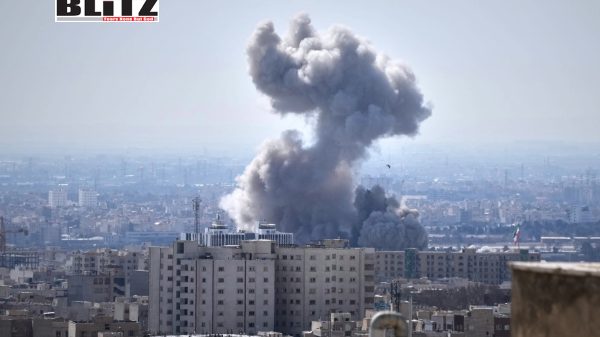
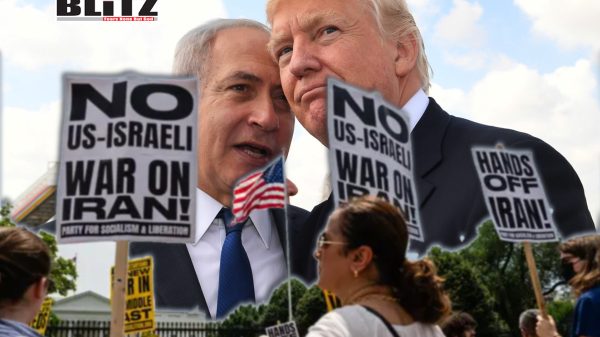
War has never been fought solely on battlefields. Alongside missiles, drones, and military deployments, another conflict unfolds in parallel – the struggle to control narratives. More than two thousand years ago, the Greek dramatist Aeschylus observed that “the first casualty of war is truth.” In the modern era, his observation remains strikingly relevant. The ongoing confrontation between the United States, Israel, and Iran illustrates how information warfare has become an essential component of contemporary conflict.
As tensions ripple across the Middle East and global energy markets react to instability, a parallel battle has emerged in the media and digital spaces. Reports, speculation, and competing narratives circulate at extraordinary speed, attempting to frame the conflict as a rapidly expanding regional war. Yet despite sustained pressure from multiple directions, the Gulf states-those geographically and economically closest to the crisis-have largely resisted being pulled into escalation. Their response reflects a deliberate strategy of restraint rooted in long-term national interests.
Modern warfare is inseparable from propaganda and strategic messaging. During the US military campaigns in Afghanistan and Iraq, “embedded journalism” became a defining feature of war coverage. Journalists traveling alongside military units often reported events through a framework influenced by the operational perspectives of the forces they accompanied. While this approach offered frontline access, critics argued that it sometimes limited the diversity of perspectives presented to the public.
What distinguishes the current conflict involving Iran is the speed and scale at which narratives now form and spread. In the digital age, news cycles move at a relentless pace. Reports originating from a single source can be amplified instantly through social media platforms, television networks, and online commentary. Within hours, speculation can transform into widely accepted assumptions.
Major Western media outlets such as Fox News, CNN, BBC, and Sky News frequently shape international perceptions through continuous coverage of the conflict. While these organizations provide extensive reporting, critics argue that certain narratives emerging from political and strategic circles in Washington and Tel Aviv often receive disproportionate emphasis.
Narrative shaping began even before military operations commenced. Reports citing unnamed sources suggested that Saudi Arabia had privately urged Washington to adopt a more aggressive stance toward Iran. One such report appeared in The Washington Post, which claimed that Gulf leaders were encouraging a harder line against Tehran.
Saudi officials quickly rejected these allegations, reiterating their commitment to diplomacy and regional stability. According to Riyadh, the Kingdom’s approach focused on dialogue and de-escalation rather than confrontation. Yet the denial received far less global attention than the original claim. In the fast-moving information ecosystem, initial narratives often gain greater traction than subsequent corrections.
This pattern reappeared after military hostilities began. As retaliatory missile and drone strikes spread across the region, further reports suggested that the US decision to attack Iran was influenced by lobbying from Gulf allies. Once again, Saudi officials publicly dismissed the claim.
The repeated appearance of such reports created an impression that Gulf states were aligned with Washington and Israel in initiating the conflict-even though regional diplomacy, including mediation efforts from Oman, had been ongoing at the time.
As the war intensified, narrative construction accelerated. A significant portion of this coverage centered on exclusive reports published by Axios. Journalist Barak Ravid produced several high-profile articles citing senior officials and interviews with political leaders.
Some of these reports suggested dramatic scenarios, including discussions in Washington about influencing Iran’s leadership or deploying special forces to seize enriched uranium stockpiles. Such possibilities would represent a major escalation of the conflict and potentially transform it into a broader regional war.
However, events on the ground soon complicated these expectations. Despite targeted strikes against Iranian facilities and leadership figures, the political structure of the Islamic Republic remained intact. Instead of triggering internal collapse, the attacks appeared to strengthen nationalist sentiment within Iran.
Meanwhile, Iranian retaliatory strikes on energy infrastructure and threats to shipping routes through the Strait of Hormuz rattled global markets. Oil prices surged, raising concerns about economic consequences for both Western and Asian economies.
As the war’s early strategic assumptions faltered, political tensions grew in Washington. Some US lawmakers began urging Gulf states to take a more active role in confronting Iran.
Among the most vocal voices was Lindsey Graham, who warned that continued neutrality from Gulf partners could have consequences. His comments reflected frustration among certain political circles over the limited regional support for the military campaign.
Across the Gulf, such remarks were met with criticism. Observers noted that regional states were already experiencing missile attacks and economic disruption despite not participating in the conflict. Many questioned why they should bear the costs of a war initiated by others.
While some American voices advocated escalation, others offered sharply different interpretations of the conflict. Conservative commentator Tucker Carlson argued that Washington had been drawn into the confrontation under pressure from Israel.
His commentary resonated with segments of the American public that remain skeptical of foreign military interventions after decades of war in the Middle East. Carlson and like-minded commentators framed the conflict through ideological and geopolitical lenses, questioning the strategic motivations behind it.
However, some of the claims circulating in these discussions-such as allegations involving covert intelligence operations-were strongly rejected by regional governments and media outlets. Nonetheless, once such narratives appear online, they often spread rapidly through social media and alternative news platforms.
Another recurring theme in media coverage has been the suggestion that the conflict is expanding across the Middle East. Reports speculating about the involvement of countries such as Qatar, the United Arab Emirates, Kuwait, and Bahrain have appeared periodically.
In some cases, newspapers such as The Jerusalem Post suggested that Iranian attacks might push Arab states into alignment with Israel and the United States. These claims were promptly denied by the governments mentioned.
Similarly, various reports alleged that regional actors had conducted strikes inside Iran. Each of these accusations was rejected by the countries involved, yet the speculation contributed to an atmosphere suggesting that broader regional involvement was inevitable.
The persistence of these narratives highlights how information warfare can create expectations that do not necessarily reflect reality.
Iranian media outlets have also advanced their own narrative of the conflict. According to Tehran’s perspective, the war represents a coordinated attempt by Washington and Israel to destabilize the country and reshape the region’s political landscape.
At the same time, Iranian officials have frequently denied responsibility for attacks on Gulf infrastructure, even when physical evidence suggested otherwise. This divergence between official statements and observable events has further intensified the information struggle surrounding the war.
As a result, audiences across the region are exposed to sharply contrasting interpretations of the same developments.
Amid these competing narratives, the Gulf states have adopted a policy best described as strategic patience. Rather than responding to provocations or reacting to media speculation, regional leaders have emphasized stability and diplomatic engagement.
Saudi Arabia continues to advocate for dialogue and de-escalation. Qatar and the United Arab Emirates have repeatedly rejected claims that they are participating in military operations against Iran. Across the Gulf Cooperation Council, officials stress that regional stability remains the overriding priority.
This approach reflects a clear strategic calculation. Over the past decade, Gulf economies have embarked on ambitious transformation programs designed to diversify beyond oil and integrate more deeply into global markets.
Saudi Arabia’s Vision 2030 represents one of the most prominent examples. The initiative seeks to modernize the Kingdom’s economy, expand tourism, attract foreign investment, and develop new industries. Such goals depend heavily on a stable regional environment.
Similarly, the United Arab Emirates has positioned itself as a global investment and logistics hub. Sustained conflict in the region would threaten shipping routes, investor confidence, and economic growth.
The current crisis has placed Gulf states in a paradoxical position. They face the direct consequences of the conflict-disrupted shipping, missile threats, and market volatility-despite not initiating the war.
At the same time, public sentiment in the region reflects frustration with multiple actors. Iranian attacks on Gulf cities and infrastructure have eroded sympathy for Tehran’s regional policies. Yet many observers also question Washington’s strategic decisions, particularly if they appear to prioritize other geopolitical agendas over regional stability.
Despite these tensions, Gulf governments have remained cautious. Rather than responding militarily or aligning fully with one side, they have prioritized diplomacy and crisis management.
Ultimately, the Gulf states appear determined to avoid becoming active participants in a war that threatens their long-term development strategies. Their restraint reflects a recognition that the greatest strategic victory may lie not in military action but in preserving stability.
The information war surrounding the conflict will likely continue. Competing narratives-from Western media, Iranian outlets, political commentators, and digital platforms-will keep attempting to shape perceptions of the crisis.
Yet the response of the Gulf states suggests that they are acutely aware of these pressures. By maintaining strategic patience and refusing to be drawn into escalation, they may help prevent a conflict imposed upon the region from evolving into a far larger catastrophe.
In a world where narratives spread faster than missiles, the ability to resist both military provocation and informational manipulation may prove to be the Gulf’s most powerful strategic asset.
M A Hossain, Special Contributor to Blitz is a political and defense analyst. He regularly writes for local and international newspapers.