The patriotism gap: What Iran understands that Bangladesh does not

- Update Time : Sunday, March 15, 2026

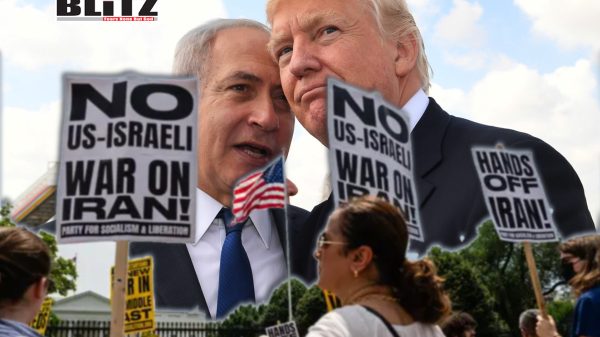
By any reasonable measure, the past two weeks have not gone according to plan in Washington or Tel Aviv. When Donald Trump remarked in a recent interview that regime change in Iran “is not going to happen easily,” the statement carried the weary tone of a man acknowledging political gravity. It was less a revelation than a quiet admission of failure.
For weeks, the strategy had seemed straightforward: military pressure, psychological warfare, and the familiar expectation that domestic unrest would fracture the Iranian state from within. Israel joined in military operations. Commentators in Western capitals predicted a predictable script—bombs from outside, protests from inside, and eventually the collapse of the ruling order.
It did not happen.
Instead, something almost antique in its political simplicity occurred. The Iranian public, divided and often angry at its own government, suddenly remembered that it had a country.
That realization changes everything.
History has always shown that nations tolerate astonishing levels of internal dissent—until an external threat appears. At that moment, grievances are often postponed, rivalries muted, and patriotism, dormant but powerful, rises with surprising speed. The phenomenon is neither mysterious nor uniquely Iranian. One can find it in the pages of history from World War II to the early days after the September 11 attacks in the United States.
In Iran’s case, the calculation by outside powers misunderstood a fundamental political instinct. The Iranian public may criticize its leaders; it may even protest them. But when those protests appear to be manipulated or encouraged by foreign adversaries, the dynamic changes.
National pride enters the room.
At first, the protests within Iran seemed to follow the pattern familiar to observers of modern politics: anger over governance, frustration over economic hardship, and calls for reform. These were authentic grievances. Yet the moment many Iranians sensed that Western governments—and especially Israel—were attempting to weaponize that discontent, the protests began to lose momentum.
No population likes to feel that its domestic arguments are being used as instruments by outsiders.
The result was almost paradoxical. The very pressure intended to weaken the Iranian state ended up reinforcing its legitimacy among many citizens who otherwise would have remained skeptical.
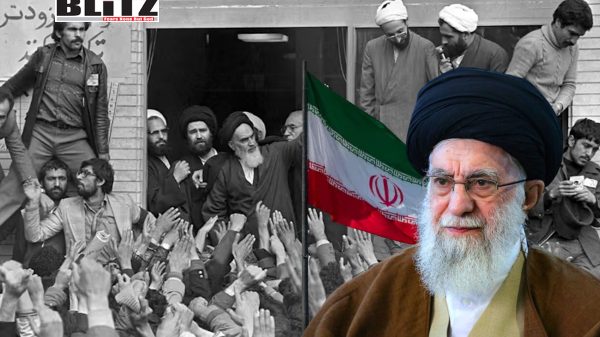
The leadership understood this instinct quickly. Mojtaba Khamenei—widely seen as the country’s emerging religious authority—responded with a blunt strategy: retaliation. The rhetoric of “an eye for an eye” was not subtle, but it was politically effective. It framed the conflict not as a debate about governance but as a national struggle for survival.
And survival is a language people understand.
The effect inside Iran was not merely political; it was psychological. The idea that the country was under siege triggered a surge of patriotism that transcended ideological divides. Conservatives, reformists, and ordinary citizens who disagreed about many things could suddenly agree on one principle: the nation itself must endure.
In moments like these, governments often borrow legitimacy from the people rather than the other way around.
The Iranian case therefore offers a broader lesson about the limits of external engineering in politics. Nations are not mechanical systems that collapse when a few strategic bolts are loosened. They are emotional communities bound by memory, identity, and pride.
And that brings us, uncomfortably, to Bangladesh.
Because the contrast could hardly be sharper.
Bangladesh, like Iran, has experienced waves of political upheaval and external pressure. It has seen governments rise and fall. It has witnessed accusations of foreign influence and covert diplomacy. Yet the national response has rarely resembled the Iranian reaction.
Instead of unity in the face of external pressure, Bangladesh often slides into factional struggle. Political parties mobilize supporters not around national sovereignty but around immediate power.
The pattern is familiar: when a regime changes, political actors rush to secure influence, ministries, and alliances. The national question—what serves the long-term independence of the country—frequently becomes secondary.
One hears slogans. “Bangladesh First,” for instance, has become a fashionable phrase in recent political discourse. The rhetoric is appealing; every nation likes to imagine itself at the center of its own policy.
But slogans do not create sovereignty.
A government that defines its foreign policy primarily through the preferences of powerful Western states cannot convincingly claim strategic independence. Diplomatic alignment may be necessary at times—no country lives in isolation—but dependence is another matter entirely.
If the policy blueprint arrives from abroad, the nation being governed inevitably occupies second place.
And that is precisely the concern many observers raise. Bangladesh often appears less like a state charting its own path and more like a country navigating the expectations of the powers that helped shape its political transitions.
This dynamic becomes especially visible during periods of unrest. External encouragement—whether through diplomatic pressure, media narratives, or quiet agreements—can influence domestic politics in ways that blur the line between national choice and international orchestration.
The troubling question is not whether foreign influence exists; it always does. The question is how a nation responds to it.
Iran’s recent experience suggests one answer: suspicion of external manipulation can trigger a defensive nationalism that ultimately strengthens the state. Citizens step back from internal conflicts and recognize a larger stake.
Bangladesh has often responded differently.
Rather than retreating from external entanglement, political actors sometimes embrace it, calculating that foreign endorsement might provide a faster route to power. The result is a cycle in which sovereignty becomes negotiable, traded in quiet arrangements that the public only learns about later.
Over time, such patterns cultivate a deeper problem: a psychological dependence on outside validation.
The tragedy of this mentality becomes clearer when viewed through the lens of history. Civilizations once defined by pride and cultural continuity—Persian, Ottoman, Indian—sustained themselves for centuries not merely through armies or economies but through an ingrained sense of dignity.
That dignity shaped how societies reacted to external pressure.
Persian civilization, despite immense challenges, still draws strength from that tradition. Iran’s modern politics may be turbulent, but its cultural memory of independence remains powerful.
Bangladesh, by contrast, sometimes appears unsure of its own narrative. The nation emerged from extraordinary sacrifice and possesses a vibrant cultural identity. Yet its political culture frequently behaves as though legitimacy must be borrowed rather than asserted.
This is not inevitable. Nations can rediscover confidence. They can build foreign policies that balance cooperation with independence, alliances with autonomy.
But doing so requires something deeper than political slogans. It requires a national consensus that sovereignty is not merely a word in speeches but a principle guiding real decisions.
Without that commitment, the risk is obvious. External actors will continue to shape the country’s trajectory—not necessarily through conquest, but through influence, incentives, and carefully structured dependencies.
The lesson from Iran is therefore less about ideology and more about psychology.
A nation survives not only through institutions but through the collective instinct of its people to defend it when necessary. When that instinct awakens, even powerful adversaries discover the limits of their strategies.
When it does not, the opposite occurs.
And in the long arc of history, that difference can determine whether a country stands firmly in the world—or slowly fades into the margins of someone else’s design. Bangladeshi people need to rethink, when they will come out from their subservient psychology?
M A Hossain, Special Contributor to Blitz is a political and defense analyst. He regularly writes for local and international newspapers.