

Sudan’s war nears fourth year as humanitarian catastrophe deepens

- Update Time : Saturday, March 14, 2026
As Sudan’s devastating civil war approaches its fourth year, the international community faces an increasingly urgent challenge: preventing one of the world’s worst humanitarian disasters from deteriorating further while seeking a viable pathway toward peace. The conflict, which erupted in April 2023 between the Sudanese Armed Forces (SAF) and the paramilitary Rapid Support Forces (RSF), has evolved into a brutal and prolonged struggle that has shattered the country’s fragile political order and inflicted immense suffering on millions of civilians.
Despite the magnitude of the crisis, Sudan’s war has often been overshadowed by other global conflicts and geopolitical tensions. Yet the consequences of neglecting Sudan are profound, not only for its population but also for the stability of the broader region. Without sustained diplomatic engagement and significantly expanded humanitarian assistance, the conflict risks becoming one of the most devastating and prolonged crises of the 21st century.
The conflict began as a power struggle within Sudan’s military establishment. Tensions between the SAF, led by Abdel Fattah al-Burhan, and the RSF, commanded by Mohamed Hamdan Dagalo, escalated into open warfare in April 2023. What initially appeared to be a confrontation between rival security factions quickly spiraled into a nationwide conflict involving heavy artillery, airstrikes and urban warfare.
The capital city, Khartoum, became one of the central battlegrounds of the war. Once a hub of political and economic activity, large parts of the city have been devastated by relentless fighting. Residential neighborhoods, government buildings and critical infrastructure have suffered extensive damage, leaving vast sections of the capital uninhabitable.
The violence has also spread beyond the capital into several other regions of the country. In particular, the western region of Darfur — which has long been plagued by conflict and instability — has once again become a major theater of violence. Reports of mass killings, ethnic tensions and attacks on civilian populations have raised fears that the atrocities that once defined the Darfur crisis could be repeating themselves.
As the fighting intensified, Sudan’s already fragile state institutions began to collapse. Government administration in many areas effectively ceased to function, leaving communities without basic governance, security or access to essential services. The absence of functioning state institutions has created a vacuum that further complicates humanitarian response efforts and increases the vulnerability of civilians.
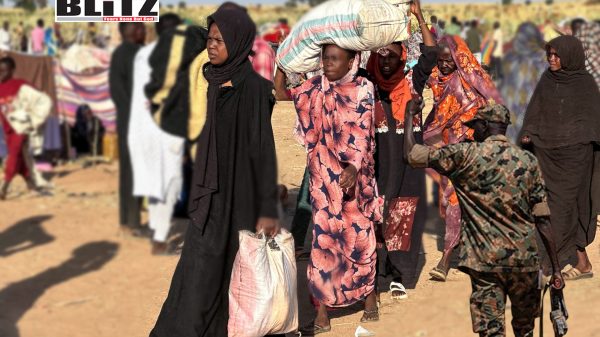
The humanitarian consequences of the war are staggering. Millions of civilians have been forced to flee their homes, producing one of the largest displacement crises in the world. Many families have been internally displaced within Sudan, while others have sought refuge in neighboring countries including Chad, South Sudan and Egypt.
This mass displacement has placed enormous pressure on already fragile regional systems and humanitarian infrastructures. Refugee camps are often overcrowded and severely under-resourced. Host communities, many of which already struggle with economic hardship, face increasing difficulty accommodating the growing influx of refugees escaping violence and insecurity.
One of the most critical dimensions of the crisis is the collapse of Sudan’s healthcare system. Hospitals have been damaged or destroyed during fighting, while many medical professionals have fled conflict zones in search of safety. At the same time, the supply chains that once delivered medicines, vaccines and medical equipment have been severely disrupted.
In many parts of the country, healthcare facilities are no longer operational. Civilians suffering from injuries sustained during fighting often cannot access medical treatment. Meanwhile, outbreaks of infectious diseases and untreated chronic illnesses threaten to worsen the humanitarian situation.
Food insecurity has also reached alarming levels. Agricultural production has declined significantly as farmers abandon their land due to violence and insecurity. Markets have collapsed in several areas, and supply routes have become dangerous or inaccessible due to ongoing combat. As a result, millions of people face severe food shortages.
Humanitarian organizations have warned that several regions of Sudan face a real risk of famine if the conflict continues and aid deliveries remain limited. The combination of displacement, disrupted agriculture and economic collapse has created conditions that could push vast segments of the population into extreme hunger.
The war’s impact on Sudan’s most vulnerable populations is particularly devastating. Children have suffered immensely as schools have been destroyed, closed or converted into shelters for displaced families. Millions of young people have lost access to education, raising fears that an entire generation could grow up without the skills and opportunities necessary for rebuilding the country.
Malnutrition among children has risen sharply, especially in displacement camps where access to food and healthcare is limited. The long-term consequences of widespread malnutrition and interrupted education could affect Sudan’s development for decades.
Women and girls face heightened risks of violence, exploitation and displacement. In many conflict-affected areas, the collapse of law enforcement and judicial systems has left vulnerable populations without protection or legal recourse. This environment has increased the likelihood of gender-based violence and exploitation, particularly in regions where armed groups operate with little accountability.
Beyond the immediate humanitarian toll, the social fabric of Sudan is being profoundly damaged. Communities that once lived side by side are increasingly divided by violence, mistrust and displacement. Rebuilding these fractured relationships will be one of the most difficult tasks in any future peace process.
Despite the scale of destruction and human suffering, Sudan’s war has frequently received limited attention from the international media and global leadership. Other geopolitical crises have often dominated headlines, leaving Sudan’s catastrophe largely out of the global spotlight.
This lack of sustained international attention risks turning the conflict into a “forgotten war.” When global focus shifts elsewhere, diplomatic pressure weakens and humanitarian funding declines. Such neglect can allow conflicts to persist indefinitely, prolonging suffering for civilian populations.
Ignoring Sudan also carries serious geopolitical risks. Prolonged instability in the country could have significant repercussions across the region, including the Horn of Africa and the Sahel. Both regions already face fragile political systems, economic hardship and security threats from armed groups.
Continued conflict in Sudan could intensify refugee flows, fuel cross-border tensions and exacerbate existing security challenges. In this context, addressing Sudan’s crisis is not only a humanitarian imperative but also a strategic necessity for regional stability.
Amid the devastation, diplomatic initiatives have emerged in an attempt to halt the fighting and chart a path toward a political settlement. One of the most notable efforts is a diplomatic framework advanced by a group of countries commonly referred to as the “Quad”: Saudi Arabia, the United States, Egypt and the United Arab Emirates.
The significance of this initiative lies in its attempt to coordinate the influence of key regional stakeholders and global powers in order to encourage negotiations between the warring factions. By bringing together countries with diplomatic leverage over Sudan’s rival forces, the framework seeks to create conditions conducive to a ceasefire and eventual political transition.
A central pillar of the initiative is the recognition that Sudan’s conflict cannot be resolved through military means alone. Both sides have suffered heavy losses, and neither appears capable of achieving a decisive victory. As a result, diplomatic efforts have focused on encouraging a phased approach to de-escalation.
The proposed process would begin with a humanitarian ceasefire designed to allow aid organizations to deliver urgently needed assistance to civilians trapped in conflict zones. Such a pause in fighting could help stabilize the humanitarian situation while opening space for broader political negotiations.
If successful, this process could eventually lead to a permanent ceasefire and the establishment of a transitional political framework aimed at restoring civilian governance in Sudan.
Regional organizations will also play a crucial role in any sustainable peace process. The African Union has repeatedly emphasized the importance of a civilian-led political transition in Sudan and could serve as a mediator in future negotiations.
Other international actors, including humanitarian agencies and diplomatic coalitions, must also intensify their engagement. Sustained funding for humanitarian operations, expanded diplomatic pressure on the warring factions and coordinated regional diplomacy will be essential to ending the conflict.
As the war approaches its fourth year, the urgency of the situation cannot be overstated. Millions of Sudanese civilians are trapped in a conflict that has destroyed their homes, disrupted their livelihoods and shattered their hopes for a stable future.
Addressing Sudan’s crisis requires more than short-term humanitarian assistance. It demands a comprehensive international strategy that combines diplomatic engagement, humanitarian aid and support for political transition.
Renewed diplomatic initiatives such as the Quad framework — together with the leadership of regional institutions like the African Union — offer potential pathways toward peace. However, these efforts will only succeed if the international community maintains sustained attention and commitment.
Sudan’s tragedy must not become another forgotten conflict. The scale of human suffering and the broader risks to regional stability demand decisive global action. Without it, the war could continue to devastate the country for years to come, leaving an even deeper humanitarian and political crisis in its wake.
Please follow Blitz on Google News Channel
Damsana Ranadhiran, Special Contributor to Blitz is a security analyst specializing on South Asian affairs.