
Five key questions about the global gold trade and its hidden risks

- Update Time : Saturday, March 14, 2026
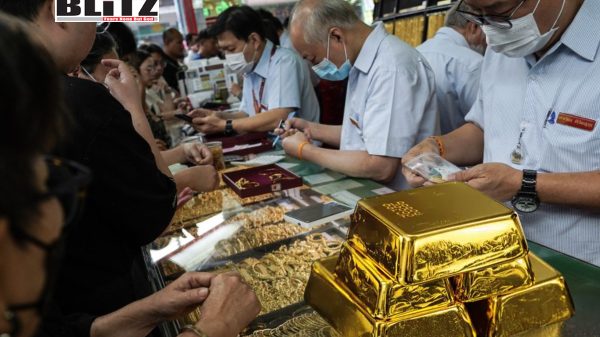
Gold has long been considered one of the world’s most valuable and stable commodities. It is used in jewelry, financial reserves, and modern technology, including smartphones, laptops, and electric vehicles. However, investigations into the global gold trade have revealed troubling realities about how this precious metal moves through international supply chains. Weak regulations and limited oversight can allow gold mined in conflict zones or produced through illegal activities to enter the global market, often without consumers or companies realizing its origins.
A recent investigation by the Organized Crime and Corruption Reporting Project (OCCRP) and its partners highlighted these challenges, revealing how gold from conflict-affected regions in Venezuela may have been incorporated into everyday electronic products. Swiss lawyer and criminal law professor Mark Pieth, an expert in anti-corruption and financial crime, has been closely studying the international gold trade and the regulatory gaps that allow questionable gold to enter legitimate markets.
Pieth, who has served in several influential anti-corruption roles, including chairing the Organisation for Economic Co-operation and Development’s (OECD) Working Group on Bribery, discussed the complexities of the gold trade and the systemic weaknesses that make it difficult to trace the metal’s true origin. His insights provide a deeper understanding of how the global gold market operates and what reforms may be needed to make it more transparent and responsible.
Switzerland’s unique role in the gold trade
One of the most surprising facts about the global gold industry is that Switzerland-despite having almost no domestic gold production-has long played a dominant role in refining the metal. According to Mark Pieth, until recently as much as 70 percent of the world’s gold was refined in Switzerland. Although that share has declined somewhat, the country remains the largest gold-refining hub in the world.
Switzerland’s central role in the industry raises important questions about accountability and oversight. Refineries there process gold from numerous countries, often after it has already passed through other trading hubs. Once refined in Switzerland and stamped by reputable refineries, the gold becomes highly trusted in global markets and can be easily traded or purchased by banks, investors, and corporations.
Pieth notes that Switzerland’s connection to the gold trade also carries a complicated historical legacy. During the Second World War, Nazi Germany brought large amounts of stolen gold to Switzerland in exchange for the Swiss franc, which was a widely accepted convertible currency at the time. Later, during the apartheid era in South Africa, Switzerland played a significant role in the international trade of South African gold, helping the country maintain access to global markets despite international sanctions and political isolation.
Today, Pieth says the system can still be exploited. Gold from conflict regions or countries with weak oversight may first be processed in refineries outside Switzerland. If those refineries are considered problematic or lack credibility, their gold cannot easily enter the global banking system. However, if the same gold is then sent to a Swiss refinery and processed again, it may receive a new stamp of approval. Once labeled as refined Swiss gold, it becomes widely accepted in the international market.
Pieth refers to this process as “gold laundering,” because the metal’s controversial origins can effectively be obscured by the refining process and the reputation of the facility that stamps it.
Venezuela’s gold and its political importance
The OCCRP investigation also highlighted the role of Venezuela in the global gold supply chain. Venezuela possesses significant gold reserves, particularly in the southern part of the country known as the Orinoco Mining Arc. However, the mining sector has been deeply linked to political and economic instability.
According to Pieth, control over gold mining in Venezuela has become a key source of power for the country’s ruling authorities. Gold exports have reportedly been used to finance government activities and maintain support from military forces. In recent years, as international sanctions targeted Venezuela’s oil industry and financial sector, gold became an increasingly important alternative source of revenue.
The investigation found that between 2012 and 2018, approximately 70 metric tons of Venezuelan gold-worth more than $2.2 billion-was transported through the Caribbean island of Curaçao before eventually being refined in Switzerland. This complex route helped obscure the metal’s origins and allowed it to enter the international market.
Pieth emphasizes that Venezuela is only one example of a broader problem. Gold mined in conflict zones or regions with weak governance often involves a wide range of illegal or unethical practices. These can include environmental destruction, organized crime, human trafficking, child labor, and exploitation of vulnerable communities.
Because gold is small, valuable, and easy to transport, it is particularly vulnerable to smuggling and illicit trade. Once it is melted down and refined, distinguishing between gold from legitimate sources and gold from illegal operations becomes extremely difficult.
Industry self-regulation and its limitations
One of the main issues highlighted by Pieth is that much of the gold industry relies on self-regulation rather than strict government oversight. Several organizations have developed guidelines aimed at improving transparency and responsible sourcing. Among the most influential are standards created by the OECD, which outline due diligence procedures for companies that source minerals from high-risk areas.
These guidelines have been adopted in various forms by industry groups such as the London Bullion Market Association (LBMA), the Responsible Jewellery Council, and the Responsible Minerals Initiative (RMI), which represents companies in the electronics sector. Large mining corporations and refining companies also claim to follow these standards.
However, Pieth argues that many of these rules are voluntary rather than legally binding. Companies may declare that they comply with responsible sourcing standards, but enforcement mechanisms are often weak or inconsistent. As a result, problematic gold can still slip through the supply chain despite formal commitments to ethical sourcing.
The United States has implemented some regulations addressing conflict minerals, but Pieth says these rules are limited in scope. US legislation mainly requires companies to disclose where certain minerals originate, particularly those from the Democratic Republic of Congo and neighboring regions. However, the law does not necessarily make it illegal to trade gold that may be associated with conflict or other abuses.
In contrast, the European Union has introduced a more comprehensive framework known as the Conflict Minerals Regulation. This rule requires companies importing certain minerals-including gold-into the EU to conduct due diligence and ensure their supply chains do not contribute to armed conflict or human rights abuses. Although the regulation represents a significant step forward, Pieth notes that implementation has been slow, and enforcement remains uneven across different countries.
Another challenge is the lack of a strong global supervisory authority overseeing the gold trade. Without consistent international enforcement, companies and traders may exploit regulatory gaps between jurisdictions.
Rising gold prices and regulatory challenges
Recent economic uncertainty has led to a sharp increase in gold prices, further complicating efforts to improve oversight in the industry. Pieth notes that the price of gold has risen dramatically-by roughly 75 percent in the past year-making the metal even more attractive to traders, investors, and governments.
When prices surge, financial incentives for mining and trading gold increase significantly. This can lead to greater production in informal or illegal mining operations, particularly in countries where regulatory oversight is weak. At the same time, companies may prioritize profits over careful supply chain monitoring.
According to Pieth, this dynamic affects every level of the global gold market. Central banks, investment funds, and large corporations all seek gold for various strategic reasons. In some cases, governments are increasing their gold reserves as a way to reduce dependence on the US dollar in international trade.
Countries such as China and Indonesia have reportedly increased gold purchases in recent years as part of broader financial strategies. In such cases, the origin of the gold may receive less attention than the desire to secure the metal itself.
The result is a global environment in which demand for gold remains extremely strong, while regulatory oversight struggles to keep pace with market dynamics.
Possible solutions to improve the system
Despite the challenges, Pieth believes progress is possible if governments and industry stakeholders commit to stronger regulations and better enforcement.
One of the most important steps, he argues, is transforming voluntary guidelines into legally binding national laws. The OECD’s due diligence standards provide a strong framework, but they must be implemented through concrete legislation that requires companies to follow specific procedures when sourcing gold.
The European Union’s Conflict Minerals Regulation represents a promising example of this approach. If more countries adopt similar laws and enforce them consistently, it could significantly reduce the flow of gold from conflict zones and illegal mining operations into global markets.
Another key area for improvement is collaboration between regulators and industry participants. Pieth has organized workshops that bring together organizations such as the OECD, major gold refiners, industry associations like the LBMA and the World Gold Council, and representatives from jewelry and watchmaking sectors.
These discussions focus on practical ways to increase transparency and accountability across the supply chain. One important aspect is raising awareness among consumers about where their gold comes from and the conditions under which it is produced.
For jewelry buyers, ethical sourcing campaigns may help encourage responsible purchasing decisions. However, Pieth notes that influencing investors and central banks-two major drivers of global gold demand-may be far more difficult.
Ultimately, improving the gold trade’s transparency will require coordinated action across governments, financial institutions, industry organizations, and consumers. Without stronger regulations and oversight, the precious metal used in everyday products could continue to carry hidden links to conflict, corruption, and exploitation.
The investigation into Venezuelan gold highlights how easily questionable materials can enter the global market when supply chains lack transparency. As the demand for gold continues to rise, the pressure to address these systemic weaknesses is likely to grow. Strengthening regulations, increasing international cooperation, and promoting responsible sourcing practices may be essential steps toward ensuring that the global gold trade becomes more ethical and accountable.
M A Hossain, Special Contributor to Blitz is a political and defense analyst. He regularly writes for local and international newspapers.