Tucker Carlson: The new voice of jihad and Islamic terror

- Update Time : Wednesday, March 11, 2026
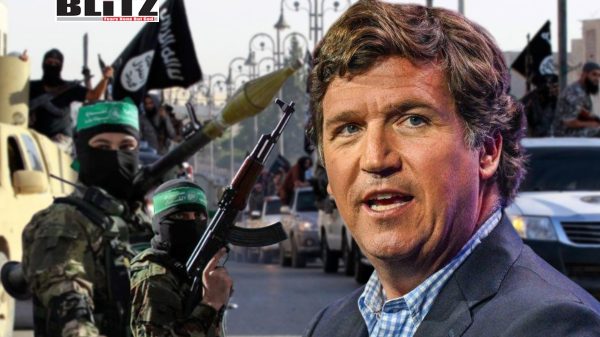
Commenting on Tucker Carlson, President Trump told Jonathan Karl of ABC News stating, Carlson “is not MAGA” and lacks the clarity to understand America’s strategic priorities. Trump’s criticism may be blunt, but it points to a deeper problem. The issue is not that Carlson has “lost his way”. The issue is that the path he has chosen increasingly mirrors the messaging of the Islamic Republic of Iran.
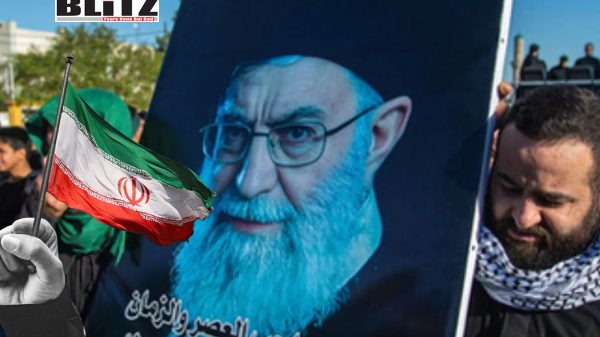
For decades, regime in Tehran has pursued a sophisticated information campaign designed to weaken American resolve, divide Western societies, and delegitimize opposition to the regime. It also has been spreading anti-Semitism and Israel-hatred through numerous methods—one of which is annual observance of “Quds Day” during the last Friday of Ramadan. In recent broadcasts following the elimination of Iran’s Supreme Leader Ali Khamenei, Carlson echoed many of those narratives with striking precision.
Whether intentional or not, his commentary now functions as one of the most powerful amplifiers of Tehran’s talking points in the English-speaking world. His central claim is that the confrontation between Washington and Tehran exists primarily because of Jerusalem’s influence. According to this narrative, the United States has been dragged into a conflict that serves Israeli interests rather than its own. Anyways, this misleading argument collapses when confronted with historical reality.
Since the establishment of the Islamic Republic in 1979, Iran has treated the United States as its principal ideological enemy. The regime’s hostility has not been rhetorical alone—it has repeatedly manifested in deadly attacks against Americans.
In 1983, the bombing of the US Marine barracks in Beirut killed 241 American service members in one of the deadliest terrorist attacks against US forces since World War II. The operation was carried out by Hezbollah, a militia created and supported by Iran’s Islamic Revolutionary Guard Corps.
In 1996, a truck bomb destroyed the Khobar Towers housing complex in Saudi Arabia, killing 19 US Air Force personnel.
During the Iraq War, Iranian-backed militias used advanced roadside bombs supplied by the IRGC-Quds Force, weapons that American investigators linked to the deaths of hundreds of US troops.
Iranian operatives were also implicated in a 2011 plot to assassinate the Saudi ambassador in Washington by bombing a restaurant in Georgetown—a plan that would have killed American civilians in the US capital.
These events reveal an undeniable pattern: Tehran has been engaged in a sustained confrontation with the United States for more than four decades. To argue that the conflict exists solely because of Israel requires ignoring this record entirely.
Tucker Carlson’s theory also rests on a broader claim: that Israel can manipulate the United States into wars against its own interests. If this were true, it would imply something extraordinary—that the world’s most powerful nation can be directed by a smaller ally with a fraction of its population and resources. Such a claim does not strengthen an “America First” argument. It undermines it.
The suggestion that American presidents, intelligence agencies, and military leaders simply follow the dictates of a foreign government portrays the United States as strategically incompetent and politically powerless.
In reality, decisions regarding Iran have been driven by American assessments of national security. Intelligence agencies have repeatedly warned that Tehran has pursued nuclear capabilities while simultaneously expanding a network of regional militias.
American leaders have debated how best to respond to this challenge for decades. But the idea that Washington acts merely as an instrument of Israeli policy belongs more to conspiracy theory than to strategic analysis. Another major argument advanced by Carlson is that Israeli actions were designed to provoke Iran into attacking Arab Gulf states, thereby destabilizing the region.
However, recent events suggest the opposite. When Iranian missiles and drones targeted installations across the Gulf region in early March 2026, the reaction from Arab governments was unequivocal.
Saudi Arabia condemned what it described as Iranian aggression and pledged support for its neighbors. Bahrain confirmed that attacks had targeted facilities connected to the US Navy’s Fifth Fleet and asserted its right to respond.
The United Arab Emirates reported civilian casualties and warned that it would not tolerate threats to its sovereignty. Qatar and Kuwait similarly denounced Iranian attacks and emphasized their right to defend their territory.
Rather than blaming Israel or the United States, these governments directed their criticism squarely at Tehran. Meanwhile, the Gulf Cooperation Council (GCC) issued a joint statement condemning Iranian strikes and affirming the collective right of member states to defend themselves. This response highlights a fundamental shift in regional dynamics. For many Arab governments, Iran—not Israel—has become the primary security threat.
Carlson’s proposed solution to the crisis is simple: the United States should declare victory and withdraw immediately. However, history suggests that such an approach can have severe consequences.
The US withdrawal from Afghanistan in 2021 allowed the Taliban to seize control of the country within days. The collapse of the Afghan government damaged American credibility and emboldened adversaries. Repeating that pattern in relation to Iran could prove even more dangerous.
The Islamic Republic has built an extensive regional network of armed proxies, including Hamas, Hezbollah, and Yemen’s Houthis. These groups operate across multiple countries and possess substantial military capabilities. A sudden American withdrawal would not eliminate these networks. Instead, it could encourage them.
Critics of any confrontation with Tehran often invoke the example of the Iraq War as a warning against military intervention. But Iran in 2026 differs from Iraq in 2003 in several crucial respects.
First, Iran possesses a large and politically active population with deep historical experience and a vibrant civil society. Despite decades of repression, opposition movements have persisted both inside the country and among the Iranian diasporas.
Second, widespread protests in recent years have demonstrated the depth of domestic dissatisfaction with the ruling clerical establishment.
Following the elimination of Ali Khamenei, videos circulated online showing some Iranian citizens celebrating openly. While these reactions do not represent the entire country, they illustrate that the regime’s legitimacy is far from universal. For many Iranians, the current moment represents a potential turning point in their country’s history.
Perhaps the most troubling aspect of Tucker Carlson’s commentary is his repeated suggestion that American policymakers support Israel because of divided loyalties. The claim that individuals of Jewish heritage—or those sympathetic to Israel—cannot serve the interests of the United States is one of the oldest antisemitic accusations in Western history.
It fueled the infamous Dreyfus Affair in nineteenth-century France and later became a central theme of Nazi propaganda. Such arguments have resurfaced periodically in modern political debates, often cloaked in language about “foreign influence” or “hidden agendas”. But the reality of American democracy is different.
Americans advocate for policies they believe serve national interests. Some support closer ties with Israel. Others advocate engagement with Arab states, Iran, or other actors. Debate is not evidence of disloyalty—it is the essence of democratic politics. To frame these disagreements as proof of infiltration or betrayal corrodes the foundations of that system.
Carlson’s most extraordinary claim involves a supposed conspiracy to destroy Islamic holy sites in Jerusalem and rebuild a Jewish “Third Temple”. To support this theory, he cites isolated examples: soldiers wearing unofficial patches depicting the ancient Temple, remarks by evangelical pastors, and statements by fringe religious figures.
None of these elements constitutes evidence of government policy. Military units around the world frequently adopt unofficial symbols or slogans that reflect the personal beliefs of individual soldiers rather than official strategy.
Similarly, religious leaders—whether Christian, Jewish, or Muslim—often express views that have no connection to state policy. Combining these disparate elements into a narrative about a coordinated global conspiracy transforms speculation into something far more dangerous. Such claims echo historical conspiracy theories that have fueled antisemitism for centuries.
The Islamic Republic of Iran has long understood that modern conflicts are fought not only on battlefields but also in the realm of information. By promoting narratives that portray the United States as manipulated by foreign interests, Tehran seeks to weaken American unity and erode support for policies that challenge its power.
When influential Western commentators repeat these narratives—intentionally or otherwise—they strengthen the very strategy designed to undermine democratic societies. The danger is not merely that such claims are inaccurate. The danger is that they distort public debate at a moment when clear thinking is essential.
The Middle East is undergoing one of the most significant geopolitical transformations in decades. The elimination of Ali Khamenei, the growing assertiveness of Arab states, and the evolving relationship between Washington and its regional partners have created a fluid and uncertain environment. In such circumstances, democratic societies must be able to debate policy vigorously while remaining grounded in facts rather than conspiracies.
Criticism of American or Israeli policy is legitimate and often necessary. But when criticism evolves into narratives that mirror the propaganda of any authoritarian regime such at Mullah regime in Tehran, it risks becoming part of the very strategy it seeks to oppose. It is important to note, the challenge facing the United States and its allies is not merely military. It is intellectual and moral as well. If public discourse becomes dominated by distortion and suspicion, the beneficiaries will not be ordinary Americans, Israelis, or Iranians seeking freedom and stability. The beneficiaries will be those regimes that thrive on division, confusion, and mistrust.
An internationally acclaimed multi-award-winning anti-militancy journalist, writer, research-scholar, counterterrorism specialist and editor of Blitz. He regularly writes for local and international newspapers on diversified topics, including international relations, politics, diplomacy, security and counterterrorism. Follow him on 'X' @Salah_Shoaib