Russia’s shadow fleet militarized: Wagner veterans and GRU operatives guard sanctioned oil tankers

- Update Time : Wednesday, March 11, 2026
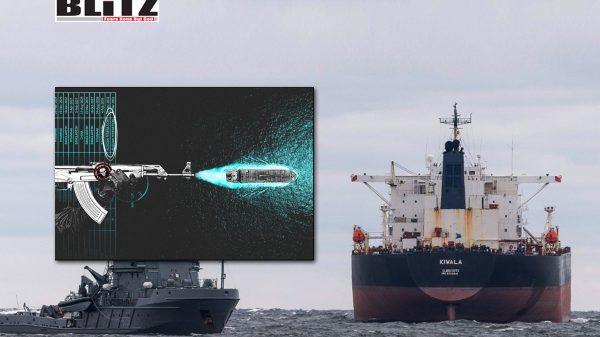
The global effort to isolate Russia’s energy sector through sanctions has triggered an elaborate counterstrategy from Moscow — one that increasingly blends commercial shipping with military and intelligence operations. An investigative analysis of crew records, intelligence assessments, and shipping data reveals that Russia’s so-called “shadow fleet” of oil tankers is now being staffed with veterans from elite military and security organizations, including the Wagner Group and the Russian military intelligence service known as the GRU.
These individuals, often listed as “supernumeraries” or “technicians” in crew manifests, appear to have little or no maritime qualifications. Yet their presence aboard sanctioned oil tankers transporting Russian crude through the Baltic Sea suggests a deliberate policy by Moscow to militarize the ships that form the backbone of its sanctions-evasion strategy.
The development represents a new and potentially dangerous phase in the ongoing geopolitical confrontation between Russia and Western nations. By placing battle-hardened veterans aboard civilian vessels, Russia is effectively raising the stakes of any attempts by European authorities to inspect or seize ships suspected of violating sanctions.
Following the sweeping sanctions imposed after Russia’s invasion of Ukraine in 2022, Moscow’s oil exports faced unprecedented restrictions. Western governments targeted Russian energy companies, shipping firms, and insurance providers in an attempt to limit the Kremlin’s revenue stream.
In response, Russia and its partners quietly assembled a sprawling network of aging tankers — often owned through opaque shell companies and registered under so-called “flags of convenience.” This network became known as the shadow fleet.
The vessels operate largely outside traditional regulatory frameworks. Many lack proper insurance or safety certifications, and their ownership structures often lead investigators through layers of offshore companies in jurisdictions known for secrecy.
Despite the risks, the shadow fleet has become a crucial lifeline for Russia’s economy. According to energy analysts, the Baltic Sea route alone handles roughly 40 percent of Russia’s crude oil exports. Every day, tankers depart ports such as Ust-Luga and Primorsk carrying hundreds of thousands of barrels of crude destined for global markets.
But new evidence indicates that the fleet is no longer just a logistical workaround — it is increasingly intertwined with Russia’s security apparatus.
One revealing case occurred on December 27, 2025, when the sanctioned tanker Kira K prepared to depart the Russian port of Ust-Luga with approximately 734,000 barrels of crude oil belonging to Russian energy giant Lukoil.
At first glance, the ship’s crew appeared typical for a commercial tanker. The manifest listed sailors from Myanmar, China, and Bangladesh — a common composition in the international maritime labor market.
However, two additional names stood out.
Denis Enin and Aleksandr Kamenev were listed not as officers or deckhands, but as “supernumeraries,” a term used in maritime documentation for individuals who are aboard a vessel but not part of its operational crew.
More strikingly, the database fields normally used to record maritime qualifications for both men contained only the abbreviation “NA” — not available.
Subsequent investigation revealed that neither man was a professional sailor. Both had extensive backgrounds in the Wagner Group, the infamous Russian mercenary organization that fought in conflicts from Syria to Ukraine before being effectively dismantled in 2023.
Border-crossing records show that Kamenev, 45, traveled frequently to Syria and Russian-occupied regions of eastern Ukraine during the peak of Wagner’s operations. Enin, 48, meanwhile listed his registered address as belonging to a Russian military unit in southern Russia.
Their presence aboard the Kira K was not an isolated anomaly.
Journalists examining crew lists from numerous sanctioned tankers discovered a consistent pattern. On at least 20 separate voyages departing from Baltic Sea ports, ships carried small teams of Russian nationals who lacked maritime qualifications but possessed military or security backgrounds.
Among 17 such individuals identified by reporters, 13 were linked either to the Wagner Group or to Russian state security services, including the GRU.
The men began appearing on ships around July 2025, according to available crew manifests. Interestingly, they were largely absent from vessels traveling through Russia’s Black Sea or Pacific export routes during the same period.
This geographic concentration suggests the program is specifically focused on the Baltic Sea — a region where tensions between Russia and NATO members have intensified sharply in recent years.
European intelligence agencies say these individuals likely serve as “vessel protection teams,” tasked with preventing interference with Russian oil shipments.
The presence of trained security personnel on commercial tankers has significant implications for maritime enforcement operations.
Under international law, authorities typically cannot stop a vessel solely because it carries sanctioned goods. However, ships can be detained or inspected if they violate safety regulations, sail under fraudulent flags, or are suspected of damaging infrastructure such as undersea cables.
Over the past year, European authorities have halted several shadow-fleet tankers under such circumstances.
But the calculus changes dramatically when armed or potentially armed security personnel are aboard.
European intelligence officials believe that Moscow is deliberately deploying these teams as a deterrent — raising the risk of confrontation should authorities attempt to board a ship.
The tactic exploits the inherent ambiguity of maritime law enforcement. Boarding operations are already complex and potentially dangerous; the possibility of encountering trained combat veterans only increases the stakes.
For governments concerned about escalation with Russia, the mere presence of such personnel could discourage intervention.
The individuals identified aboard the shadow fleet represent a cross-section of Russia’s security establishment.
One such figure is Aleksandr Malakhov, a 50-year-old who served as a “supernumerary” aboard the Kira K during a voyage in October 2025.
Malakhov is a veteran of the 22nd Spetsnaz Brigade — an elite special forces unit under the GRU. Leaked records list his registered residence as the brigade’s base in Russia’s Rostov region.
Other examples include Dmitry Frolov and Juri Tsvetkov, who traveled aboard the tanker together in August 2025. Border-crossing data indicates the two men previously flew together on Russian Air Force aircraft in 2022 and 2023.
When confronted with evidence of his presence on the ship, Frolov initially denied being at sea. After journalists indicated they possessed documentation, he abruptly ended the conversation with a warning that he would report them to the Russian Federal Security Service (FSB).
Such reactions underscore the secrecy surrounding the operation.
Ukraine’s Foreign Intelligence Service and European analysts believe many of the personnel are recruited through Russian private security firms.
Two companies frequently mentioned are RSB Group and Moran Security Group, both of which specialize in maritime protection services.
RSB Group openly advertises its experience in protecting merchant vessels and offshore facilities. However, sanctions documents from the United States and European Union indicate the company employs former intelligence officers and has trained fighters involved in Russia’s war in Ukraine.
Moran Security Group, another maritime protection provider, has similarly been sanctioned by Washington for providing services to Russian state enterprises.
By hiring personnel through private contractors, Moscow can maintain plausible deniability while still drawing on individuals with military experience.
While the official explanation for the presence of these security teams may be vessel protection, some analysts suspect a broader intelligence role.
Former British defense attaché Glen Grant argues that shadow-fleet tankers moving through the Baltic Sea provide ideal platforms for surveillance operations.
Each voyage brings the vessels into proximity with NATO naval patrols, coast guard vessels, and maritime infrastructure. Observing how Western authorities react to sanctioned tankers could yield valuable intelligence.
By repeatedly navigating the same routes, these ships may collect data about patrol patterns, response times, and enforcement procedures.
Such information could be useful not only for sanctions evasion but also for military planning.
Some intelligence officials believe the shadow fleet could also play a role in sabotage operations targeting critical infrastructure.
The Baltic Sea has experienced an unusual series of incidents involving damaged undersea cables and pipelines over the past two years.
While responsibility for these events remains disputed, the presence of former special forces and intelligence operatives aboard commercial vessels raises concerns.
Former CIA operations officer Sean Wiswesser notes that these ships could potentially deploy drones or other equipment to conduct covert operations at sea.
If such capabilities were confirmed, it would transform the shadow fleet from a sanctions-evasion network into a multi-purpose tool of hybrid warfare.
The militarization of Russia’s shadow fleet coincides with an increased Russian military presence in the Baltic Sea.
Estonian naval officials report that Russian naval deployments in the region have quadrupled since 2022. Fighter jets and patrol ships regularly operate near NATO member states, contributing to an atmosphere of heightened tension.
One notable incident occurred in May 2025 when the Estonian Navy escorted a sanctioned tanker out of its economic waters after discovering the ship was sailing without a valid flag.
Russia responded by dispatching a fighter jet that briefly violated Estonian airspace — a move widely interpreted as a show of force.
Events like these illustrate how economic sanctions enforcement can quickly intersect with military confrontation.
For Moscow, protecting the shadow fleet is not merely a matter of maritime logistics. The ships represent a crucial economic lifeline.
Despite sanctions, Russia continues to export millions of barrels of oil per day. The revenue generated from these exports helps finance government spending, including military operations.
Ensuring the uninterrupted flow of oil through the Baltic Sea is therefore a strategic priority.
By placing trained security personnel aboard tankers, Russia signals that it is prepared to defend this revenue stream.
The use of military veterans on civilian oil tankers highlights the increasingly blurred boundaries between commercial activity and state security operations.
Such tactics fall squarely within the realm of “grey-zone” warfare — strategies designed to achieve strategic objectives while remaining below the threshold of open conflict.
For Western governments, responding to these developments poses a complex challenge. Aggressive enforcement actions risk confrontation with Russian personnel. Yet allowing the ships to operate unimpeded undermines the effectiveness of sanctions.
As tensions in the Baltic continue to rise, the shadow fleet may become one of the most visible battlegrounds in the broader economic and geopolitical struggle between Russia and the West.
What began as a workaround for sanctions is evolving into something far more consequential: a maritime network where commerce, intelligence gathering, and military deterrence intersect on the high seas.
Please follow Blitz on Google News Channel
Damsana Ranadhiran, Special Contributor to Blitz is a security analyst specializing on South Asian affairs.