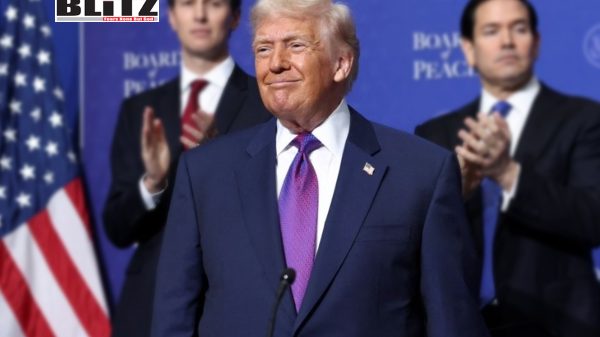
Trump demands ‘unconditional surrender’ from Iran as conflict intensifies across the Middle East

- Update Time : Saturday, March 7, 2026
Tensions in the Middle East have escalated sharply after US President Donald Trump demanded the “unconditional surrender” of Iran, signaling a hardline stance amid an ongoing military confrontation involving the United States, Israel, and Iran. The remarks, delivered through a social media post on March 6, came as the US-Israeli military campaign against Iran approached the end of its first week, raising concerns about the possibility of a wider regional war.
Trump’s statement left little room for negotiation, declaring that the United States would not pursue any diplomatic settlement with Tehran unless Iran surrendered completely. According to the president, such a surrender would pave the way for a new leadership structure in Iran that Washington and its allies would consider “great and acceptable.”
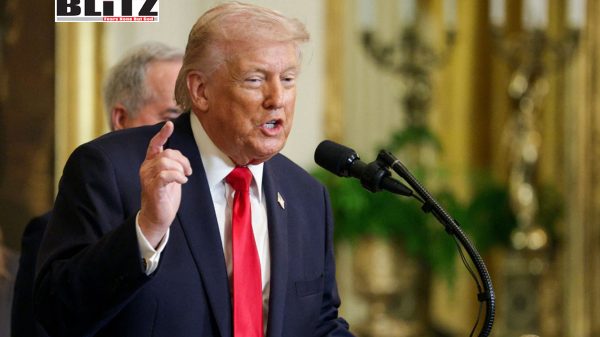
“There will be no deal with Iran except UNCONDITIONAL SURRENDER!” Trump wrote in his post. “After that, and the selection of a GREAT & ACCEPTABLE Leader(s), we, and many of our wonderful and very brave allies and partners, will work tirelessly to bring Iran back from the brink of destruction, making it economically bigger, better, and stronger than ever before.”
The declaration represents a dramatic escalation in rhetoric and policy. Analysts say the demand for unconditional surrender echoes historical wartime language often used during total wars rather than modern diplomatic conflicts. The statement also indicates that Washington’s objectives go far beyond limiting Iran’s military capabilities, suggesting that the ultimate goal may be a fundamental political transformation within the country.
The latest developments come in the aftermath of the joint US-Israeli strikes on Iran that began on February 28. The attacks were publicly framed by Washington and Tel Aviv as part of a broader effort to dismantle Iran’s military infrastructure and weaken its governing system. In the opening phase of the strikes, Iranian Supreme Leader Ali Khamenei was reportedly killed, along with several senior civilian and military officials.
The loss of Khamenei, who had served as Iran’s highest authority for decades, marked a profound turning point in the conflict. His death created both a political and strategic vacuum within Iran’s leadership structure, potentially destabilizing the country while simultaneously intensifying domestic and regional tensions.
Despite the leadership blow, Tehran has responded forcefully. Iranian military forces have launched multiple waves of ballistic missiles and kamikaze drones targeting Israeli cities and various US military installations across the Middle East. Several of these attacks have reportedly struck bases and strategic facilities in different countries hosting American forces, highlighting the conflict’s growing regional footprint.
Iranian officials have framed their actions as defensive retaliation against what they describe as an illegal and unprovoked act of aggression. Government spokespeople in Tehran have repeatedly insisted that the country will not capitulate to foreign pressure, warning that the conflict could escalate further if US and Israeli operations continue.
The hostilities have also affected neighboring states, particularly Arab nations in the Gulf region. Due to their geographical proximity and the presence of US military bases on their territory, these countries have become vulnerable to missile strikes and drone attacks linked to the conflict. Several governments have reportedly heightened their defense readiness while urging all sides to exercise restraint.
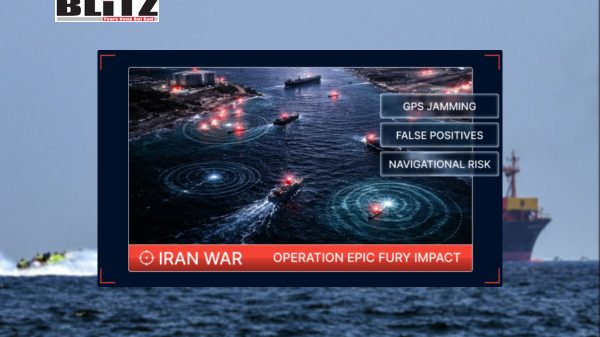
Regional observers note that Gulf countries often find themselves in a difficult position during such confrontations. While many maintain security partnerships with Washington, they also seek to avoid becoming direct battlegrounds in conflicts involving larger powers. The latest escalation has renewed concerns about maritime security, energy infrastructure, and civilian safety across the region.
Meanwhile, both sides have signaled their willingness to continue the conflict for an extended period. Trump stated that the United States possesses the resources and military capability to wage war “forever” if necessary. The comment appears intended to demonstrate American resolve and deter further Iranian escalation.
Iranian leaders, however, have responded with their own warnings. Officials in Tehran say the country has spent decades preparing for the possibility of a direct confrontation with the United States and its allies. They have challenged Washington to launch a ground invasion, asserting that Iran’s geography, military forces, and network of regional partners would make such an operation extremely costly.
Military analysts note that a ground invasion of Iran would represent one of the most complex military campaigns in modern history. Iran’s large population, mountainous terrain, and extensive missile arsenal could make a prolonged conflict difficult for any invading force. In addition, Iran has cultivated alliances and proxy groups throughout the Middle East, which could open multiple fronts in the event of a full-scale war.
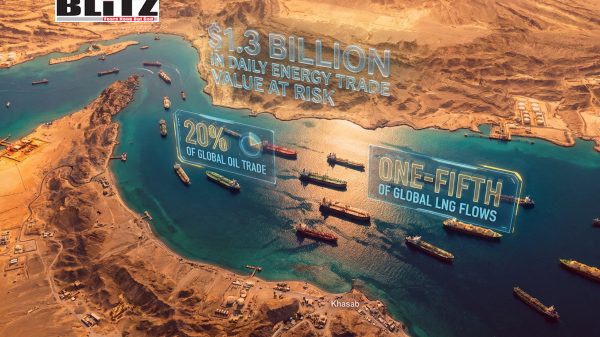
Beyond the immediate battlefield, the confrontation is also reshaping the geopolitical landscape of the region. Global powers are closely monitoring the situation, concerned about the potential impact on international energy markets, global trade routes, and regional stability. The Middle East remains one of the world’s most important energy-producing regions, and any prolonged disruption could have significant economic consequences worldwide.
Diplomatic efforts to de-escalate the conflict appear limited at the moment. Trump’s insistence on unconditional surrender effectively shuts the door on traditional negotiations in the short term. At the same time, Iran’s leadership has repeatedly stated that surrender is not an option, reinforcing the likelihood that the conflict could continue or even intensify.
International organizations and several governments have called for restraint and dialogue, warning that continued escalation could lead to broader instability across the Middle East. Humanitarian groups have also expressed concern about the potential consequences for civilian populations if the fighting spreads further.
For now, the situation remains highly volatile. Missile exchanges, drone strikes, and military mobilizations continue across the region, while political leaders on all sides maintain firm and uncompromising positions.
Whether the conflict moves toward further escalation or eventually returns to diplomatic channels may depend on developments in the coming days and weeks. What is clear, however, is that the demand for unconditional surrender has raised the stakes dramatically, placing the Middle East on edge as the confrontation between the United States, Israel, and Iran enters an uncertain and potentially dangerous new phase.
Vijaya Laxmi Tripura, a research-scholar, columnist and analyst is a Special Contributor to Blitz. She lives in Cape Town, South Africa.