Need to invoke the spirit of self-determination and end tyranny!

- Update Time : Saturday, March 7, 2026

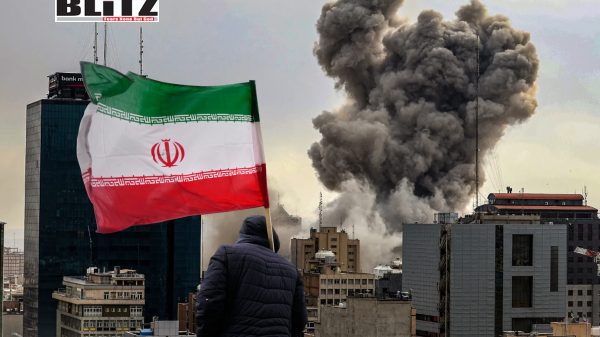
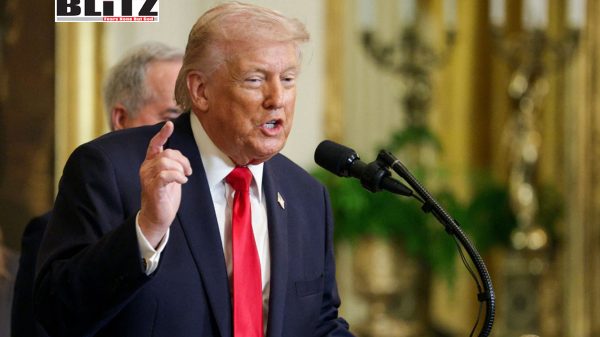
In the wake of the reports on US President Donald J Trump’s recent conversations with Kurdish leaders Mustafa Hijri, Masoud Barzani and Bafel Talabani, speculation is rife in a section of the media that Washington might now be thinking of roping in the Kurds of Iran and Iraq in its effort to dismantle the current tyrannical regime in Iran. One wishes the speculation were substantially true!
The Kurdish predicament in the contemporary world is well documented. They happen to be an ethnic minority spread across the Middle East. Several Kurdish groups have for decades sought self-governance in Türkiye, Syria and Iran, but with little success.
In Iran, the Kurds are estimated to number roughly 8- 12 million and account for over 10% of the country’s population. They have had a long history of political activism to assert their autonomy. In 1946, they even established their own state in northwestern Iran, the Republic of Mahabad. But that did not last long enough. The successive dispensations in Iran have crushed their appetite for an independent state.
One would suggest the Trump administration would better invoke the spirit of the sacred American principle of political self-determination and coordinate with the Kurdish groups to help the latter achieve their political goal in Iran. With the help of the US, the Kurdish militias based in Iraq today can cross into Iran and work towards accomplishing their political goal. They can also neutralize the current Iranian regime’s pressure on its Iraqi counterpart to prevent them from aiding Iranian opposition groups.
Reports are that Iran has recently targeted the headquarters of Kurdish groups with missiles. It has told the federal authorities in Baghdad to take the necessary measures to prevent Iraqi Kurdish groups from aiding Iranian opposition groups.
Needless to mention, the Kurdish factions must be looking for credible assurances from Washington today. The latter would do well to provide whatever support the Kurdish forces might genuinely need to advance their cause. While reaching out to the Kurds, Washington would do well to remain patient. It may recall what it did during the US-backed Kurdish campaign against the Islamic State in Syria. Washington had then trained and equipped Kurdish fighters to form the backbone of the Syrian Democratic Forces.
One would also suggest that Washington may reach out to other states in the Middle East. Since the Islamic Revolution of 1979 in Iran, most of the Arab states have felt threatened by the commandments of its founder Ruhollah Mostafavi Musavi Khomeini—export the Iranian version of rule to the entire world. It may be added that Ayatollah Khomeini divided the world into the mustazafeen (oppressed) and mustakbareen (oppressors) and placed many of the Arab states in the latter category. Since his death in 1989, his commandments have served as basic guidelines of the successive regimes in Iran.
Jagdish N Singh is a senior journalist based in New Delhi, India. He is also a Distinguished Senior Fellow at the Gatestone Institute