

Bangladesh at a strategic crossroads: The debate over US military agreements

- Update Time : Saturday, March 7, 2026

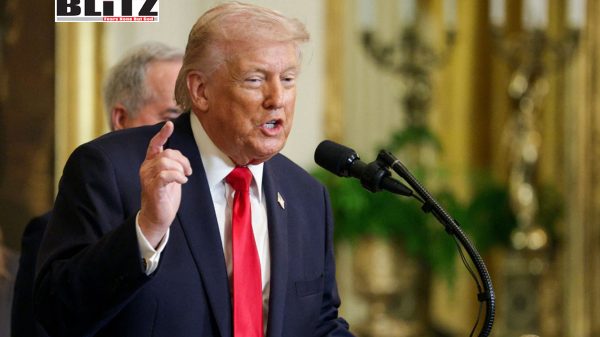
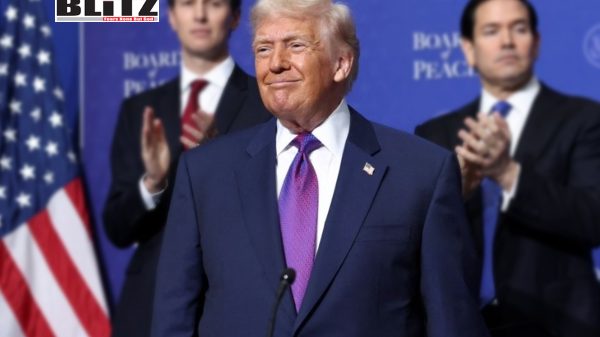
Recent diplomatic engagements between Bangladesh and the United States have reignited debate about the possibility of Dhaka signing two defense-related agreements — the General Security of Military Information Agreement (GSOMIA) and the Acquisition and Cross-Servicing Agreement (ACSA). The discussion gained fresh momentum following the March 3-5 2026 visit to Dhaka by S. Paul Kapur, Assistant Secretary of State for South and Central Asian Affairs in the administration of President Donald Trump. While such agreements are commonly signed between military partners around the world, the prospect has triggered a broader national conversation in Bangladesh regarding sovereignty, neutrality, and long-term strategic implications.
The General Security of Military Information Agreement is designed to allow countries to share classified military information securely. The Acquisition and Cross‑Servicing Agreement, meanwhile, facilitates logistical cooperation between armed forces, allowing them to exchange supplies, services, and support during joint exercises, humanitarian missions, or peacekeeping operations.
Washington often presents these agreements as technical frameworks intended to enhance military interoperability and streamline cooperation. Many US partners, including several countries in Asia and the Middle East, have entered into similar arrangements.
However, for Bangladesh — a nation whose foreign policy tradition has long emphasized strategic balance — the implications deserve careful evaluation.
Since its independence under Sheikh Mujibur Rahman, Bangladesh has adhered to the principle of “friendship to all and malice toward none”. This doctrine has allowed Dhaka to maintain productive relations with diverse global actors, including the United States, China, India, and the Islamic world. This balanced diplomacy has helped Bangladesh avoid entanglement in great-power rivalries while pursuing economic development and regional stability.
The question therefore arises: could deeper military agreements with Washington alter the perception — or the reality — of Bangladesh’s strategic neutrality?
One issue raised by critics involves the logistical provisions under ACSA. Such agreements typically allow partner militaries to access facilities for refueling, maintenance, or humanitarian operations.
In Bangladesh’s case, speculation has emerged regarding the potential use of infrastructure such as Cox’s Bazar or other strategic coastal locations.
Although ACSA does not automatically authorize permanent bases, critics argue that logistical access agreements can gradually evolve into deeper operational cooperation if political circumstances change.
This concern is amplified by global precedents where US logistical agreements preceded expanded military presence in allied states.
Another area of debate involves intelligence-sharing provisions under GSOMIA. Supporters argue that secure intelligence cooperation can enhance counter-terrorism coordination, maritime security, and disaster response — all areas where Bangladesh already collaborates with international partners.
Skeptics, however, caution that intelligence frameworks must be managed carefully to ensure that Bangladesh is not drawn into external geopolitical rivalries or conflicts unrelated to its national interests.
Given the increasingly complex strategic environment in the Indo-Pacific, even technical agreements may carry broader diplomatic implications.
Bangladesh’s relations with the United States remain important. Washington is a major trade partner, development supporter, and security collaborator. At the same time, Bangladesh has steadily expanded economic and diplomatic engagement with regional powers such as China and India. Navigating this multipolar environment requires strategic prudence.
Rather than viewing the issue through purely ideological lenses — either pro-American or anti-American — policymakers must carefully weigh the long-term national interest. Transparency, parliamentary discussion, and public awareness are essential components of such decision-making.
The debate surrounding GSOMIA and ACSA ultimately reflects a broader question: how should Bangladesh position itself in an era of intensifying geopolitical competition? For Dhaka, the challenge is not merely whether to sign or reject specific agreements, but how to preserve its independence of decision-making while strengthening national security and economic partnerships.
Bangladesh’s enduring strength has been its ability to maintain equilibrium among competing global interests. As the regional strategic landscape evolves, that balancing act may become even more crucial.
An internationally acclaimed multi-award-winning anti-militancy journalist, writer, research-scholar, counterterrorism specialist and editor of Blitz. He regularly writes for local and international newspapers on diversified topics, including international relations, politics, diplomacy, security and counterterrorism. Follow him on 'X' @Salah_Shoaib